There is a particular kind of morning that only happens when you are sailing the Ionian Islands on a boat. You wake up before anyone else, climb up to the deck, and the Ionian Sea is completely flat, cobalt blue fading to turquoise where it gets shallow near the shore, not another soul moving yet, just the sound of water against the hull. I had that morning more than once a few summers ago and I am still not entirely over it.
I spent a week working as a hostess on a crewed catamaran sailing the Southern Ionian, taking in Lefkada, Meganisi, Ithaca, Kefalonia and Zakynthos across seven nights. What follows is an honest account of what each stop was actually like, for anyone who wants the version of Greece that has not been packaged yet.
I did this working as part of the crew. If you want to experience the same islands as a guest with everything handled, this 8-day crewed sailing itinerary through the Southern Ionian Islands is the closest bookable equivalent.
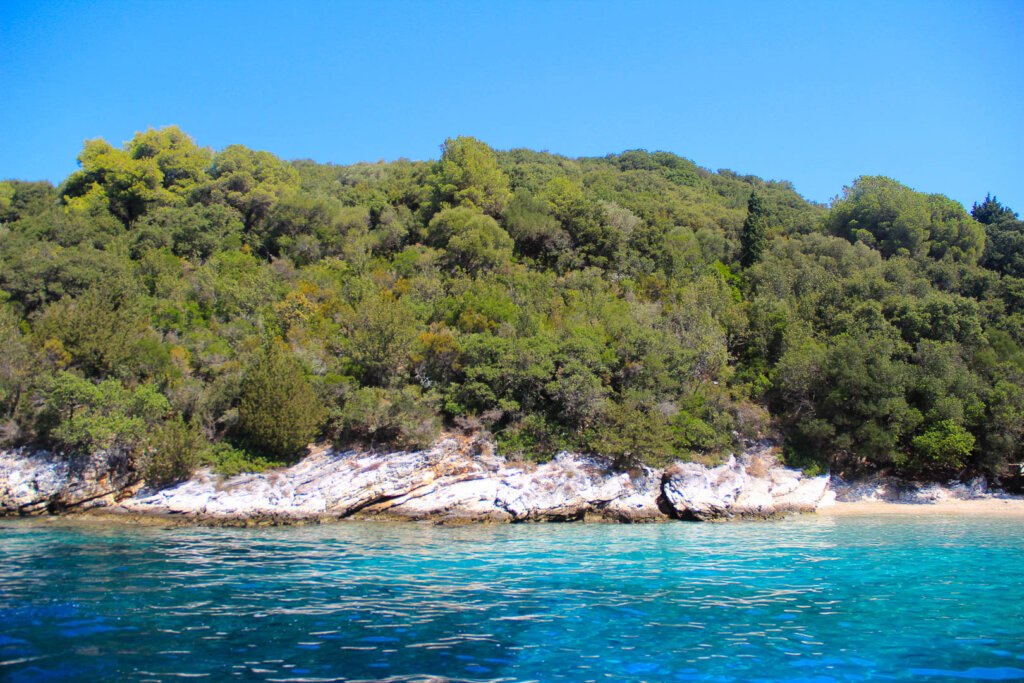
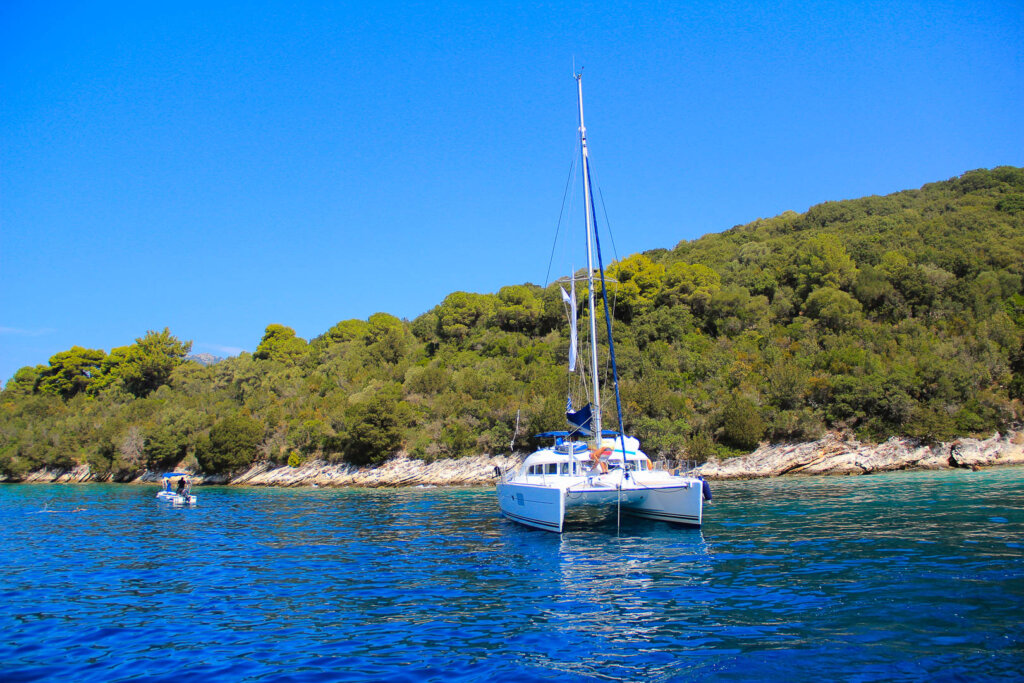
The Boat: Lagoon 42 Catamaran
Before the islands, the boat matters more than people expect. A catamaran changes the experience completely compared to a monohull. It has a wider deck, more stability, less of that constant sideways lean that makes some people queasy.
We had a full crew – skipper and hostess (me) – which meant guests could actually relax. No one had to think about navigation or anchoring or whether the weather window was closing. You spend the week swimming, eating, watching coastlines appear, and occasionally helping with a rope if you feel like it.
Sailing the Ionian Islands: What to Expect on Each Stop
Day 1, Lefkada: The Warm-Up
Embarkation is at Lefkada Marina at 5pm. Guests arrive, get shown to their cabins, and are handed a glass of Prosecco on the deck. It’s a good start!
We set sail almost immediately, no sitting in the marina on night one, and headed south toward the first anchorage. People are still finding their sea legs, still figuring out being on a boat together.
Day 2, Papanikolis Cave, Meganisi
The first proper sailing day and the one that tends to define the whole trip. We sailed south from Lefkada to Meganisi and into Papanikolis Cave, one of the largest sea caves in the Mediterranean, named after a Greek submarine that sheltered here during the Second World War.
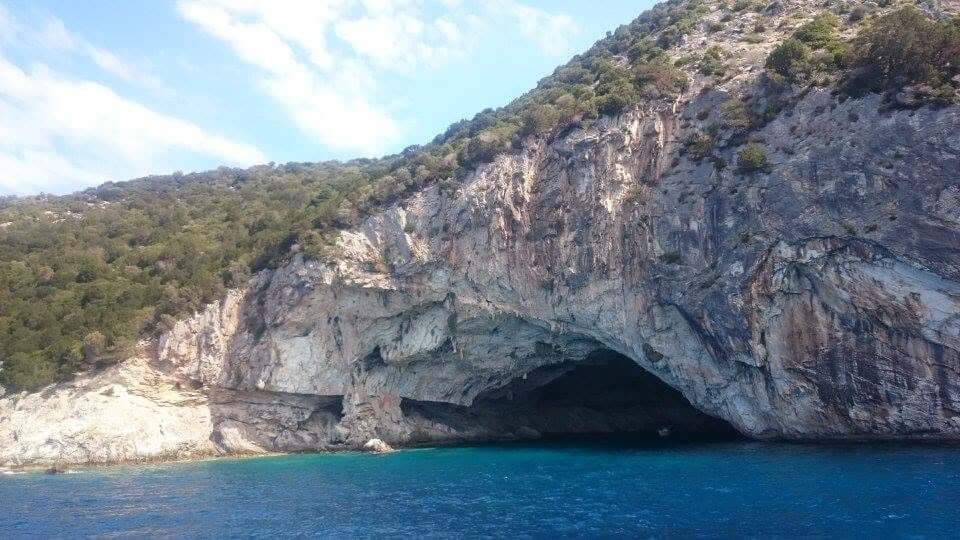
The Papanikolis Caves are sea caves carved into white limestone cliffs. You swim or kayak into them, and inside, the refraction of sunlight through the water turns everything electric – blue walls, blue ceiling, blue water glowing from below. Photos don’t even compare. You need to be inside it!
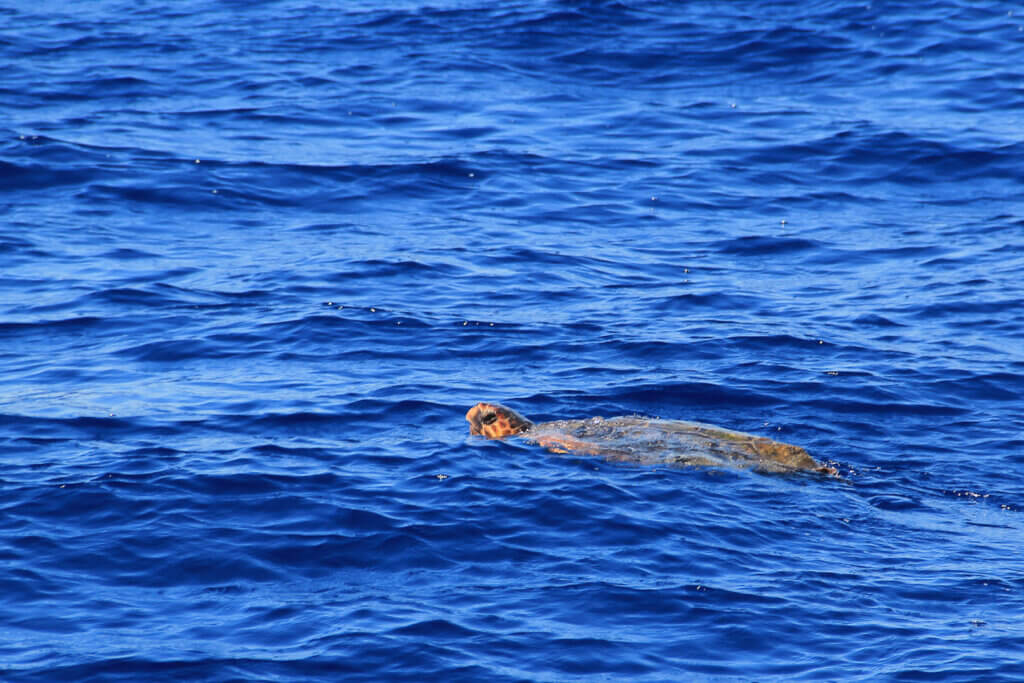
After the cave we anchored in a sheltered bay nearby for lunch on board, then sailed on toward the evening anchorage. This is the day people stop talking about what they left behind at home. Bonus points for keeping your eyes on the sea – you might as well see one of Greece’s endangered loggerhead sea turtles!
Day 3, Ithaca: The Island Homer Chose
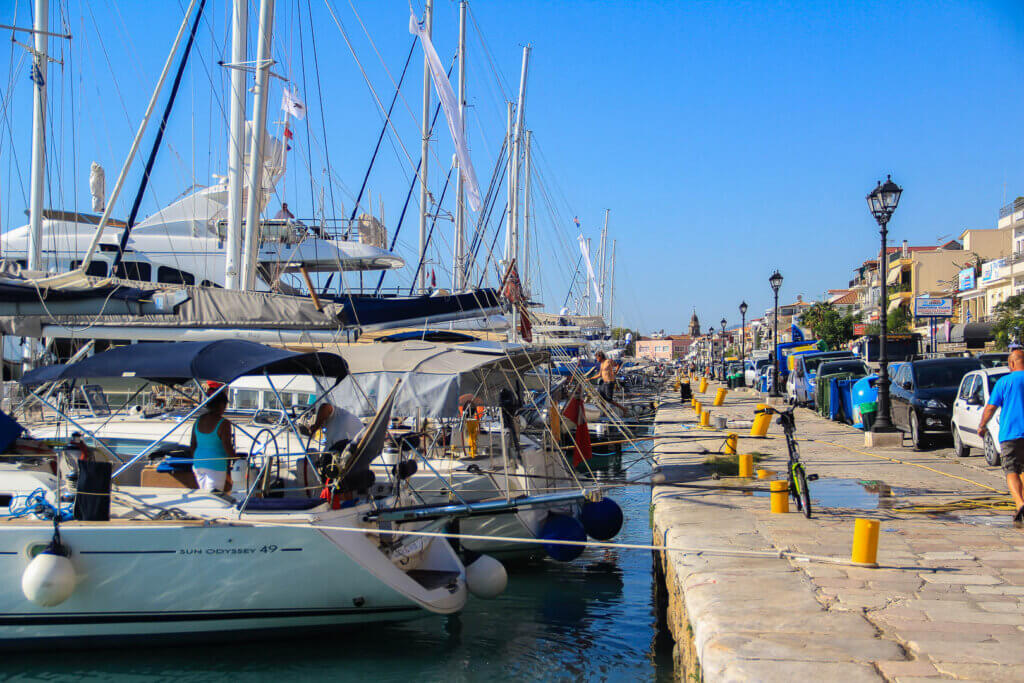
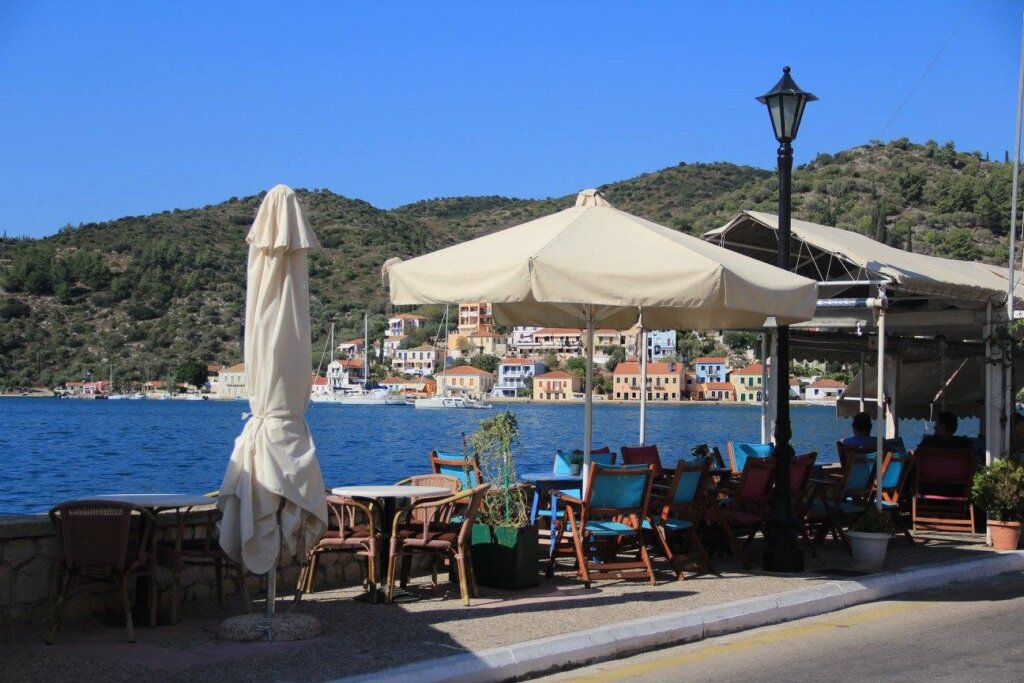
Vathy, the main port of Ithaca, is one of the most beautiful natural harbours in the Mediterranean. It’s a near-perfect circle of water, completely enclosed by hills, calm in almost any weather. The town itself is small, faded, and elegant in a way that doesn’t try too hard. Think waterfront tavernas, neoclassical buildings, a main square where the evening walk still happens. Homer set the Odyssey here!
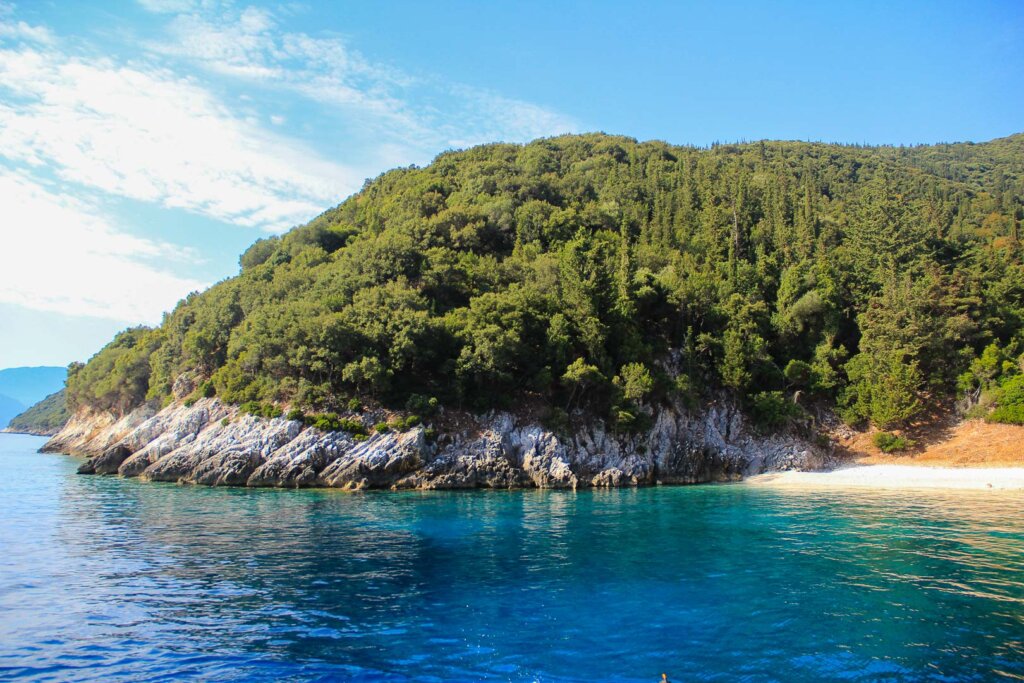
We spent the afternoon at Tilemachos Beach – a short boat ride from Vathy, completely inaccessible by road, with white pebble and water so clear it looks fake. The kind of beach that makes you understand why people keep coming back to Greece.
Evening in Vathy: local tavernas, cold Mythos, the kind of dinner that takes three hours because nobody is in any hurry.
Day 4, Fiscardo, Kefalonia: The One That Survived
Kefalonia is the largest of the Ionian islands and it feels it. More mountainous, more dramatic, more to explore than you can fit in a single stop.
Every building in the Ionian was destroyed by the 1953 earthquake. Every building except Fiscardo at the northern tip of Kefalonia survived intact. It is the only place in the entire archipelago where the pre-earthquake Venetian architecture is still standing. Pastel facades, stone lanes, buildings that are two and three hundred years old.
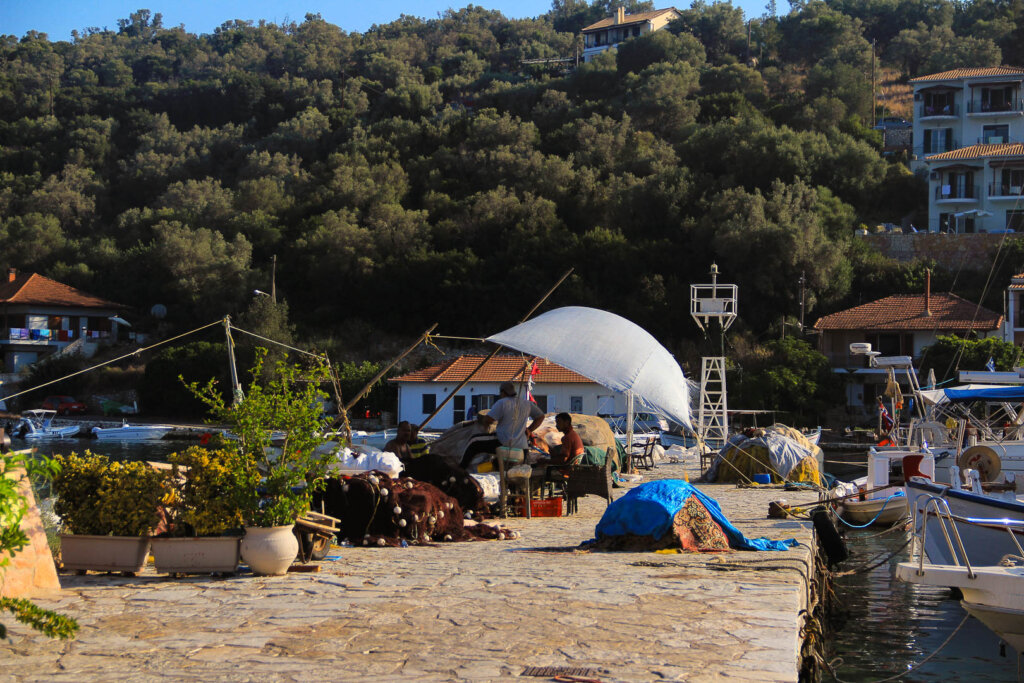
The waterfront restaurants are the best on the route. More expensive than elsewhere in the Ionian but worth it. Grilled seafood, fresh pasta, wine lists with more than two options. Order the octopus and whatever whole fish the kitchen says is from this morning. Do not rush!
If the quay is full, White Pebble Beach just outside the village is a small perfect cove the catamaran can anchor in while the day trippers are eating lunch in town.
Kefalonia produces Robola wine, a dry white that is genuinely excellent and almost impossible to find outside Greece. Buy a bottle before you leave and finish it on the boat that evening.
Day 5, Zakynthos: The Cinematic One
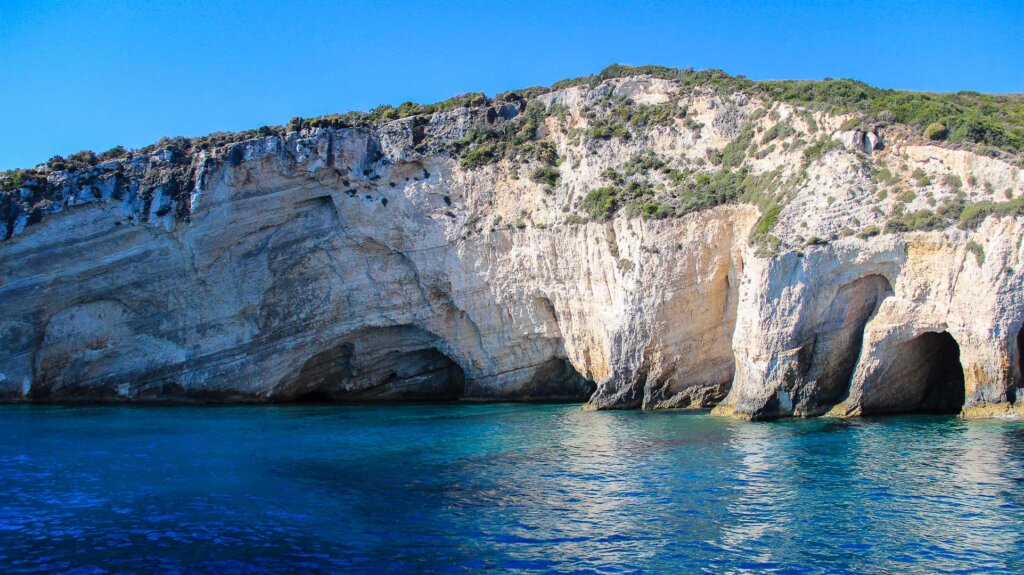
After days of quieter, less-visited islands, Zakynthos felt like the world reappearing. The most visited of the Ionian islands and also, in places, the most spectacular.
The Blue Caves on the northern coast are best seen early, before the day trip boats arrive from the main port. From the water you swim or kayak directly into them and inside the light does something extraordinary, refracting off the white limestone floor beneath the surface until the walls glow electric blue. It is one of those experiences that is genuinely difficult to photograph and even harder to describe. You need to be there!
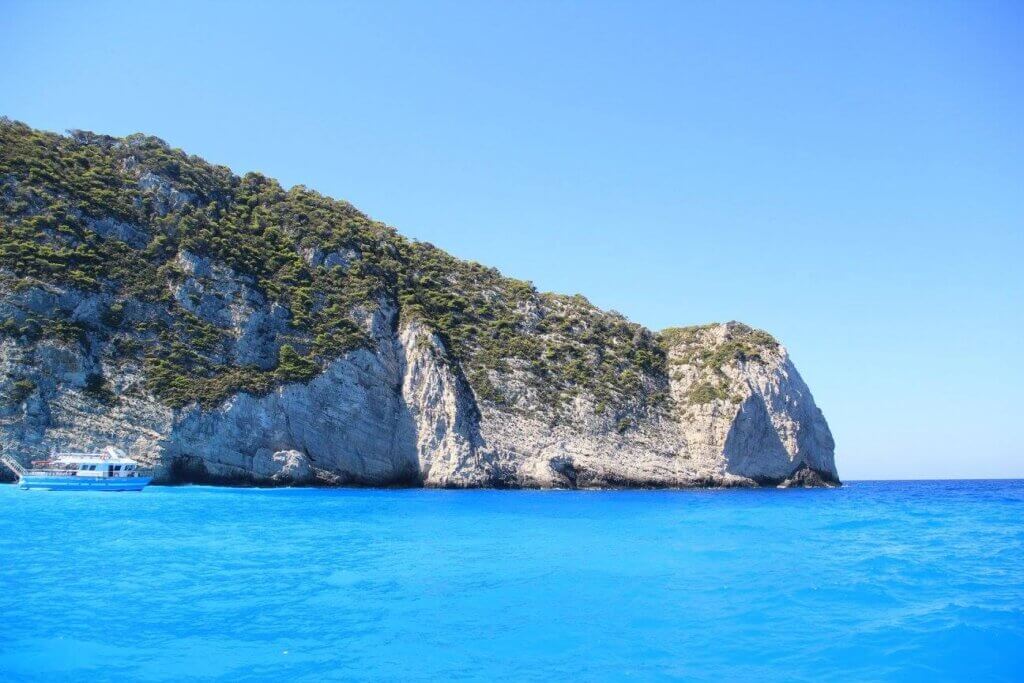
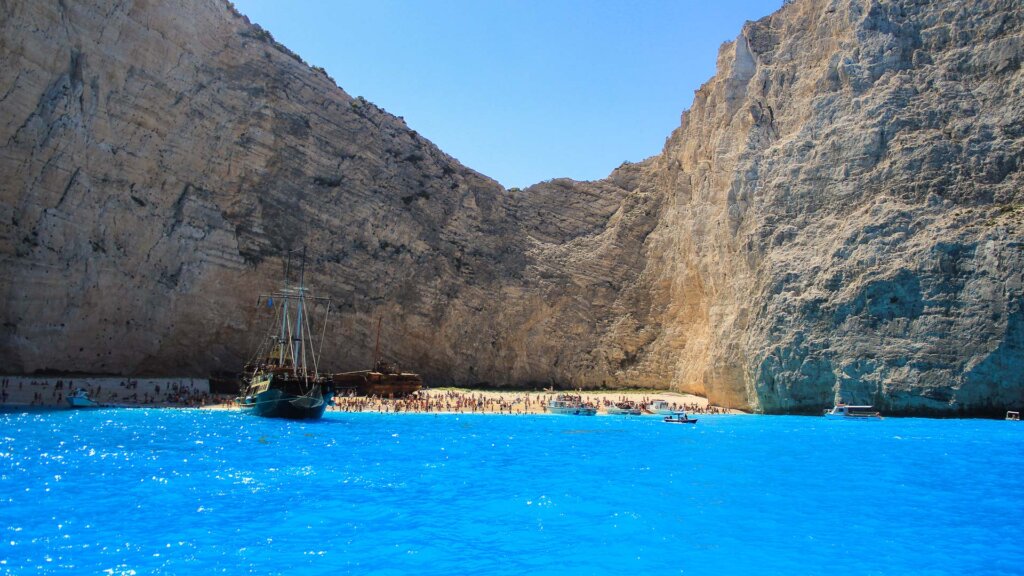
Shipwreck Beach, or Navagio, earns its reputation completely. An old smuggler’s vessel rusting on white pebble, enclosed by cliffs so vertical they block the wind, the water in the cove a flat luminous turquoise. Arriving by boat rather than the tourist viewing platforms above means you are there on your own terms, leaving when you want. It’s one of the most stunning sea I’ve ever seen – it’s still staying with me.
Bring a waterproof bag for your phone when you go ashore. You can’t anchor on the beach directly but rather in shallow water and have to swim a little to get there!
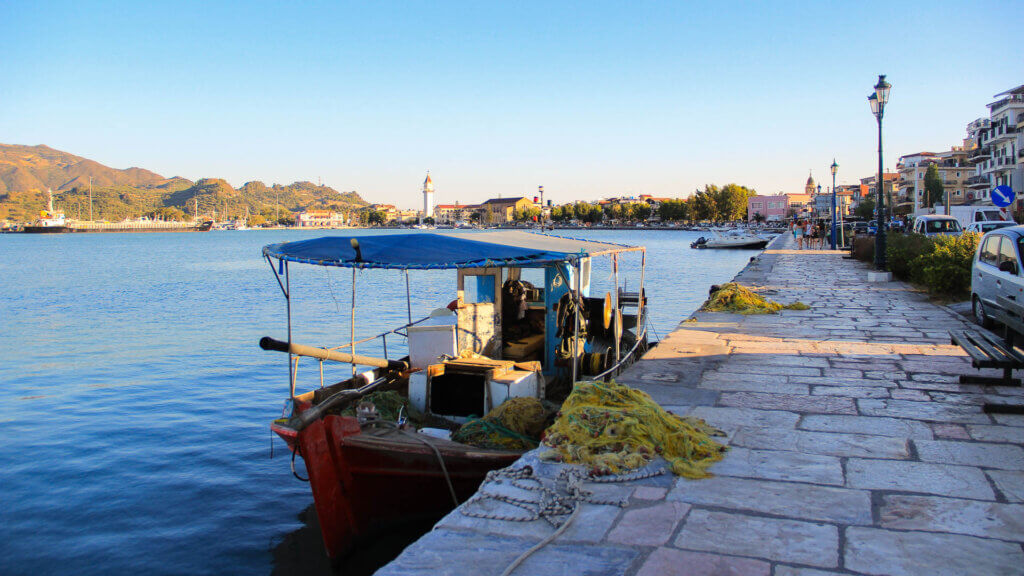
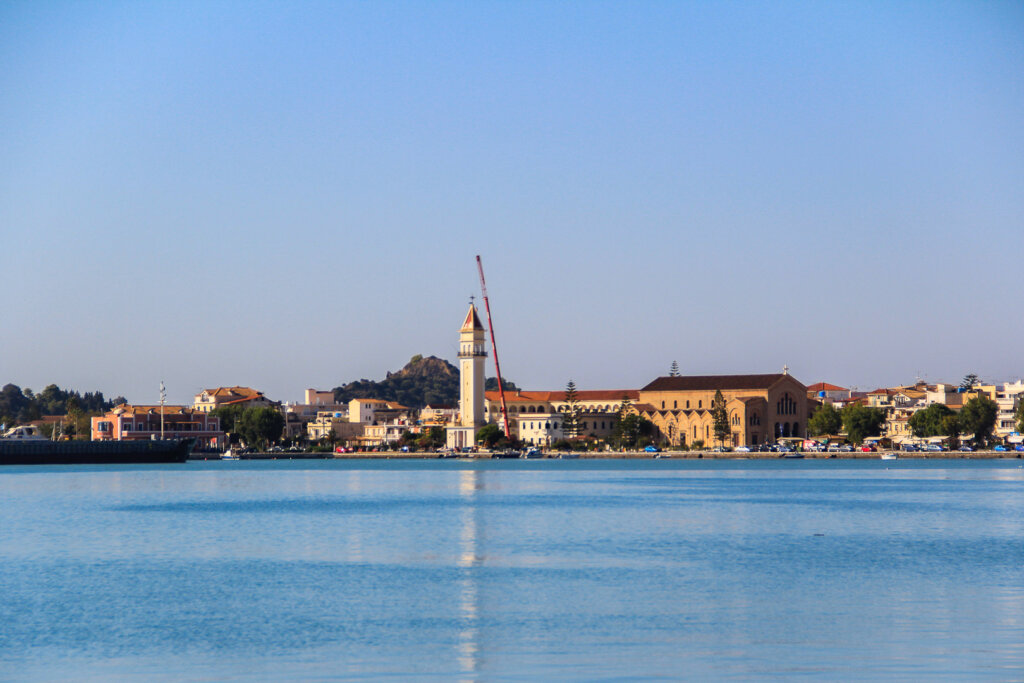
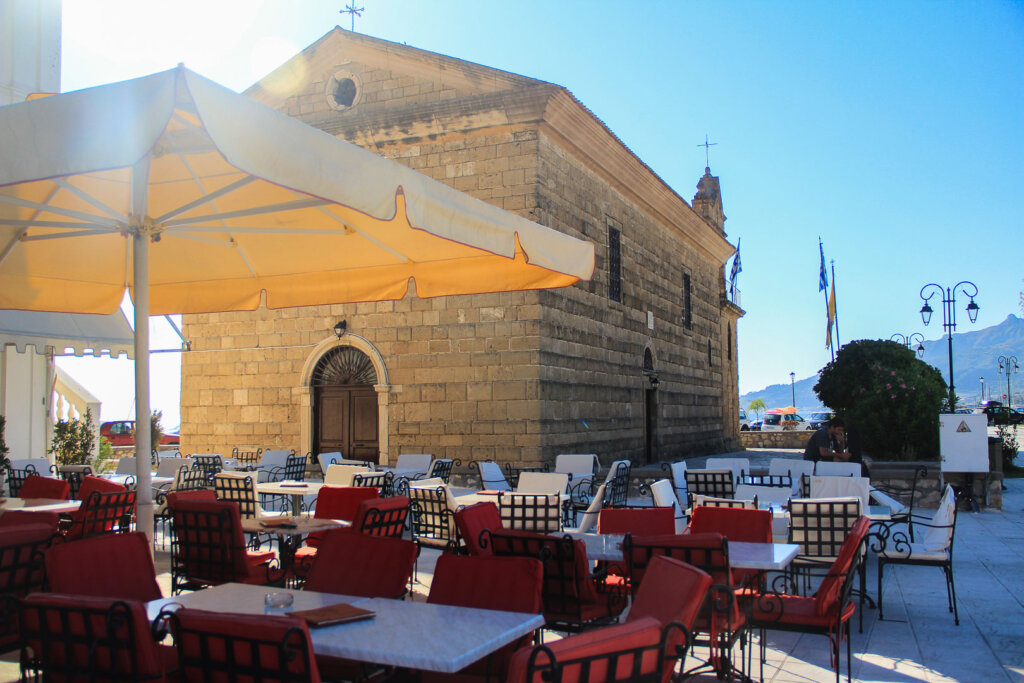
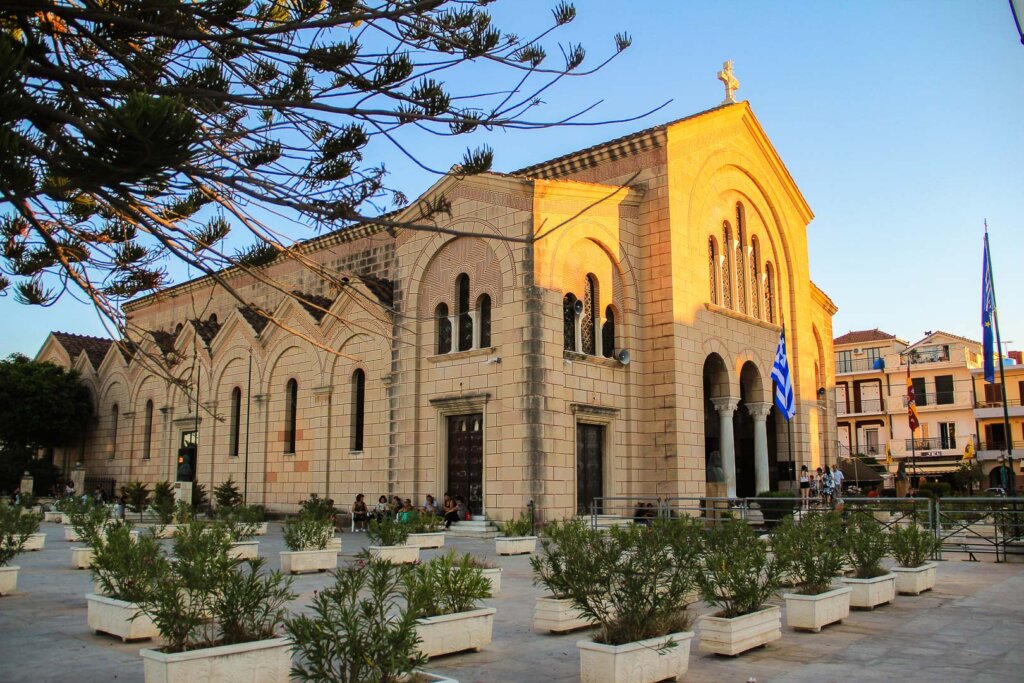
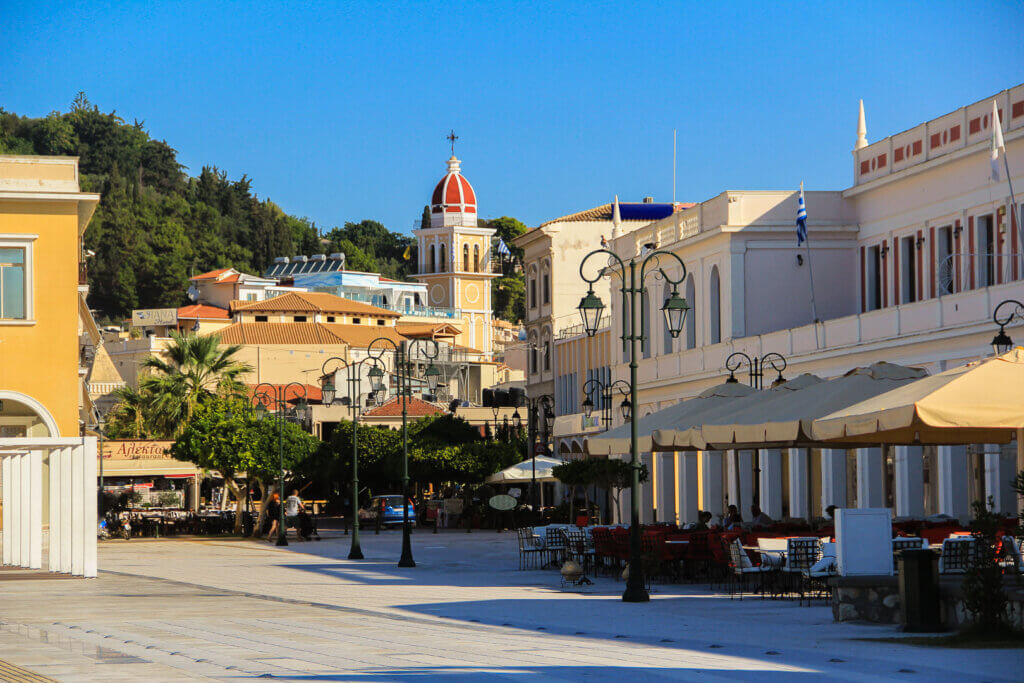
The evening in Zakynthos Town is worth taking slowly. The main harbour is lively without being overwhelming, the waterfront restaurants serve fresh fish, and the Venetian bell tower of Saint Dionysios is worth the short walk from the port. The liveliest evening of the trip and a good contrast to the quieter anchorages earlier in the week.
Day 6, Vathy, Meganisi: The Slow One
Coming back to Meganisi after Zakynthos felt right. Vathy is the kind of place you arrive at and immediately slow down without deciding to.
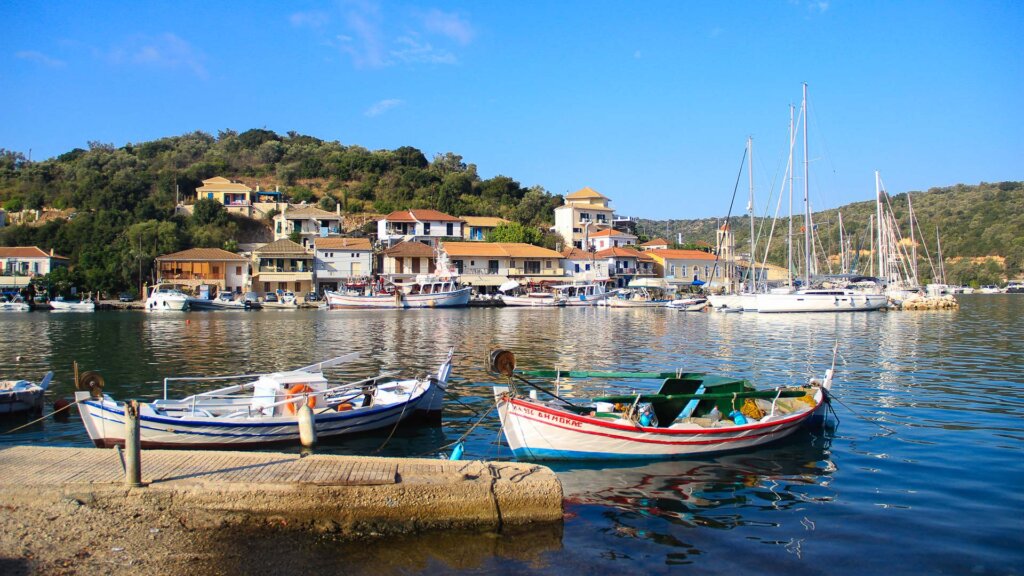
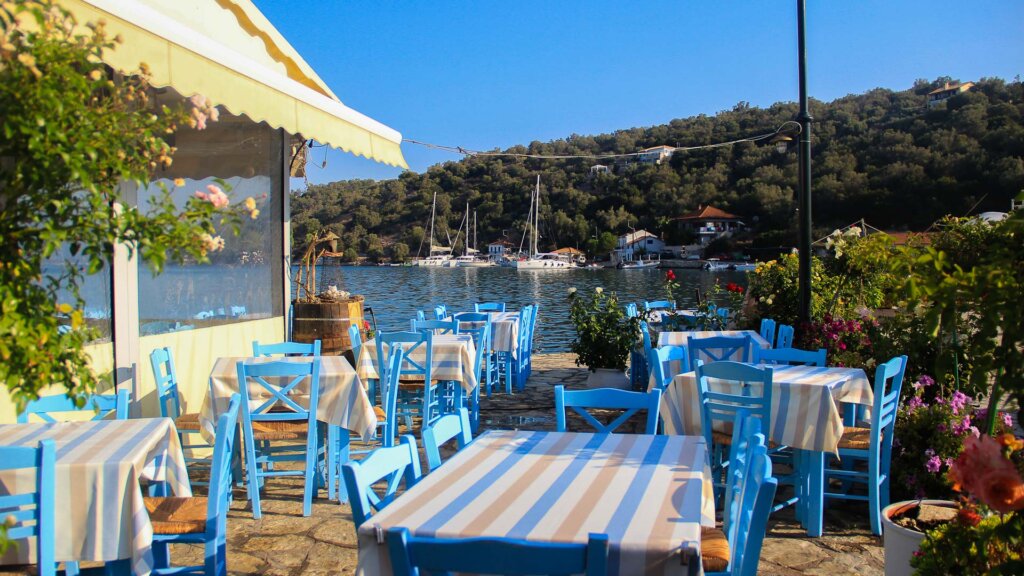
Dinner at Errikos Fish Tavern in the harbour is the meal of the week. Fresh fish, village salad, house wine in a jug, a table six inches from the water. One of the cheapest evenings of the trip and one of the best. The owner will tell you what is good tonight. Listen to him!
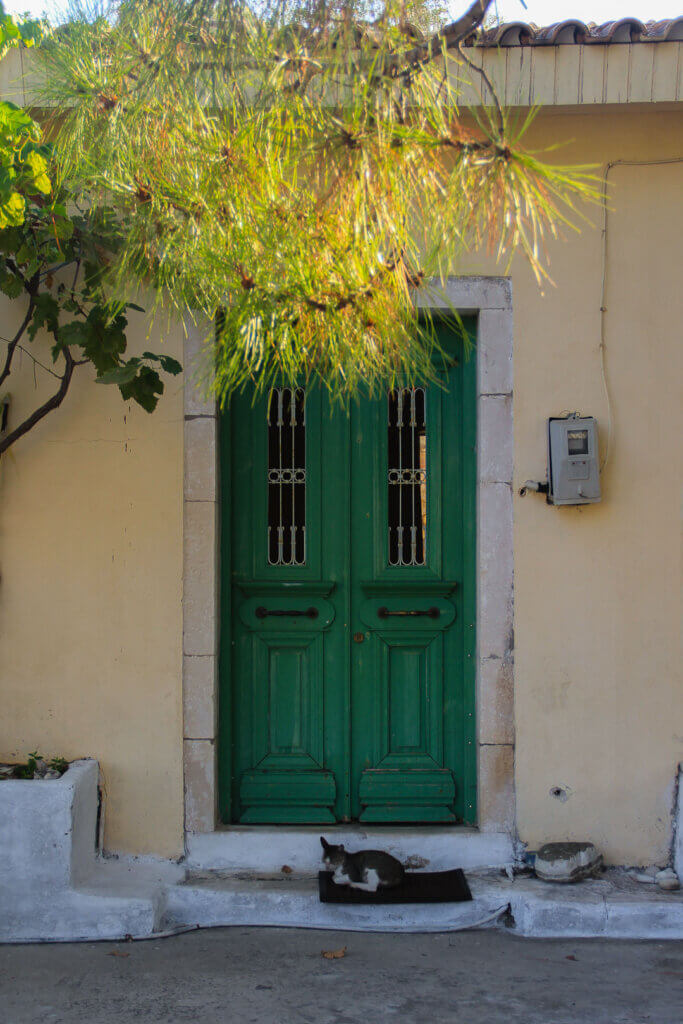
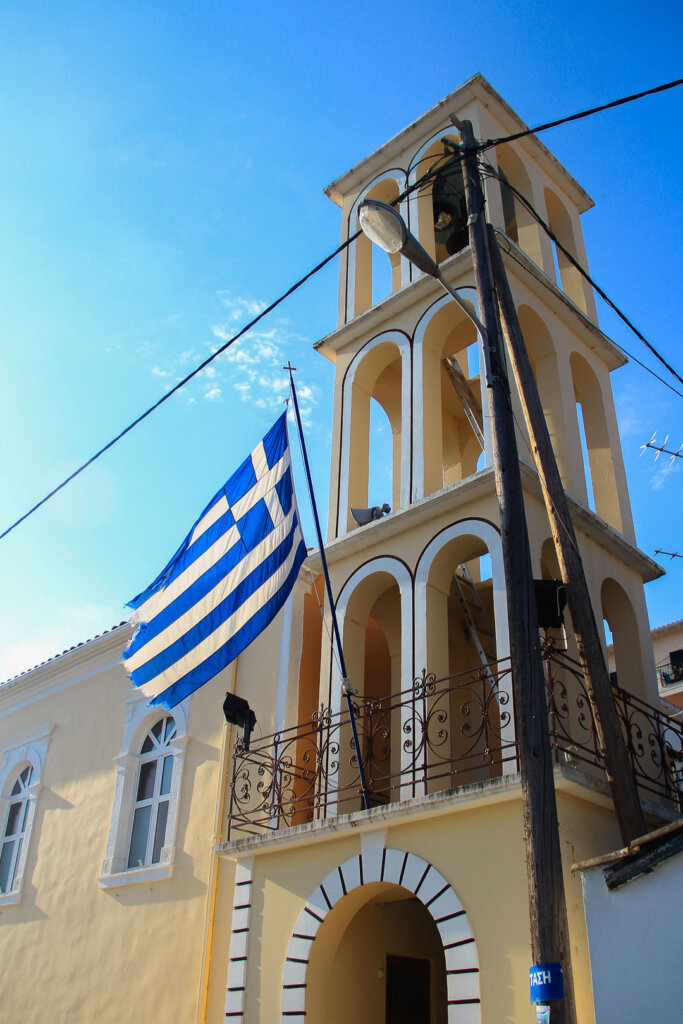
Spartochori village sits on the hill above, fifteen minutes up a steep path. At the top a village square with a plane tree, a kafeneion where men have been playing backgammon at the same table for forty years, and a view over the water to Lefkada and Skorpios.
Day 7, Filiatro Beach, Ithaca: The Last One
The last morning starts gently – breakfast on board, one final swim stop in a hidden bay the skipper knows, then the sail back north to Lefkada Marina.
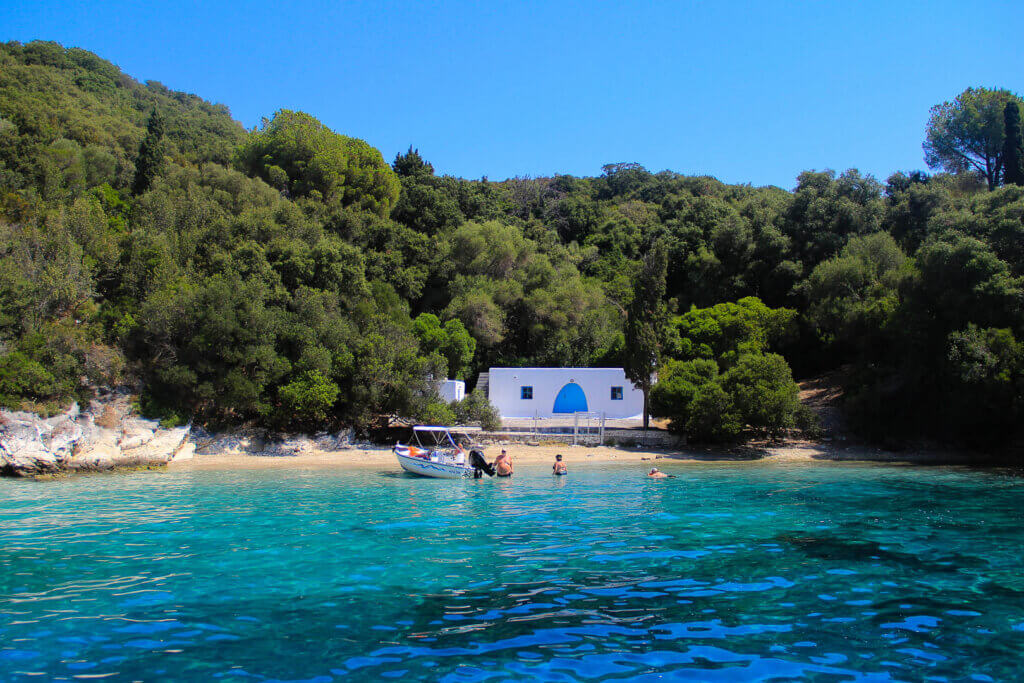
Watching the coastline you’ve spent a week exploring recede behind you is its own particular feeling. You’ve been to places that don’t have roads to them and had breakfast in coves that don’t have names on most maps. You’ve watched the light change over Fiscardo and swum in the Blue Caves before anyone else was awake and eaten fish at a table six inches from the water in Meganisi.
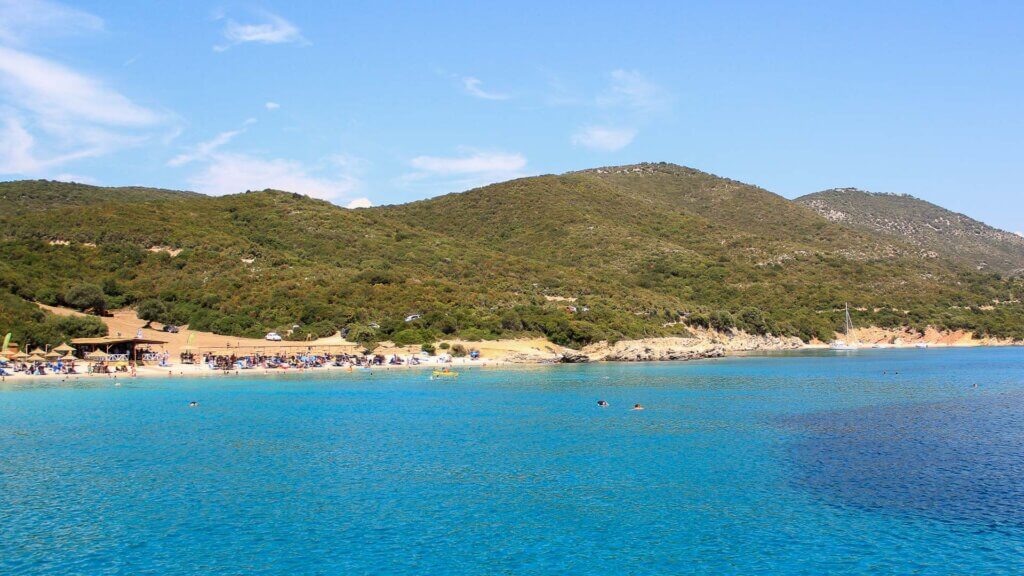
The farewell dinner is on board the last night in Lefkada. By this point the group of strangers who showed up with luggage on Saturday have usually made plans to sail together again next year.
Disembarkation is Saturday morning at 9am.
Is Sailing the Ionian Islands Worth It?
Without qualification, yes. The Southern Ionian is the version of Greece that has not been fully processed for tourism yet. Kefalonia, Ithaca, Meganisi, Zakynthos away from the crowds. Places that still feel like Greece rather than a set dressed to look like it.
The full crew format means nobody has to be responsible for anything except enjoying themselves. That is the version of a sailing holiday that converts people permanently.
How to Book Something Similar
If sailing the Ionian Islands is calling, the easiest way to book a similar route without organising a private charter is this 8-day crewed gulet itinerary through Kefalonia, Fiscardo, Meganisi and Ithaca. Prices from €879 per person with meals mostly included. It books up well in advance so worth checking availability early, especially for summer departures.
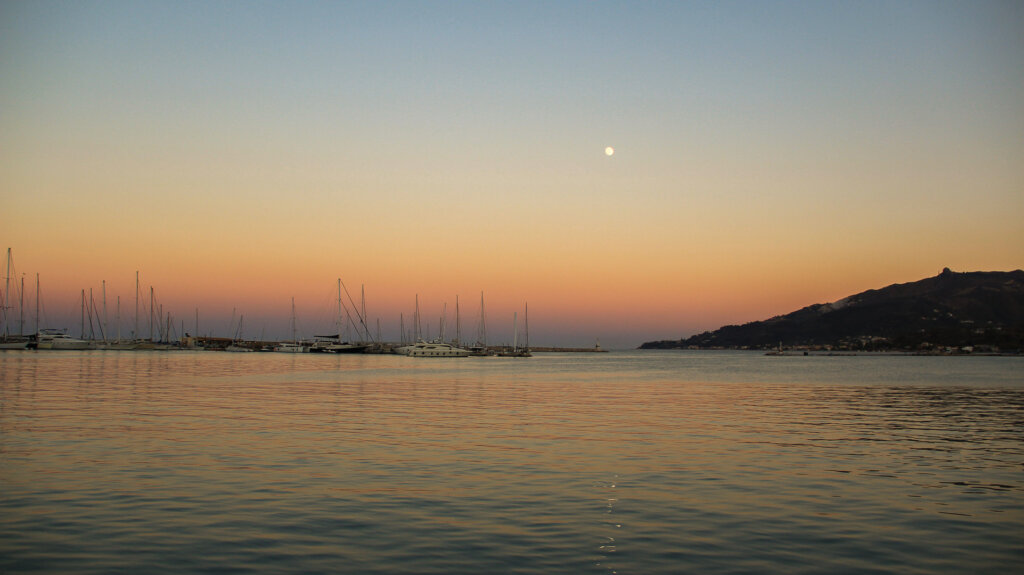
Where to Stay Before or After Sailing the Ionian Islands
Where to Stay in Lefkada
Depending on which route you take, you will either be starting and ending in charming Lefkada or in fabulous Zakynthos.
Book Eunoia Porto Katsiki if you want to wake up minutes from one of the most dramatic beaches in the Ionian, with a pool, sea views, and a host who already knows the island better than any guidebook.
Travelling as a group? Reserve Feel Zen Villas for a six-bedroom villa with a private pool, sea views, and enough space that nobody has to compromise.
Where to Stay in Zakynthos
Book Bitzaro Boutique Hotel if you want to stay right in Zante Town, five minutes from the waterfront, sea view rooms, a good breakfast, and a team that genuinely looks after you. The right base if you want to explore the town properly after disembarkation.
Want to splurge? Book Lesante Cape for a five-star resort built to look like a traditional Greek village, with a private beach, four restaurants, a spa, and views across to Kefalonia. A Leading Hotels of the World property that earns the label!
Travelling as a group? Book Arismari Luxury Villas for a four-bedroom stone villa right on the seafront in Vasilikos, private infinity pool, hot tub, and direct beach access in the Natura 2000 protected zone where sea turtles nest. The kind of place you genuinely do not want to leave.
As for the sailing itself, I did this route with Med Sailing Holidays, just the honest recommendation.
Map of the Ionian Islands We Sailed
Practical Notes to Sailing the Ionian Islands
When to go: May, June and September are the sweet spots – warm enough, less crowded, calmer seas. July and August are peak season; beautiful but busier at the popular stops like Fiscardo.
What to pack: Soft bags only, not hard suitcases – storage on a catamaran is awkward with rigid cases. Reef-safe sunscreen (some bays require it). Seasickness bands if you’re unsure, though a catamaran is significantly more stable than a monohull. A light layer for evenings -even in summer the deck gets cool after dark.
Travel Insurance: Travel insurance is essential for a sailing trip. I recommend SafetyWing which covers water sports and sailing activities. It’s worth checking your policy covers this specifically before you go.
Getting there: Lefkada is a 4-hour drive from Athens, or fly into Preveza/Aktion airport (PVK) which is 20 minutes from the marina. For the Viator trip, fly into Zakynthos (ZTH).
Budget beyond the boat: Meals ashore, drinks and excursions (Melissani Cave, scooter hire in Kefalonia). Budget roughly €50-80 per day for extras if you want to eat well ashore most nights. For spending on the islands, I use Wise to avoid bank fees on card payments and cash withdrawals. It saves more than you would expect over a week of taverna meals and port fees.
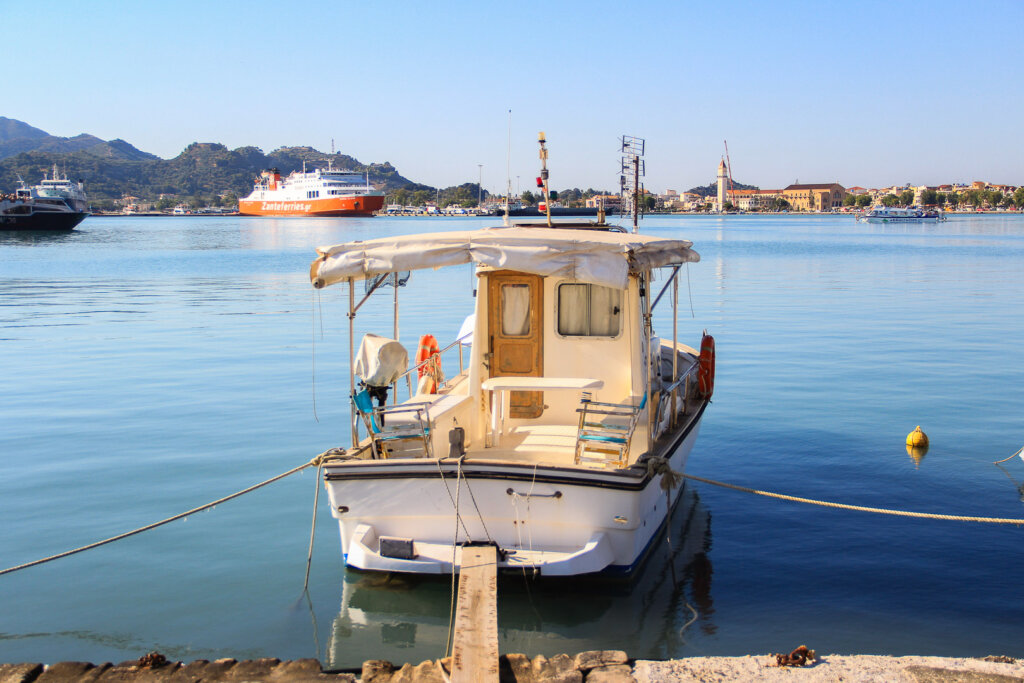
FAQ for Sailing the Ionian Islands
How much does a Southern Ionian sailing holiday cost? A shared gulet cruise like the one linked above starts from around €879 per person for eight days with most meals included. Private catamaran charters are a different product entirely and typically start from €1,500 to €2,000 per person depending on group size and season.
Does the bookable cruise follow exactly your route? Not exactly. My route started from Lefkada Marina. The Viator cruise starts and ends in Zakynthos, which is further south. The core islands, Kefalonia, Fiscardo, Meganisi and Ithaca, are the same. Think of it as the same archipelago from a different starting point.
How far in advance should I book? For July and August, three to six months minimum. For May, June and September a few weeks is usually enough but availability goes faster than people expect.
Planning more of the Mediterranean? Croatia’s Dalmatian coast is the perfect companion trip. Here’s the full 7-day Croatia itinerary covering Zadar, Split, and Dubrovnik with the best boutique hotels at every stop.
If sailing is your way of seeing the world, two other trips tend to have the same effect. The Galapagos by small ship expedition is the one that recalibrates everything, islands that exist on their own terms, completely indifferent to tourism. I wrote about what to expect on a 3-day Galapagos cruise here. And if being underwater matters as much as being on the water, sailing on a Komodo liveaboard is the other trip worth planning a whole journey around.
This article contains affiliate links. If you purchase using these links, I earn a small commission at no additional cost to you. Thank you for your support! I only recommend services and tools I know and trust myself.