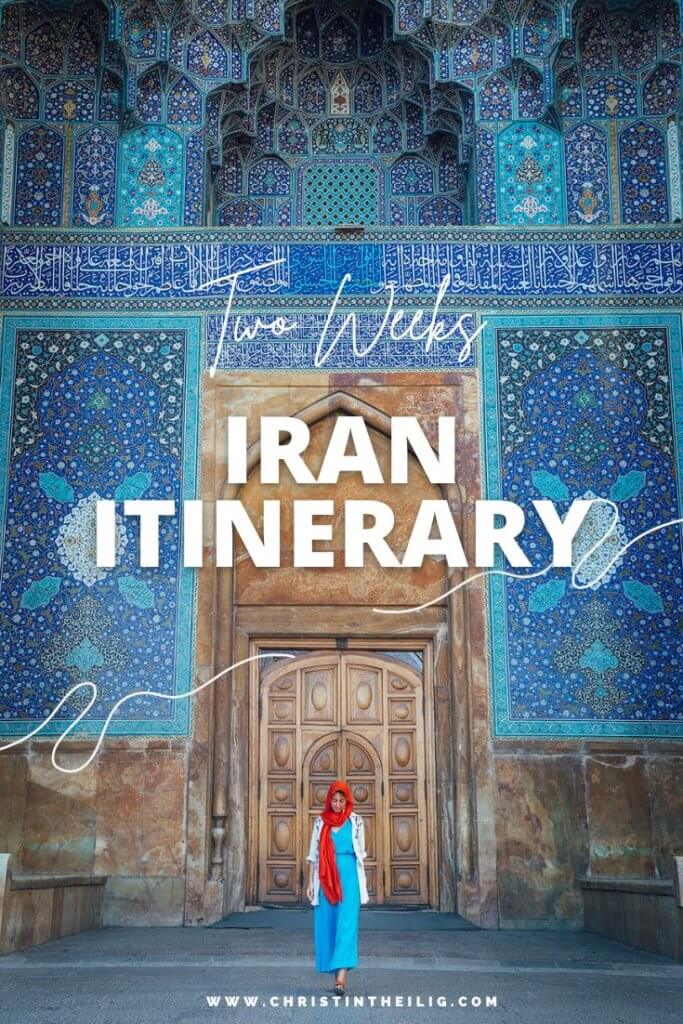
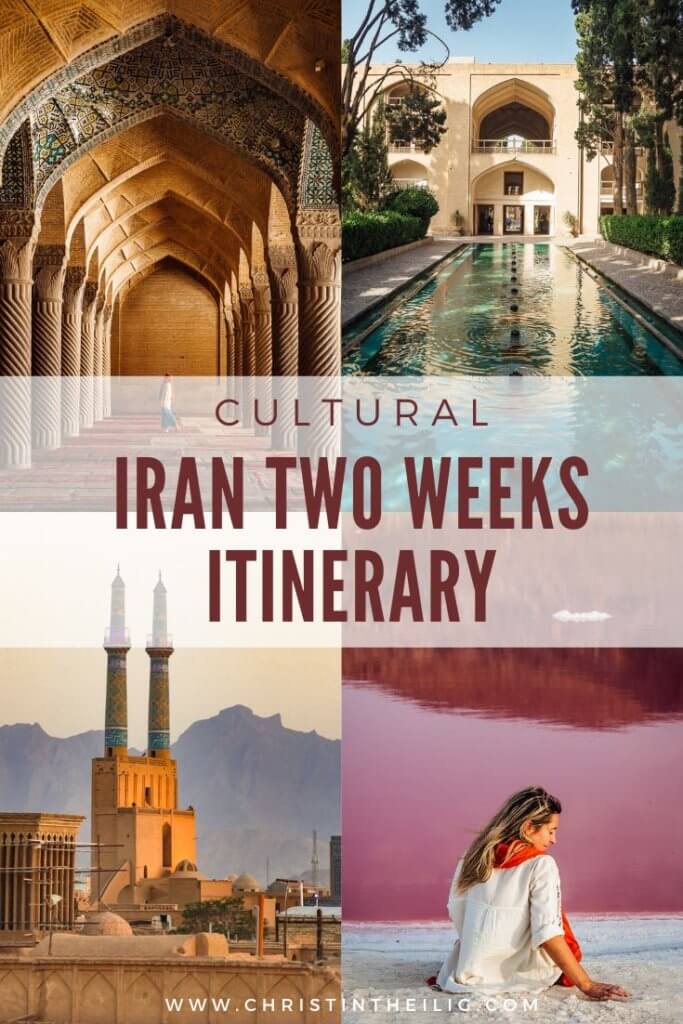
If you have ever played with the idea of visiting Iran, this travel itinerary covers the most amazing places to visit and what to know before. Iran still seems to be more of an offbeat place to travel for the adventurous ones, but it doesn’t have to be!
This itinerary is designed for independent travelers who want to understand Iran before they book a flight. It’s for photographers, curious travelers, and people who care about culture, not checklists. You don’t need a tour for most of this route, but you do need preparation.
I’m not gonna lie, I was a little bit more intimidated to come to a country where visa requirements are tighter, where the dress code is stricter (for women) and where you need to plan your budget in advance.
However, since the day I arrived, I’ve been greeted by nothing but the friendliest, warmest Iranians who showed me their city, shared their culture and tea with me and made me feel so welcome.
Covering a vast area, Iran is the second-largest country in the Middle East, ranging from waterfalls, hot springs, rainforests, tropical beaches and magical deserts. This Iran travel itinerary also includes modern and culturally rich cities that will surely enchant you just as much as they did me!
However, the best thing about Iran might not be the mosques and sights, but its people.

Important Tips for Your Iran Travel Itinerary
Iran, also known as Persia, is an Islamic state where Farsi is spoken. Historically, it was ruled by the Shah until the 1979 Iranian Revolution led by Ayatollah Khomeini transformed the country’s political landscape. Today, women can own property, work, and vote, although traditional family roles are still common.
Before you plan routes or hotels, these are the non-negotiables for traveling Iran independently. This is where it can get overwhelming, but once it’s sorted, the rest of the trip is surprisingly easy.
Visa – Is it Hard to Travel to Iran?
To get a tourist visa for Iran, you can either apply directly at the Ministry of Foreign Affairs yourself or go through an agency if you want to have a stress-free experience. I used TAP Persia and was super happy with the service. They guide you through the process, help with your itinerary, and are available for any questions during your stay.
The process is simple: you receive a code via email, pay the visa fee, and then pick up your visa at the airport in Iran upon arrival.
Timing depends on your nationality. If you’re not from the United States, Canada, or the UK, apply at least 8 working days before your trip. Citizens from these three countries need to apply 2–3 months in advance, and the process is slightly different.
For US citizens, travel is only possible as part of an organized tour, with a designated guide accompanying you from the airport to departure.
Iran Visa Cost: 75 Euros or 82 Dollars
Money in Iran: How to Pay, Mah Card, and Cash Tips
Foreign credit and debit cards do not work in Iran. Because of international sanctions, Visa, Mastercard, and all non-Iranian bank cards are blocked. This means you should arrive with enough cash to cover your trip, ideally in Euros, US Dollars, or British Pounds, which are easiest to exchange once you’re there.
To avoid carrying large amounts of cash every day, I highly recommend getting a Mah Card. It’s a prepaid travel card created specifically for short-term visitors to Iran. With it, you can pay in most hotels, restaurants, shops, and even taxis.
You can either preload the card online before your trip or meet a Mah Card representative after arriving in Tehran, who will load it for you in person. That’s what I did, and it made traveling around Iran much easier and less stressful. At the end of your trip, any unused balance can be refunded.
Honestly, this card changes the whole experience. It lets you move through the country more freely without constantly worrying about cash.
What Do I Wear in Iran?
If you are a woman, remember to dress in clothes that cover your legs/upper arms before you board the plane and take a scarf with you. You only need to put it on once you leave the plane, though.
Insurance
Check if your travel insurance covers Iran and see if you can include it in your current insurance. TAP Persia also offers Iran insurance for the duration of your stay! When you arrive at the airport, you will likely be asked if you have insurance.
SIM Card
Personally, I had problems with the registration of my passport at the airport SIM card store, so I got my SIM card from the hostel. The price for Irancell is around 7-8 Euros for 10 GB of data. You can make the whole experience easier by just buying an eSIM beforehand.
Iran VPN
The Iranian Government blocked several social media and communications platforms, such as Instagram, Facebook, YouTube, Twitter, and also applications from the US.
Before you enter the country, make sure to sign up for ExpressVPN. I used it and totally recommend it as the best choice to access international apps and social media!
The internet in Iran is good for simple tasks. I had no issues with WiFi in places like Tehran, Kashan, or Isfahan – except Yazd and Shiraz, where the quality in hotels/guesthouses was more choppy.
Sites you can freely use without a VPN in Iran: WhatsApp, Google, Gmail
Iran Hotel: Where & How to Book
The current entry requirements in July 2022 required to show proof of booking of your first night in a hotel or guesthouse.
You can find many guesthouses, hostels or small hotels on Hostelworld these days. As part of this Iran travel itinerary, you can book hotels on Trip and Iran’s popular 1stQuest hotel booking site. I found it easiest to check on their availability through WhatsApp or Instagram, as none of the previously mentioned websites reliably show the hotel’s availability (it is apparently rare for hotels to update this).

Is it Safe to Travel to Iran?
Travelling through Iran for two weeks as a solo female traveller has been nothing short of amazing. The ease of getting from one city to another, a feeling of safety no matter where you are (besides when crossing the road), the possibility to pay with a card wherever you go, and the hotels having staff working 24/7 just added a cherry on top.
One more thing to add for female solo travel – in all two weeks of my Iran travel itinerary, I have not encountered any form of sexual harassment or catcalling.
I’d say if you come here, have an open mind and trust that the people who approach you really are that curious to see you, happy to practice their English. Iranians really are unique in their being, more charming and jokey than serious, more welcoming than judging.
Iran Two Weeks Itinerary Map
Map of all the sights you get to visit when on your Iran Travel Itinerary:

Iran Travel Itinerary: 2 Weeks from North to South
Tehran (1-2 Days)
Tehran is the capital of Iran with about 8.6 million inhabitants. It’s a huge city with a developed metro network that covers the whole city. In the Northern part, you find the wealthy residential areas with high-end restaurants and boutiques, whereas the South tends to be a more historic part of the city.
From the airport, I recommend taking a taxi, which will probably cost around 10 US Dollars/Euros. There is also a train and metro that go into town. It’s not the fastest and you might need to change it a few times. However, it’s the cheapest option for a ticket price of 165.000 IRR.
If you have some extra time, I’d spend a good 3-4 days in the city to really find some hidden gems!
Where to Stay in Tehran to Explore the City
Tehran is big and a bit chaotic, but choosing the right hotel turns your first few days in Iran from overwhelming into genuinely enjoyable. The city thrives on contrasts -regal palaces sit near busy boulevards, leafy parks hide treasure-filled museums, and your hotel can make your whole experience.
Luxury: If you want service, you can actually relax into after long days of wandering bazaars and museums. Espinas Palace Hotel delivers just that. Rooms are spacious and calm, the breakfast buffet is one of the best in the city, and the staff speak excellent English. The location also makes it easy to reach the metro or taxis for quick city access.
Mid-range: Gran Miras Hotel is a solid in Tehran if you want comfort, privacy, and a more international hotel feel. The rooms are modern, clean, and well soundproofed, which makes it a good base after long days exploring the city.
Budget: Tehran Heritage Hostel is a great, affordable option and ideal if you want to meet fellow travellers! The staff is super friendly, the rooms are bright and modern and breakfast is included!
Check available Hotels in Iran Here
Golestan Palace
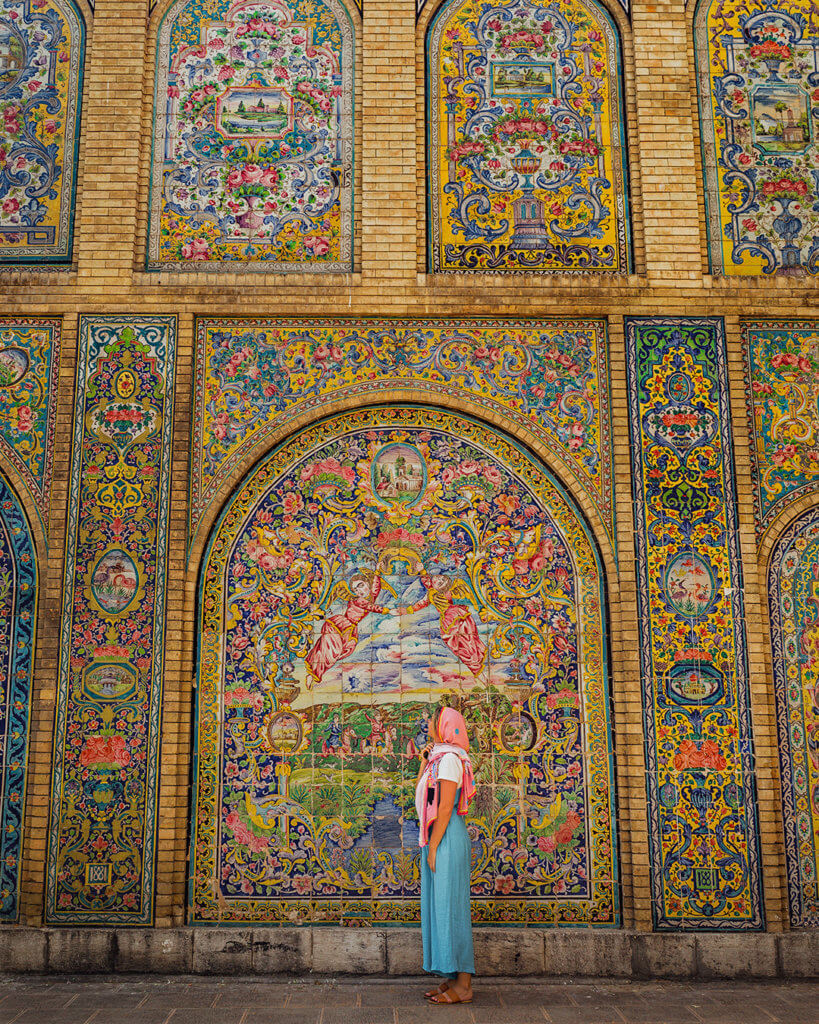
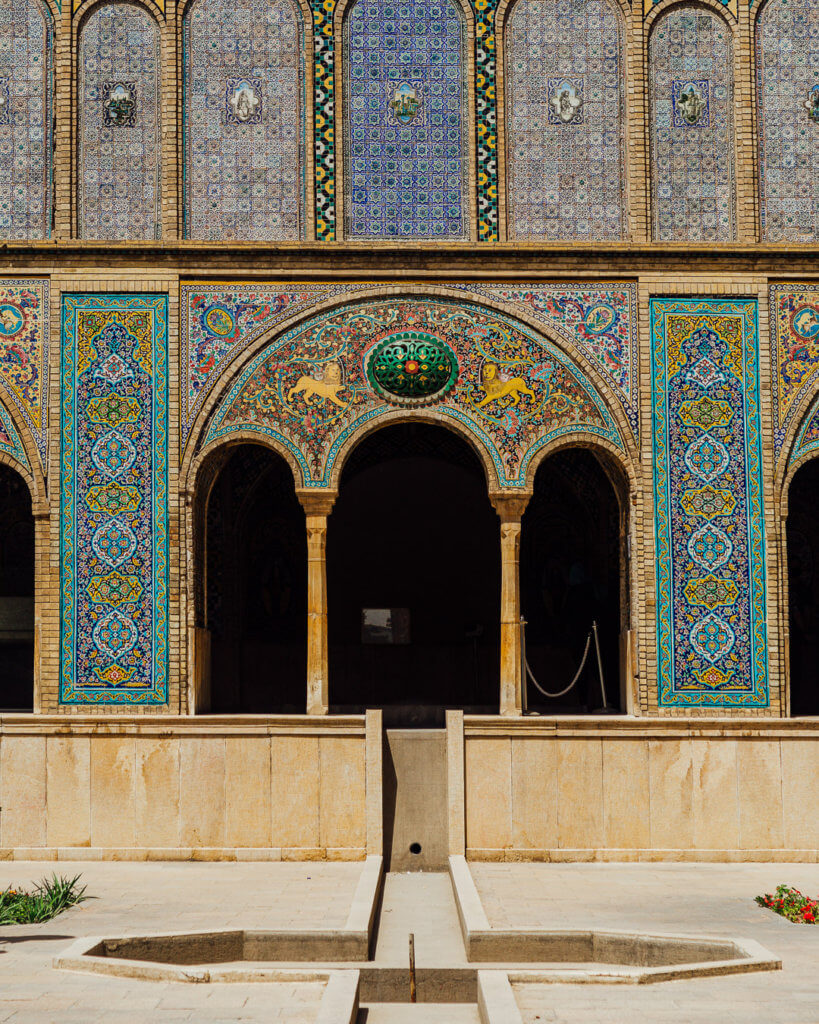
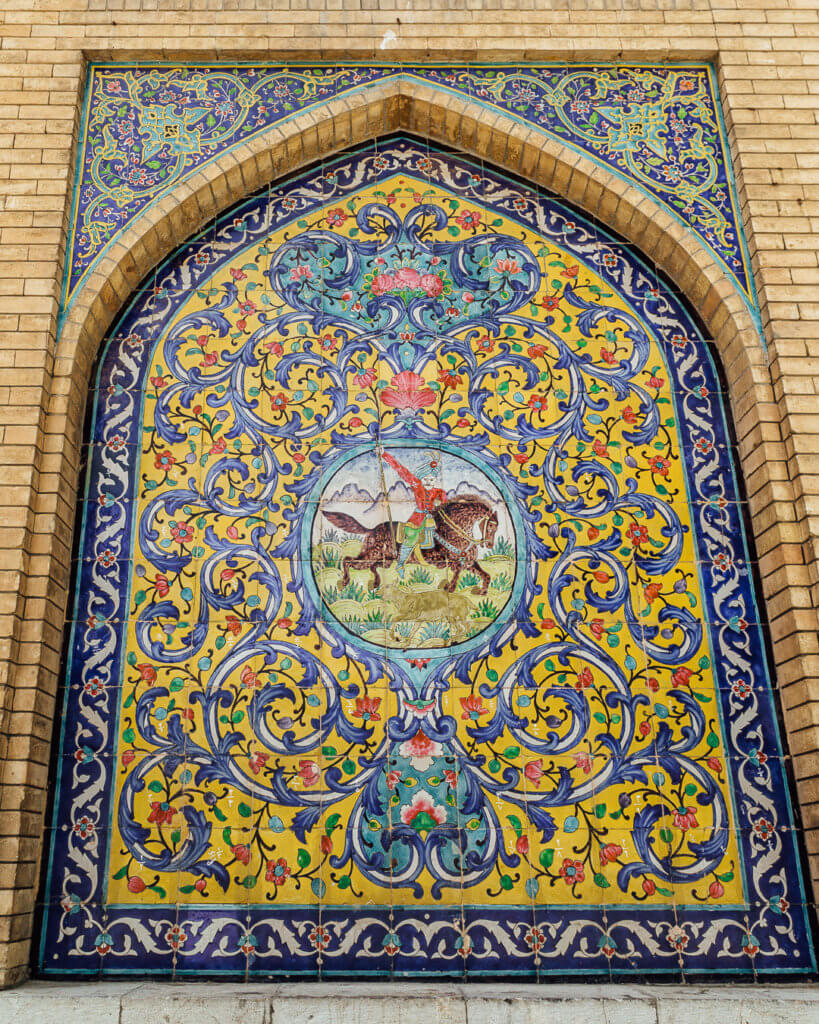
This must be Tehran’s most stunning place and a must on your Iran travel itinerary. The Golestan Palace is a 19th-century former royal residence and built during the Qajar dynasty. It’s Tehran’s oldest government building, registered on the UNESCO Heritage List.
The Golestan Palace consists of 17 structures, including museums, halls and palaces, and a marble throne. For me, the outside facade was the most impressive feature and wandering through the garden provided some fantastic photo locations!
It combines traditional Persian architecture paired with the most stunning mirrorwork and Western influence.
Grand Bazaar Market
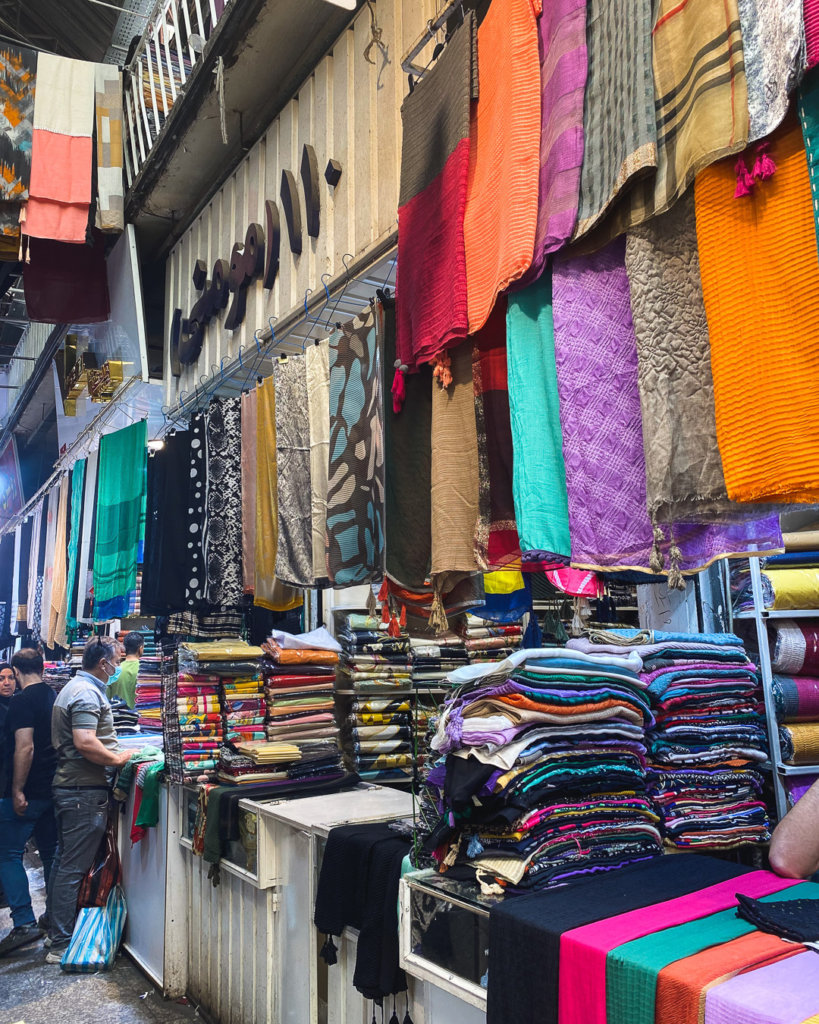
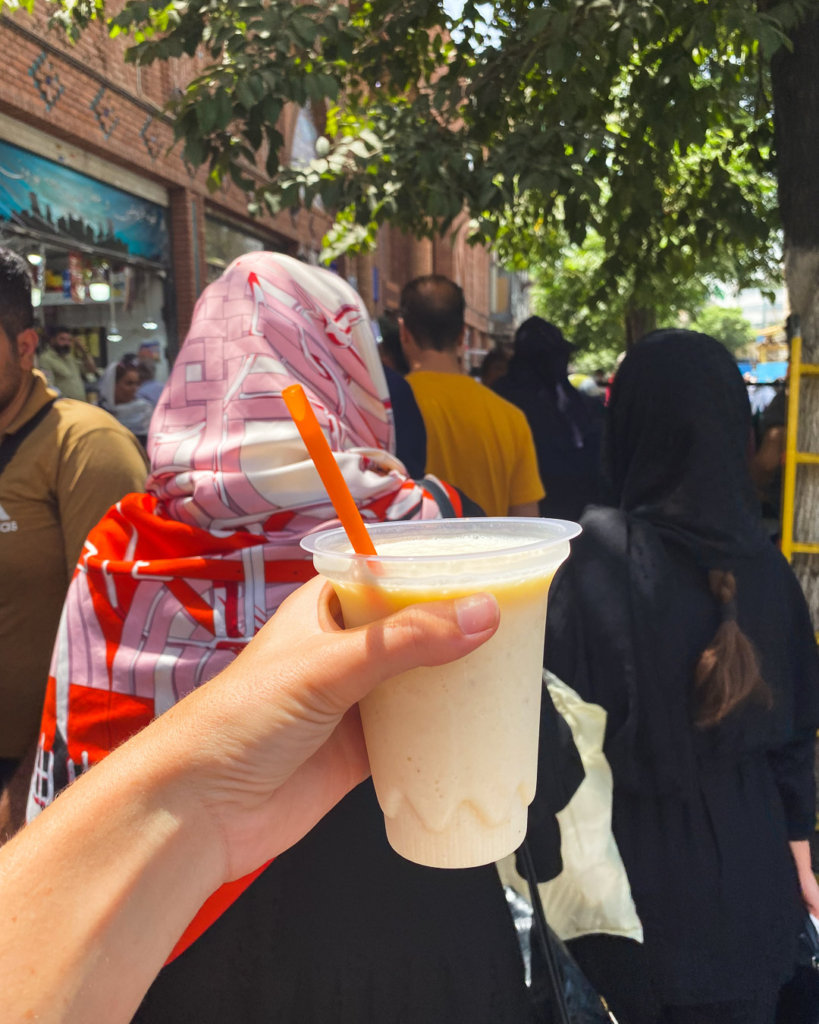
If you start your trip in Tehran, I recommend you visit the Grand Bazaar and the nearby shopping center. It is here where you can find anything from colorful headscarves to tunics and trousers, which you might need for your stay (I know I did). Here you can also find lots of tasty street food, juices and snacks!
Expect to pay around 1 Euro for a scarf and around 3-4 Euros for a tunica.
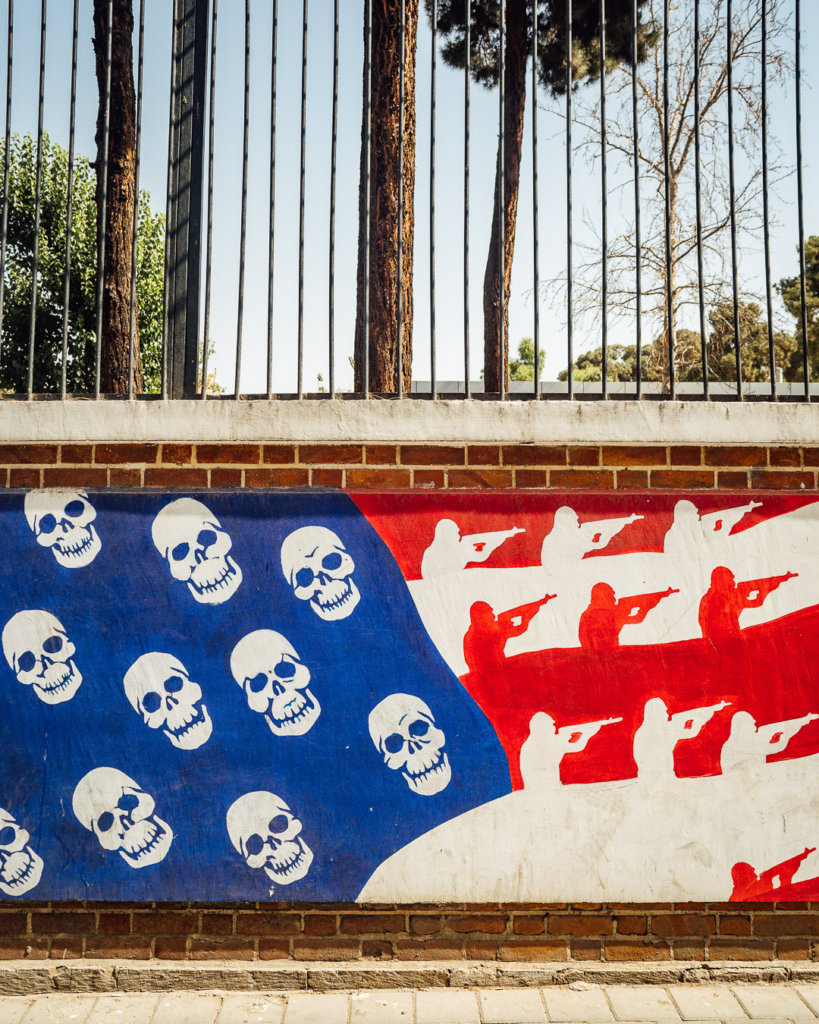
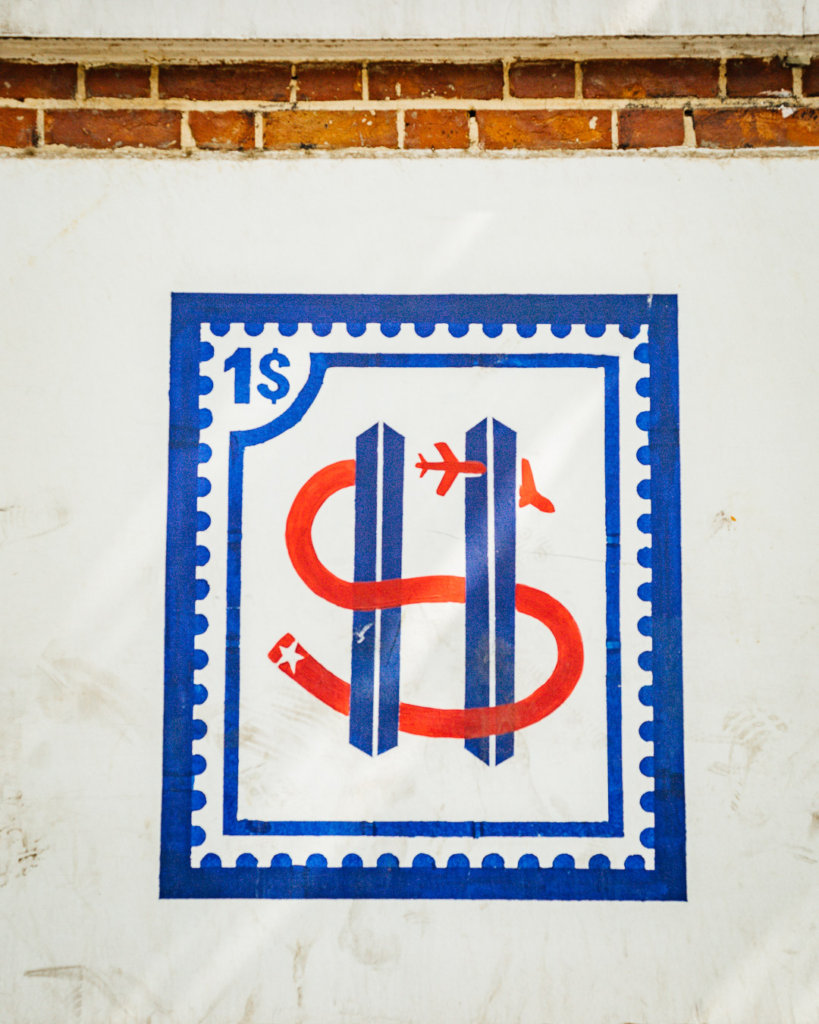
Former American Embassy
In 1979, a group of Iranian students stormed the embassy and held more than 50 Americans hostage for 444 days. Since that day, the situation between the two countries has been difficult.
Nowadays, it’s a museum that you can visit. From the outside, you can find different, ever-changing murals showing anti-US messages.
Tabi’at Bridge
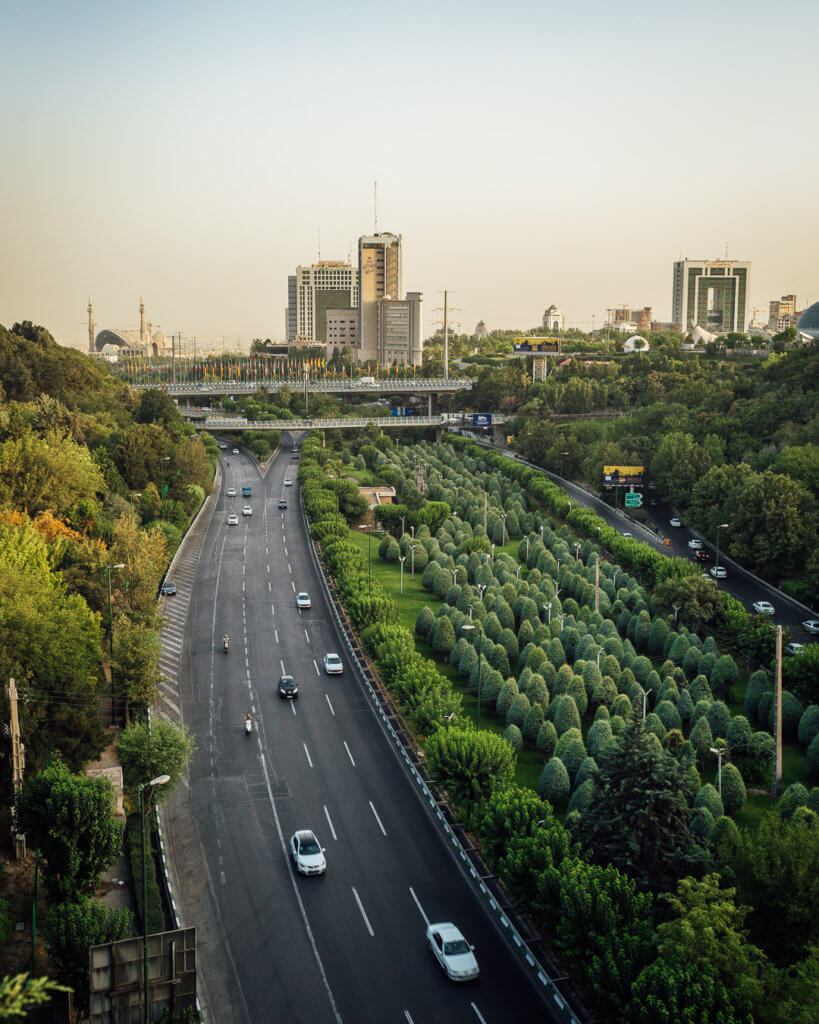
One of the nicest features of Tehran is the contrast between old and new, historical houses and modern architecture. The Tabi’at Bridge is a splendid structure that connects two parks and spans over lots of greenery. From there, you get a fantastic view of Northern Tehran, its mountain range and of the Southern part – perfect to include in your Iran travel itinerary for sunset!

Restaurant Tehran
Moslem Restaurant for great Persian food
Santo Coffee for some real Iranian coffee shop vibe
Getting from Tehran to Kashan
The bus ride is around 4.5 hours and cost 650.000 IRR (2 Euros). Buses depart from Tehran’s southern bus terminal.
Day 3 Tehran to Kashan
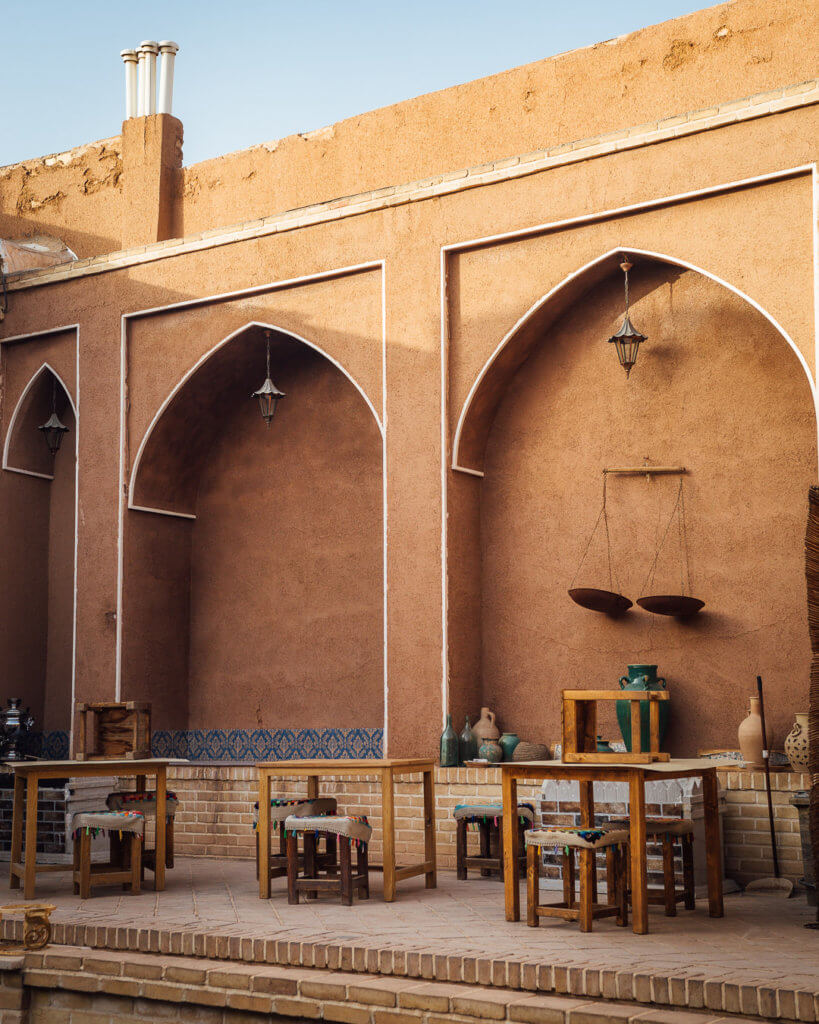
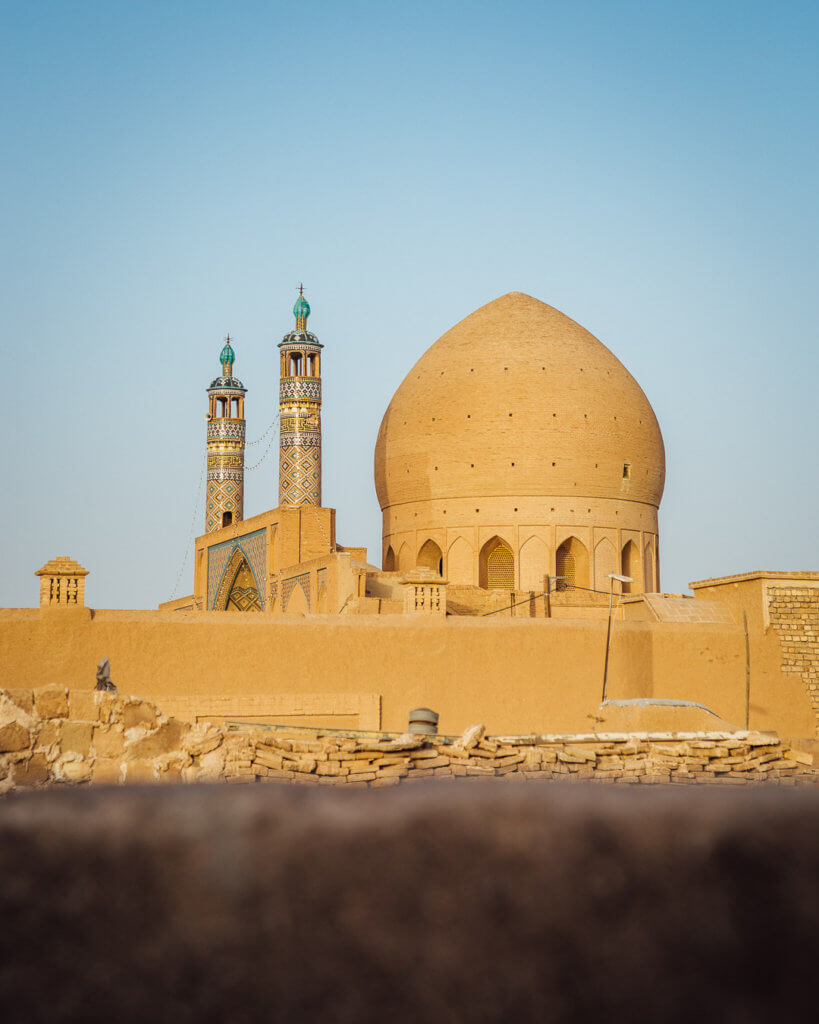
Kashan quickly turned into one of my favorite places in Iran and definitely deserves a spot in every two-week Iran travel itinerary! This oasis desert town in the province of Isfahan is a calm, small town that lets you breathe after some busy days in Tehran. The little lanes of the old town, which are made of mud clay, are incredibly quiet during the day, and together (or maybe because of it), it give the city a magical feeling. I just loved it there!
The weather in Kashan is way hotter than in Tehran, so most shops tend to close between 1 to 5 pm, including the Bazaar.
Where to Stay in Kashan: Historical Houses
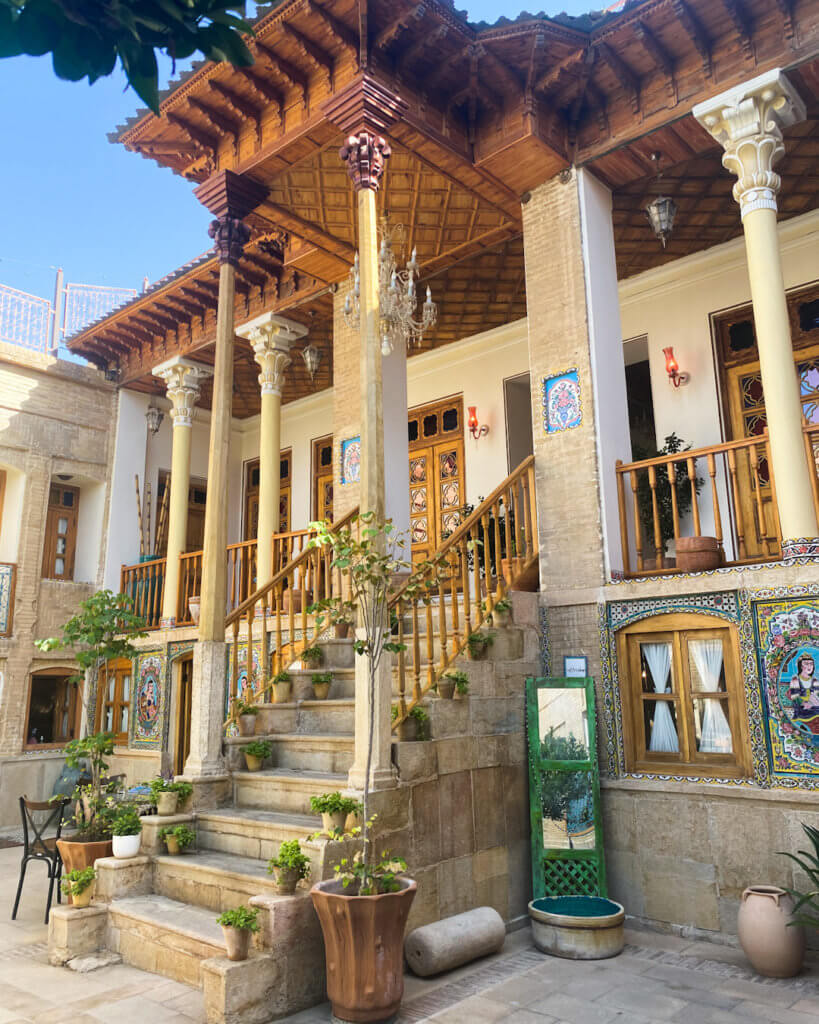
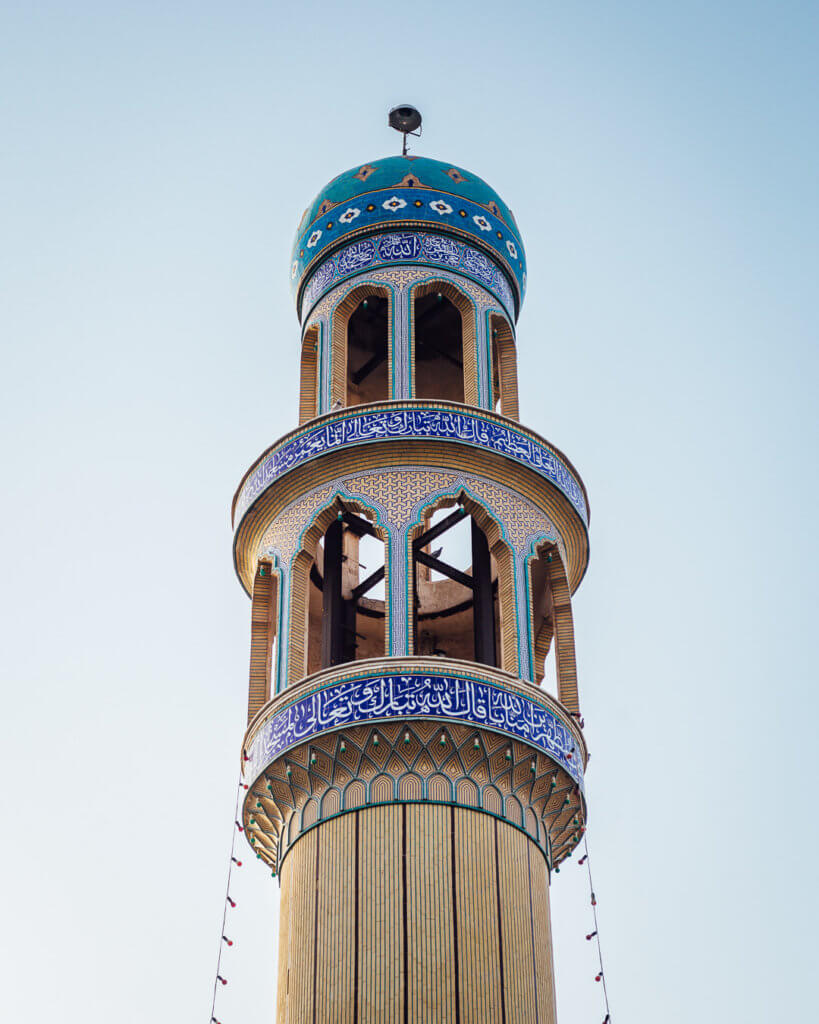
Kashan is one of the best places in Iran to stay in a traditional Persian house. Many hotels are beautifully restored merchant homes with courtyards, stained glass, and intricate plasterwork, which makes staying here feel like stepping into another era rather than just checking into a hotel.
Luxury: Saraye Ameriha Boutique Hotel is Kashan at its best. A beautifully restored historic mansion with courtyards, arches, and that quiet desert-town atmosphere. Staying here feels like part of the experience, not just a place to sleep.
Mid-range: Charming, authentic, and very well located near the historic houses. At Manouchehri Traditional House, you still get the Persian architecture and courtyard feel, just at a more approachable price point.
Sana Historical House, as the name suggests, is a renovated historical house – where if not here, are you able to experience sleeping in a Persian historical house? I found this to be the best choice as its centrally located, offers a tasty Persian breakfast and starts with prices from 10 Euros for a single room.
Grand Bazaar
So in the evening, pay a visit to the authentic Grand Bazaar and experience its liveliness once the sun goes down. Most Iranians flock to public spaces once the temperatures come down.
House of Lucie
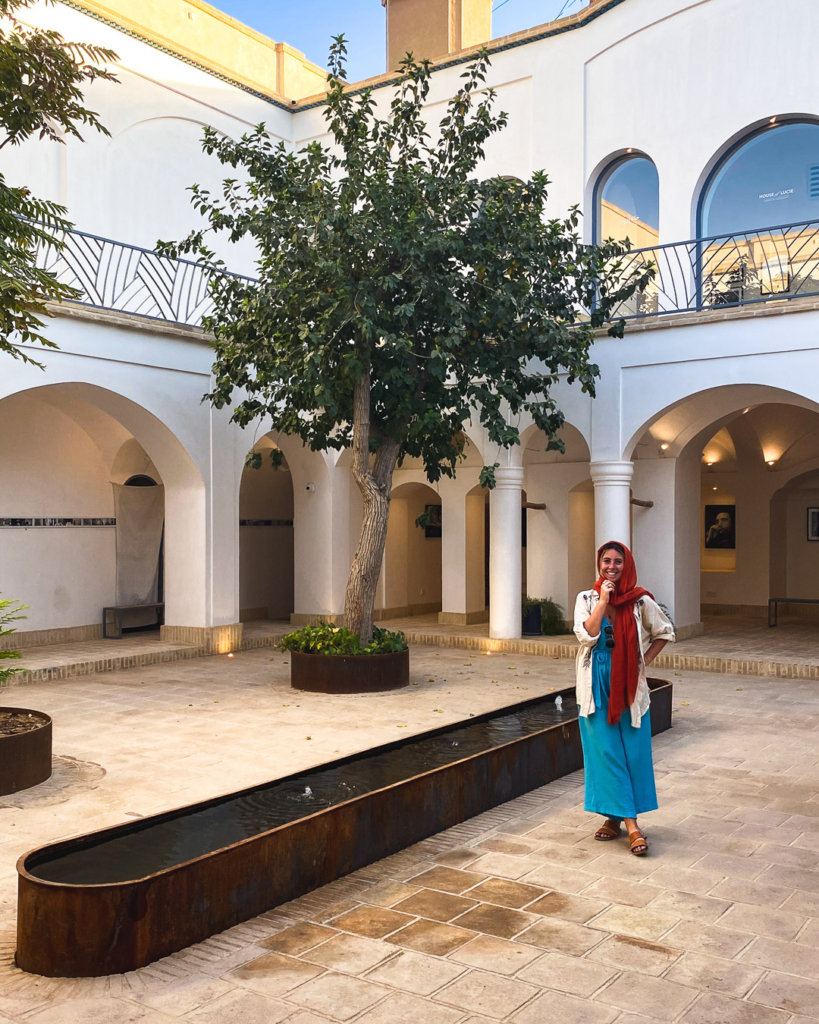
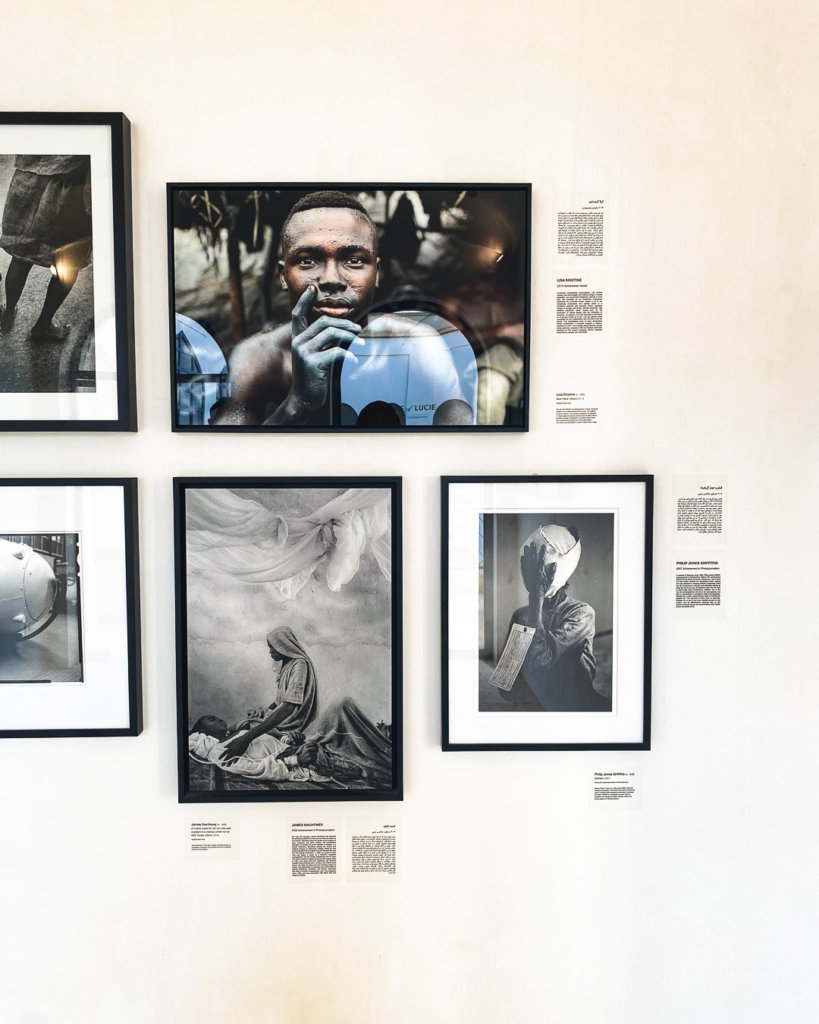
The newest cultural addition to Kashan is a branch by one of New York City’s largest photography exhibition venues called House of Lucie. Settled in a renovated Qajar-era house, this gallery is nothing short of beautiful. It features more than 300 photographs from honored artists
Entry is free.
Day 4 Kashan
Historical Houses
A few of the main ones include the Borujerdiha Historical House, the Tabatabai House, the Abbāsi House and the Manouchehri Traditional House.
Borujerdi House was nominated as the most beautiful historical house in Asia by UNESCO a few years ago. There’s also a love story behind it: when a man fell in love with the daughter of a wealthy family, he appointed a famous architect to construct this house to impress her, with success!
Tabatabaee Historical House is another example of what luxurious life looked like back then. A successful carpet merchant ordered the mansion to be built for his wife. One of the striking features is this 5-door room with colourful windows

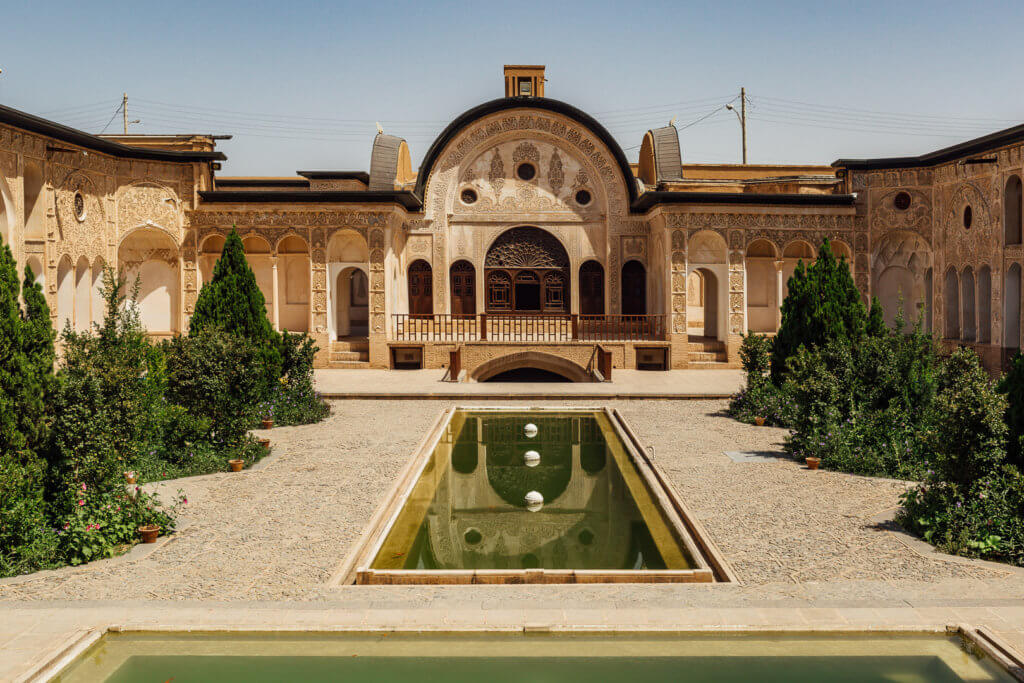
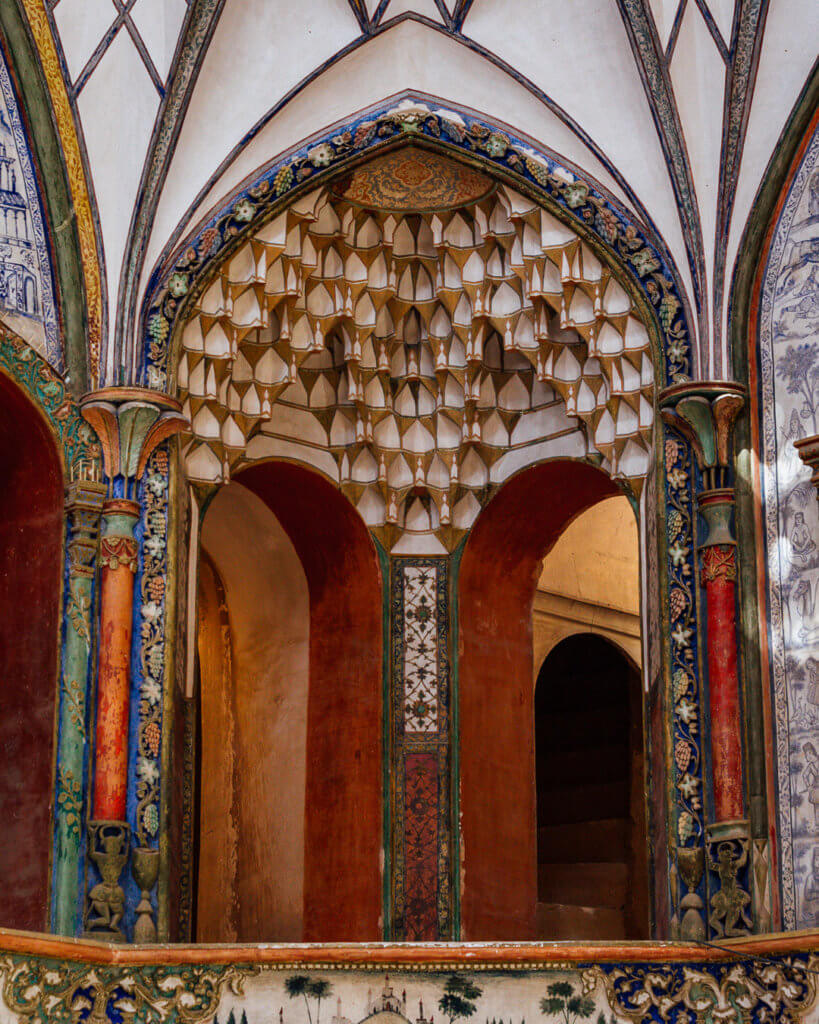
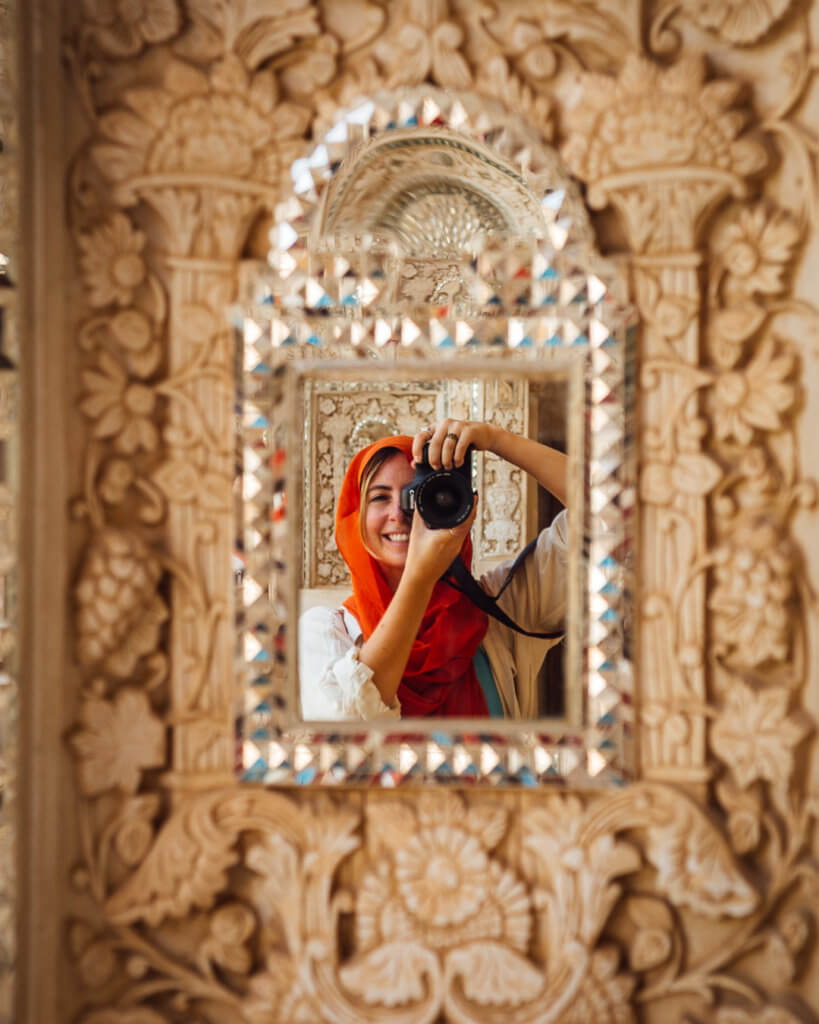
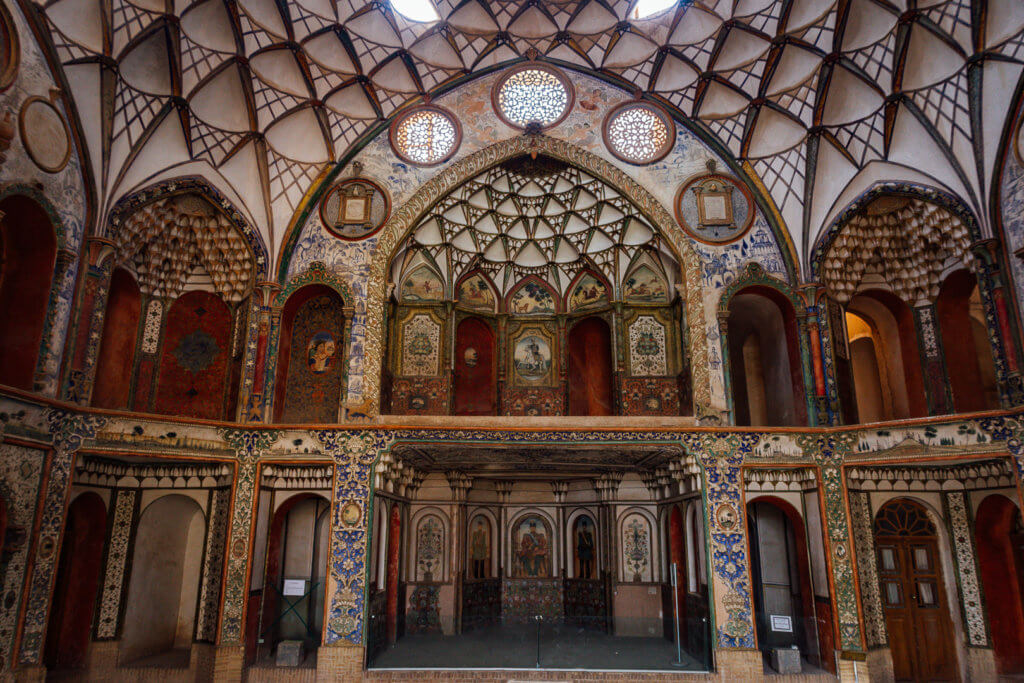
The price per house is roughly 500.000 IRR (2 Euros) and despite what other blogs suggest, no combo ticket allows you to visit multiple houses. Each house has its price.
Have a stroll through the nearby old town and visit the few tourist shops. One famous feature of Kashan is its rosewater production. In the center, you can see the process of how they make it and you can visit a few shops and try it yourself. Iranians put rosewater in almost everything, from their tea to the ice cream. This one is so unique to try when in Iran and definitely should have a place in your Iran itinerary.
There is also a market for infused spice waters like cinnamon water or basil water.
Sultan Amir Ahmad Bathhouse
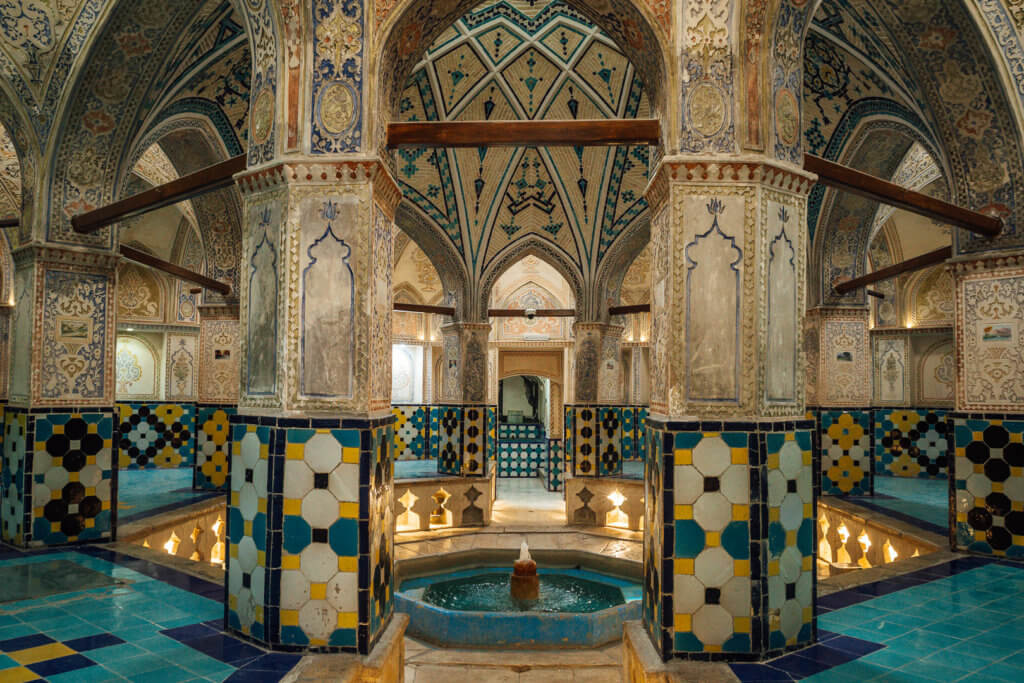
The Sultan Amir Ahmad Bathhouse is an authentic 16th-century bathhouse or hammam with some of the most beautiful interiors. It gives a fantastic insight into the importance of bath culture not only for cleaning purposes but also for social life.
Don’t forget to have a look to the roof for the cute bath
Entry: 500.000 IRR
Fin Garden
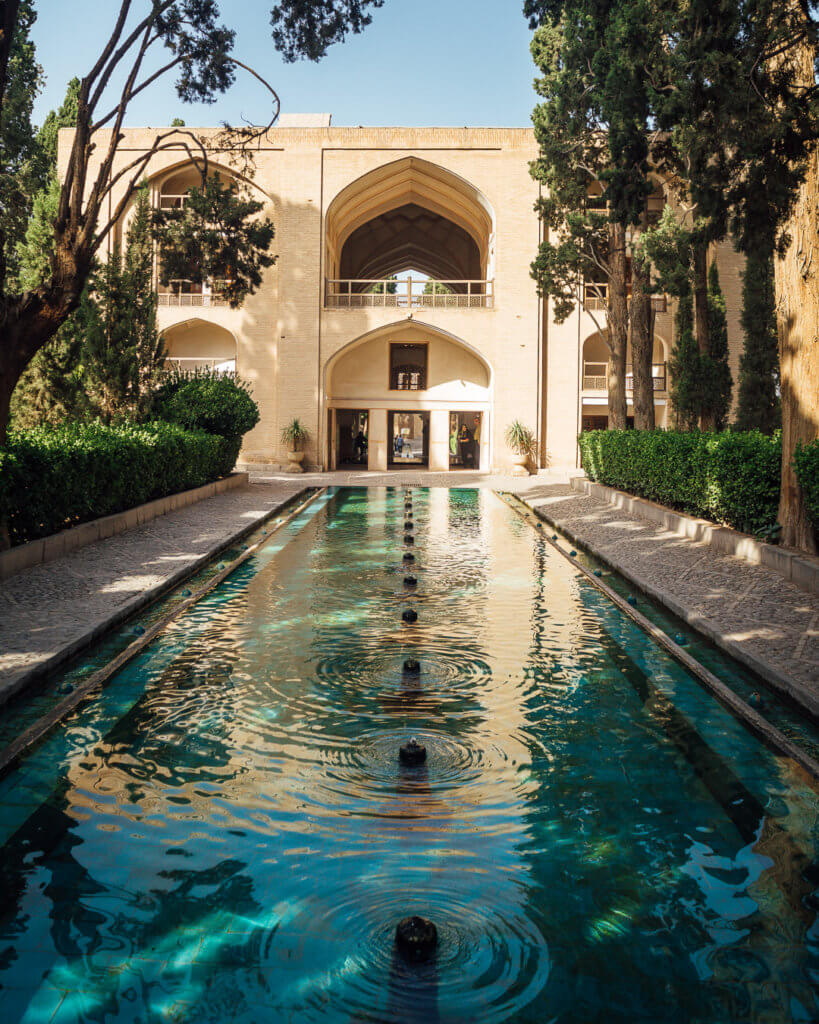
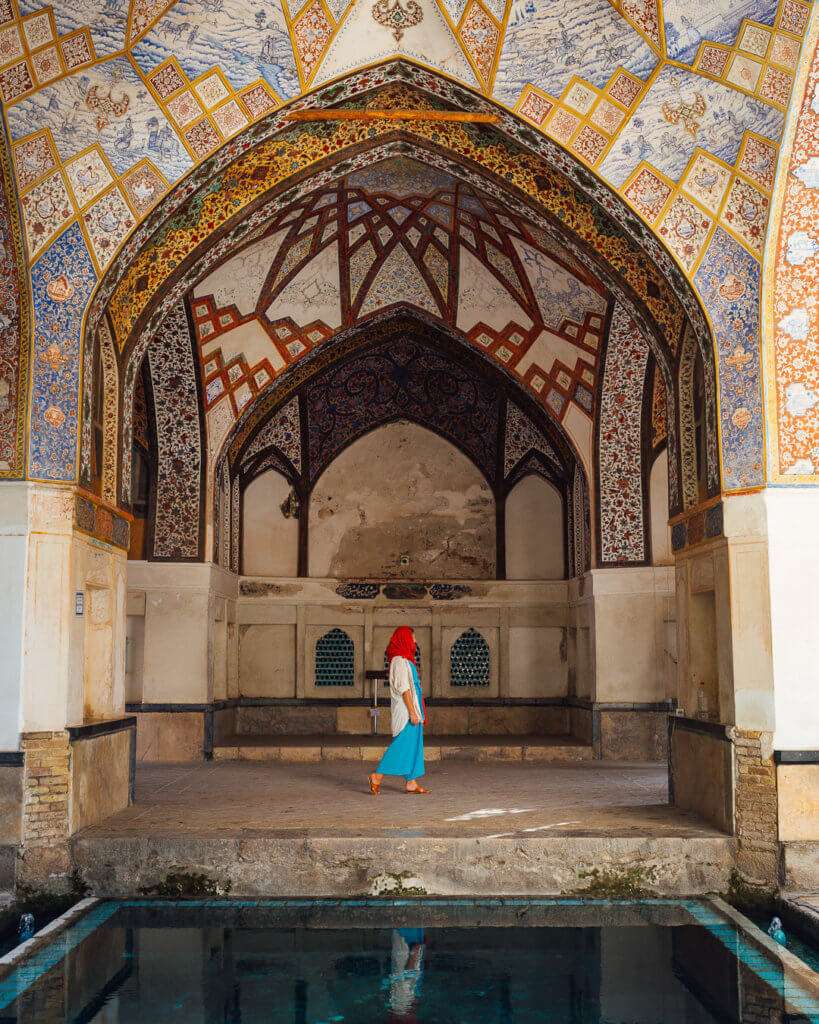
In the afternoon, check out the UNESCO site of Fin Garden. The historical Persian garden is a bit outside of the city centre, but its architecture is outstanding, making it one of Kashan’s highlights. Crazy to think there is so much greenery and water in the middle of the desert!
The garden was completed in 1950, making it one of Iran’s oldest extant gardens. It so deserves a visit on your Iran travel itinerary.
Restaurant Kashan
Sangpoloy Café for coffee or a drink in the evening
Mozzafari Traditional Restaurant
Abbasi Traditional Restaurant
Day 5 Kashan – Abyaneh – Isfahan
Kashan is the perfect place for adventures to the desert (with an overnight stay in a camp) and half-day trips to Abyaneh.
Visit Abyaneh, a traditional Iranian Village
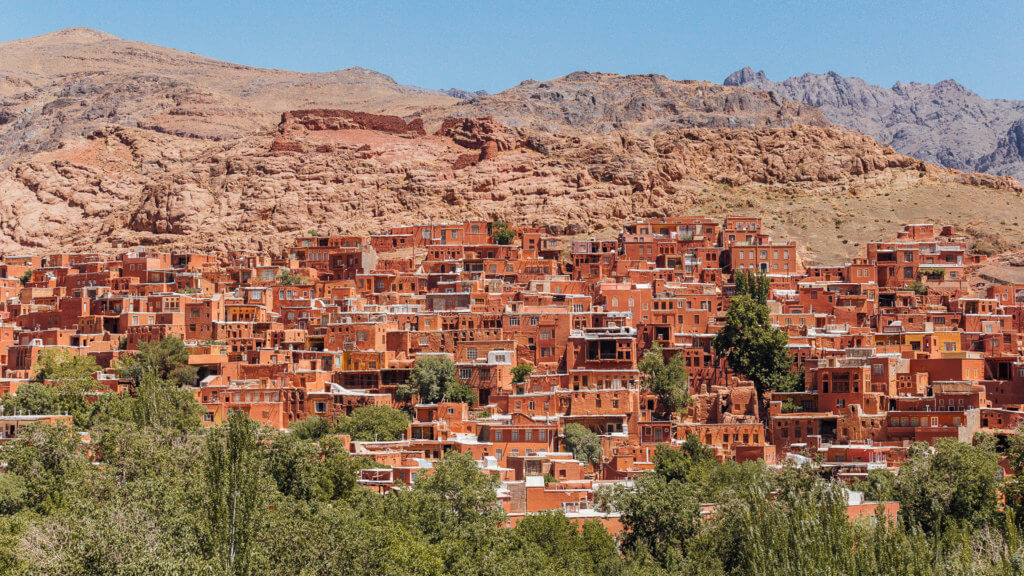
Abyaneh is a 2,500-year-old traditional village around 80km from Kashan. It sits at a higher altitude and people from Kashan frequently visit to escape the heat and picnic in the gardens. The village is mostly famous for its ochre mudbrick houses and red soil – also called the Red Village. In here, the villagers keep the traditions, costumes, and cultures alive till today.
One big feature is the women who, to this day, wear a white hijab with embroidered red flowers and colourful dresses. Have a wander around, drink some chai and soak in this trip to the past! It’s definitely a must for every Iran travel itinerary!

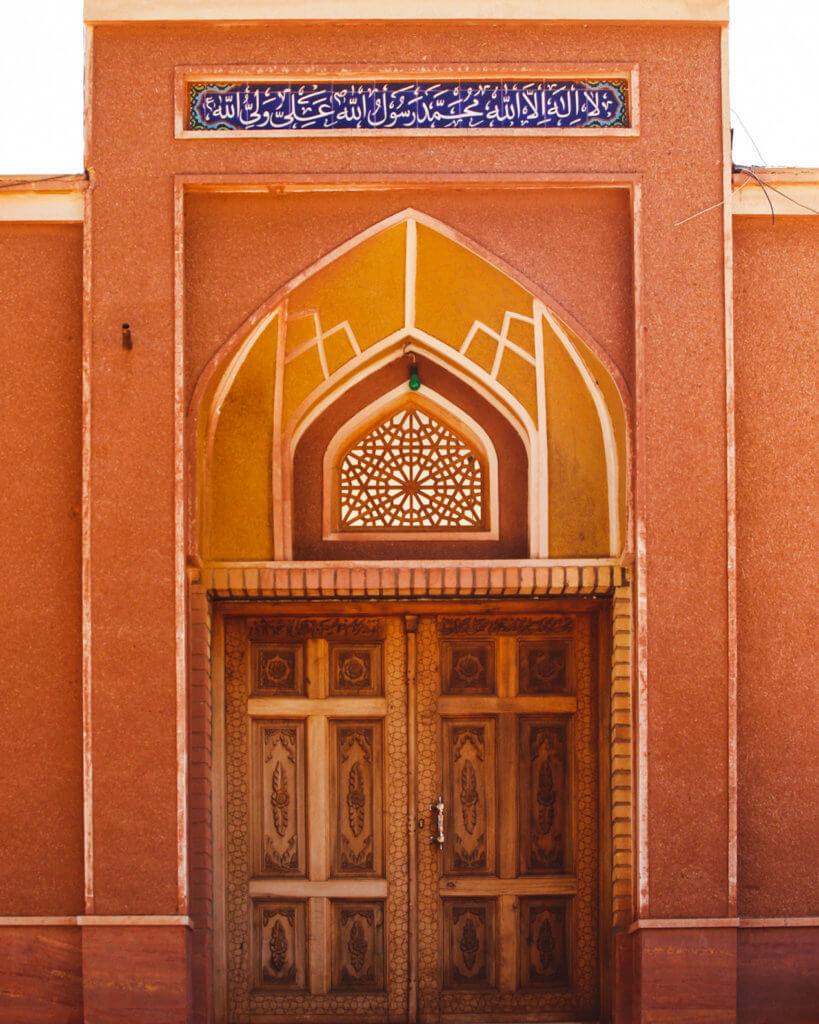

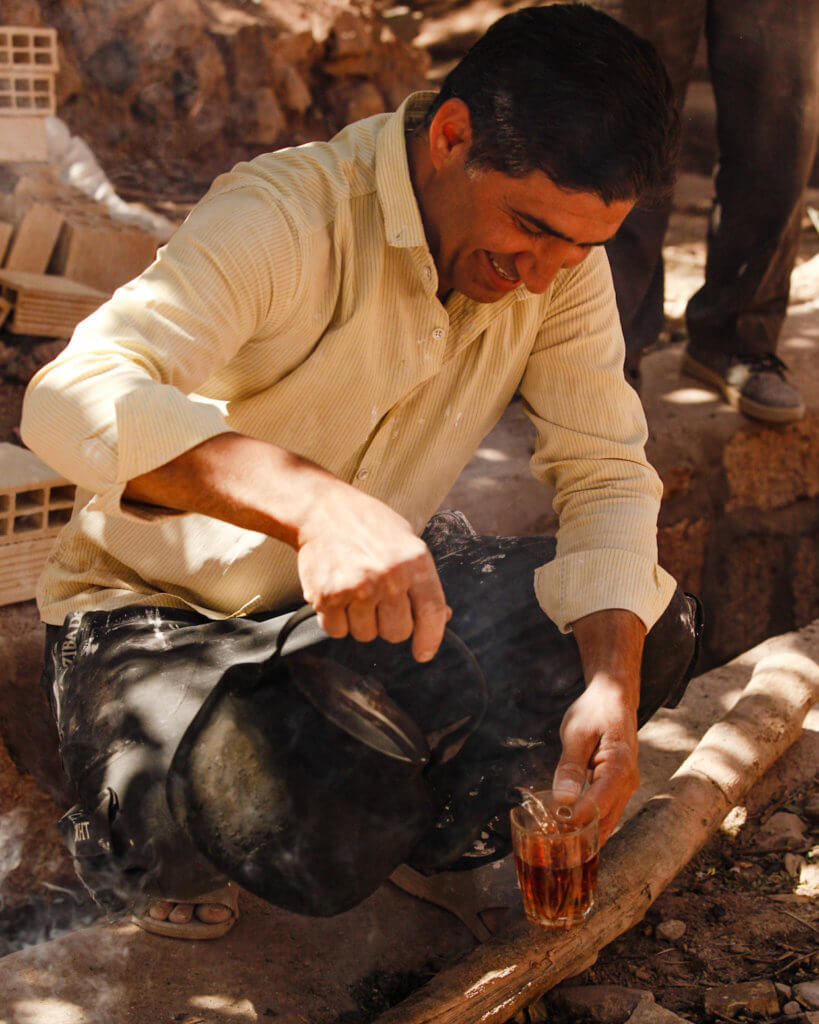
There is also the option to take a private taxi from Kashan via Abyaneh to Isfahan. This option costs around 35-40 Euros and takes the whole day but allows you to tick one of Iran’s oldest villages off the list.
Getting from Kashan to Isfahan
From Kashan, there are hourly buses to Isfahan, which leave from the only bus terminal. The drive is around 2.5-3 hours and cost 500.000 IRR. You can buy your ticket in the bus from the driver – but remember to bring cash!
Note: There are no buses from Kashan to Yazd! You can try to go to Fin Toll Station and wait for a bus that goes to Tehran – Yazd.
Day 6 to 9 Isfahan
Isfahan is Iran’s third biggest city with a population of 2 million people. It’s one of Iran’s top tourist destinations as it hosts sights such as the Shah Mosque, Sheikh Lotfollah Mosque, and Vank Cathedral.

Where to Stay in Isfahan: Traditional Persian Hotels & Courtyard Houses
Isfahan is walkable but spread out, so location is key. I’d stay somewhere central or close to the river, so you can easily explore mosques, bazaars, and still come back to a comfortable base in the evening.
Luxury: The Parsian Kowsar Hotel is perfect if you want space, comfort, and a polished stay. It’s close to the river and bridges, has great facilities, and feels like a proper break after long walking days in Isfahan.
Mid-range: One of my favorite historic hotels in Isfahan is Isfahan Traditional Hotel. Beautiful traditional design, calm courtyard, and walking distance to Naqsh-e Jahan Square. Great value for how special it feels.
Budget: Isfahan Heritage Hostel has fantastic breakfast, lovely new single and dorm rooms and a fantastic atmosphere. The staff speaks great English and is super helpful. It’s perfectly located in the city center, near the Shah Mosque and the Naqsh-e Jahan Square. I’d always stay there again!
Check for available Isfahan Iran hotels here
Shah Mosque
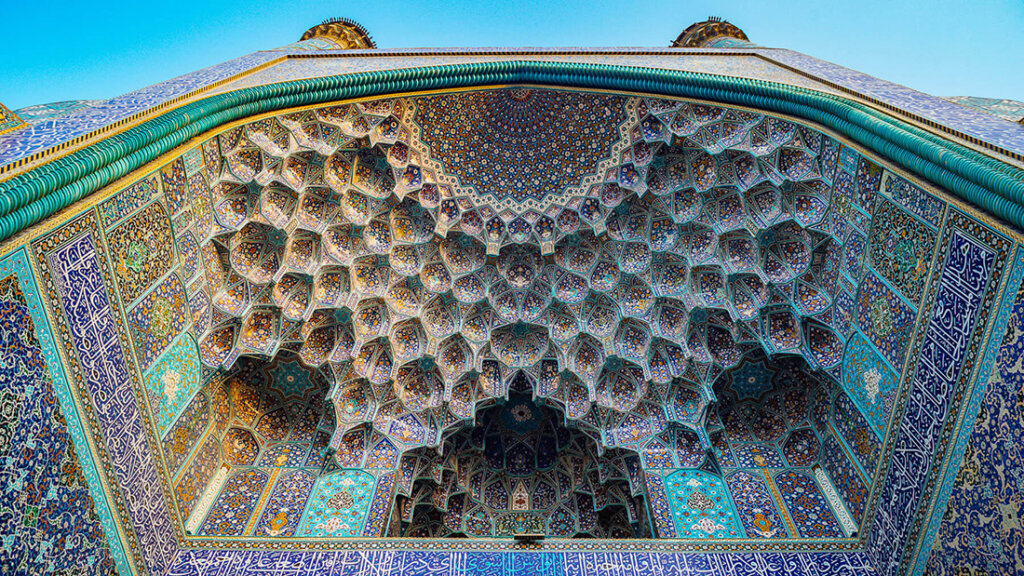
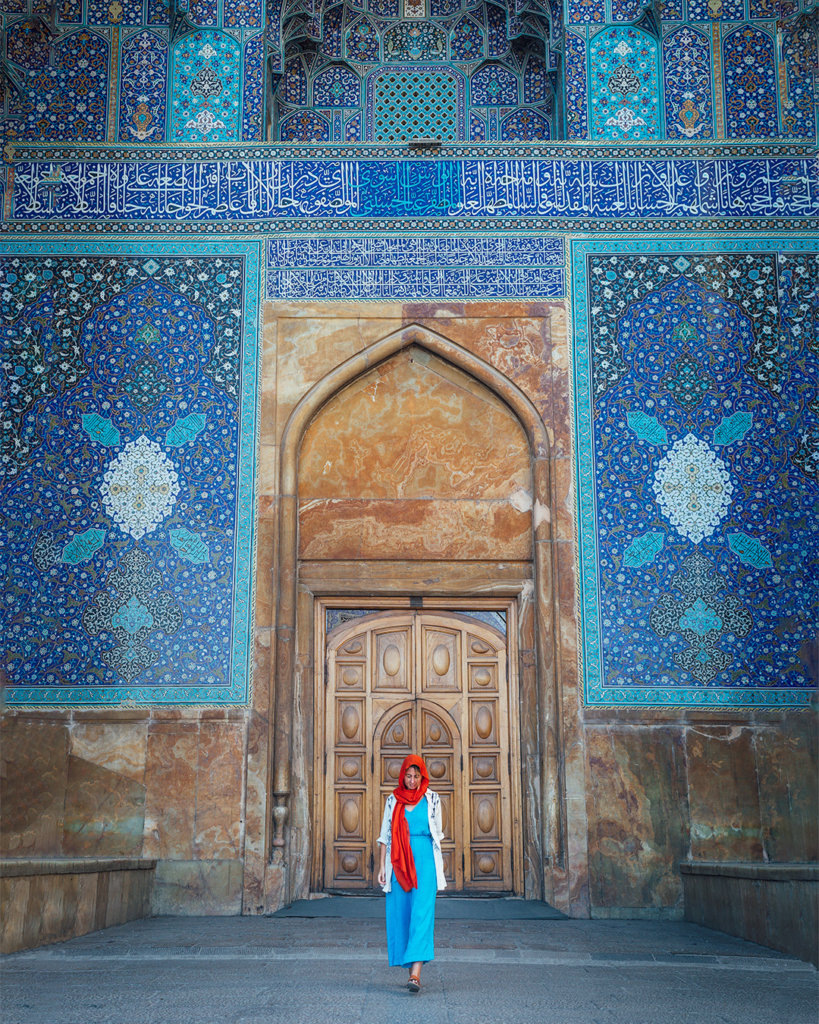
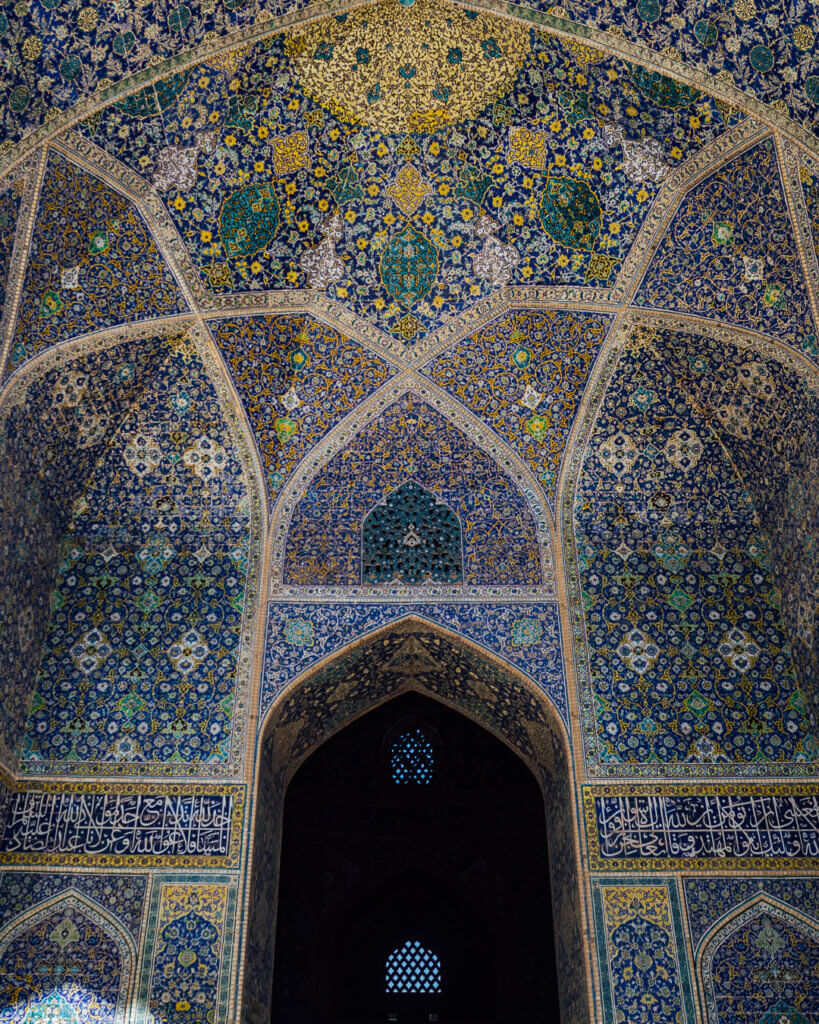
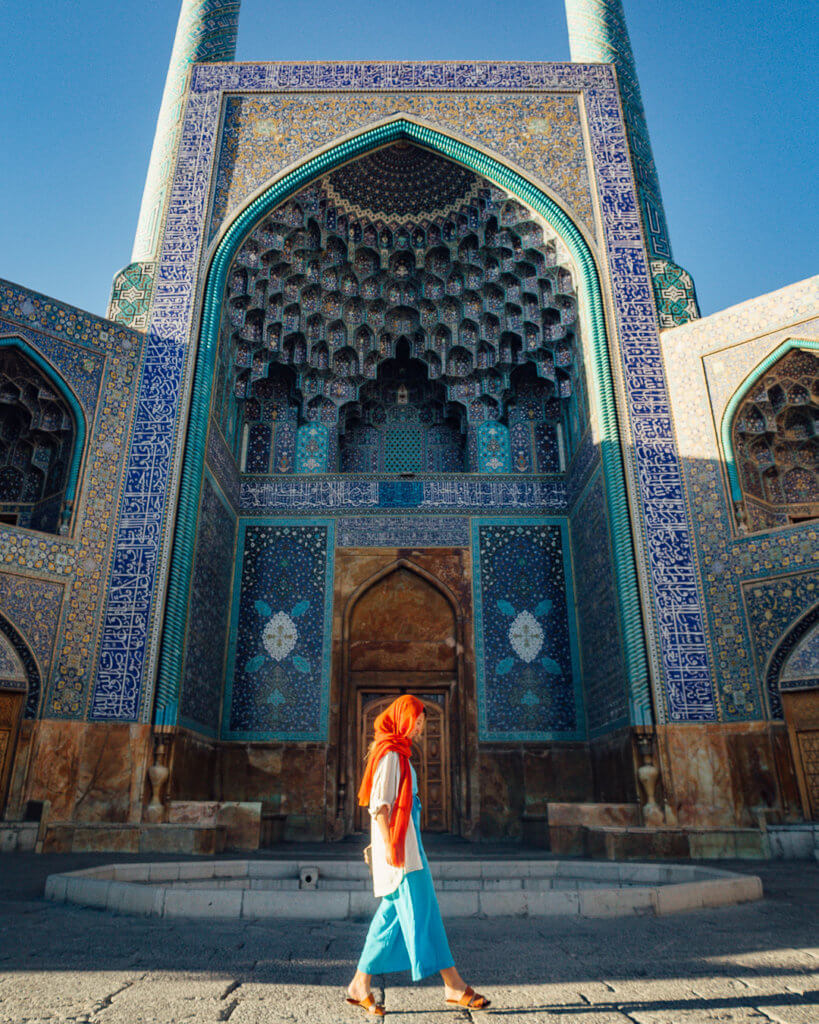
The Shah Mosque or Great Abbasi Mosque was built during the Safavid dynasty and is regarded as one of the Persian masterpieces of architecture. Standing below the grand design just leaves you speechless!
To get an undisturbed shot of the Shah Mosque, I recommend going around 7 am.
The mosque itself opens its doors to visitors at 9 am. The mosque was built around 400 years ago and took 2o years to complete. The architecture is just outstanding, you can visit the tile workshop, in which they explain the restoration process and even take part in ‘Friendly Islamic Talks’ within the former Madrassa.

Chehel Sotoon Palace
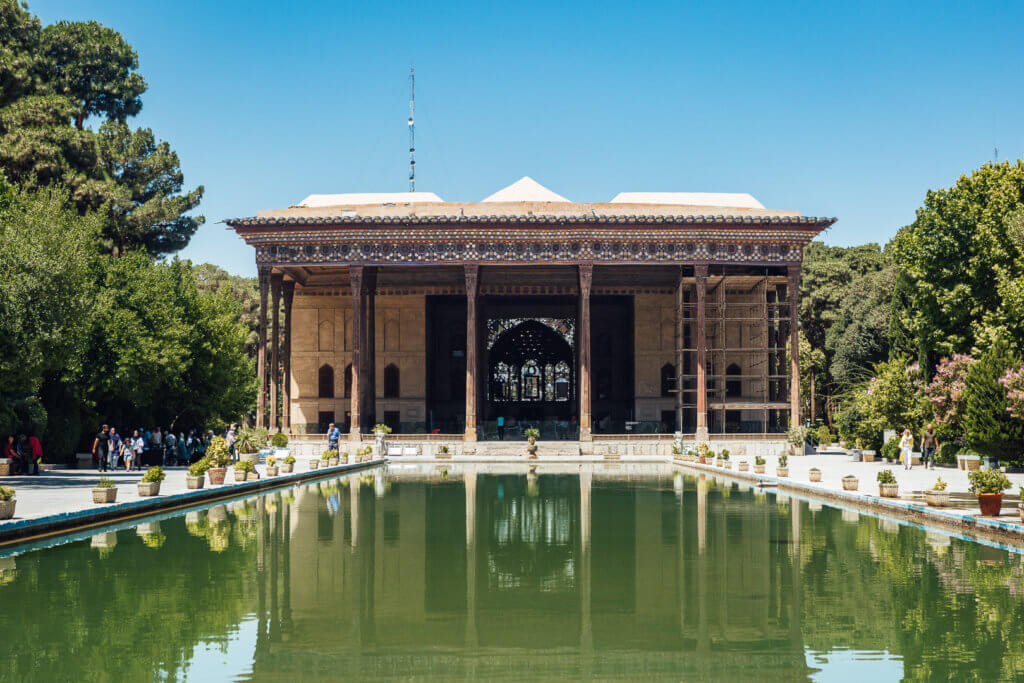
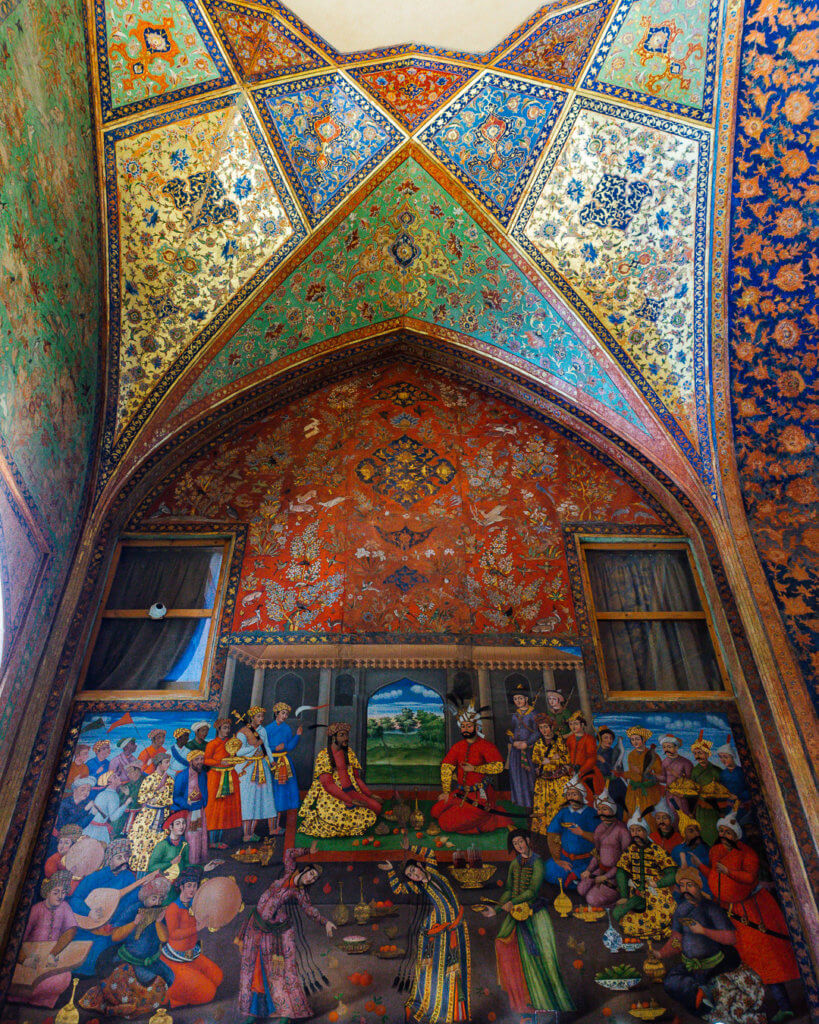
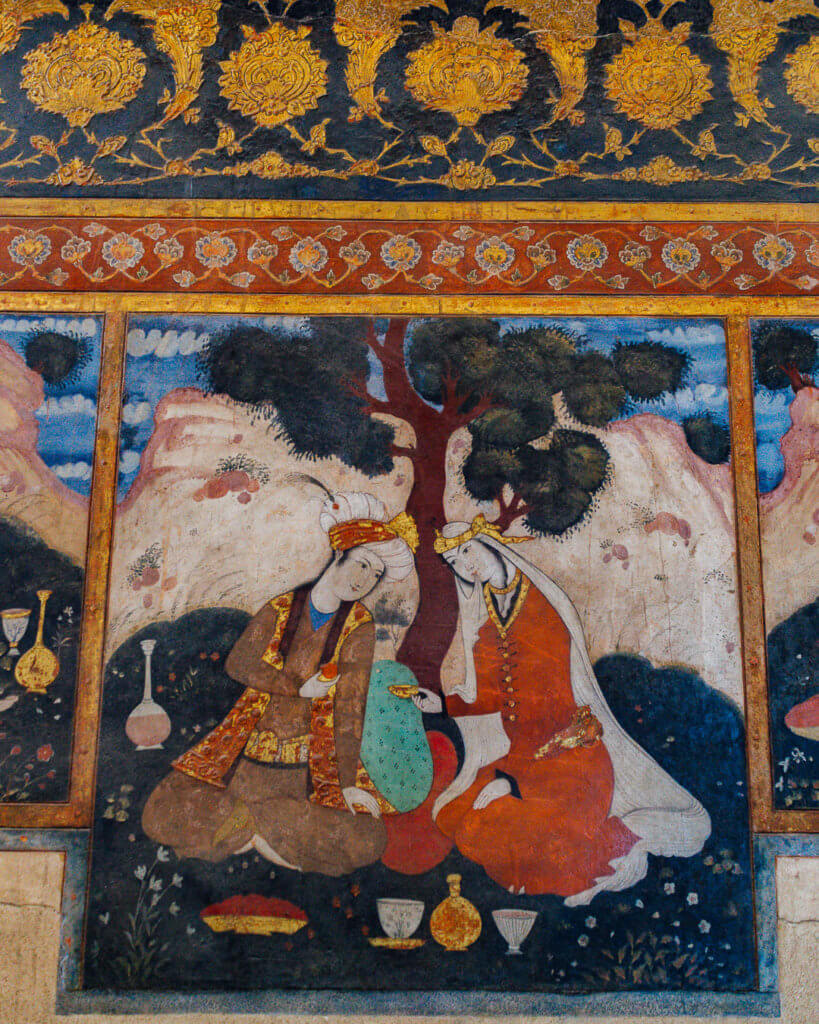
Chehel Sotoon Palace is a Persian pavilion in the garden that Shah Abbas II used for entertainment and receptions. The palace contains many frescoes and paintings, depicting various battle scenes.
Azadegan Tea House
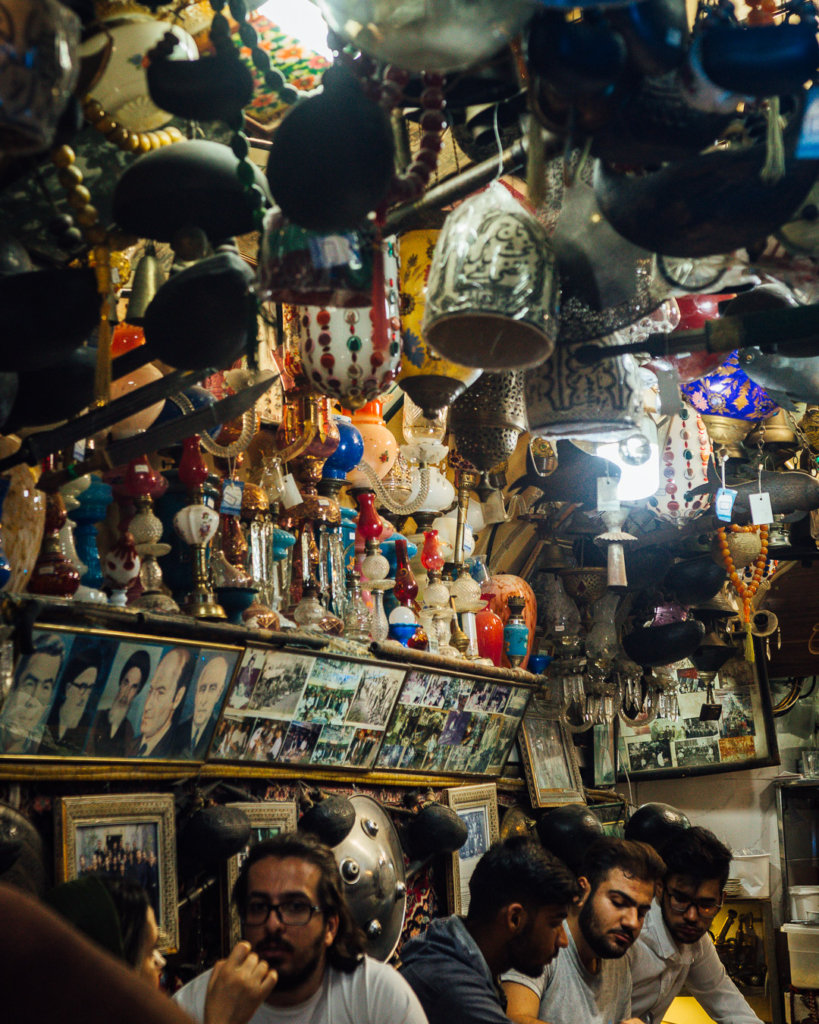
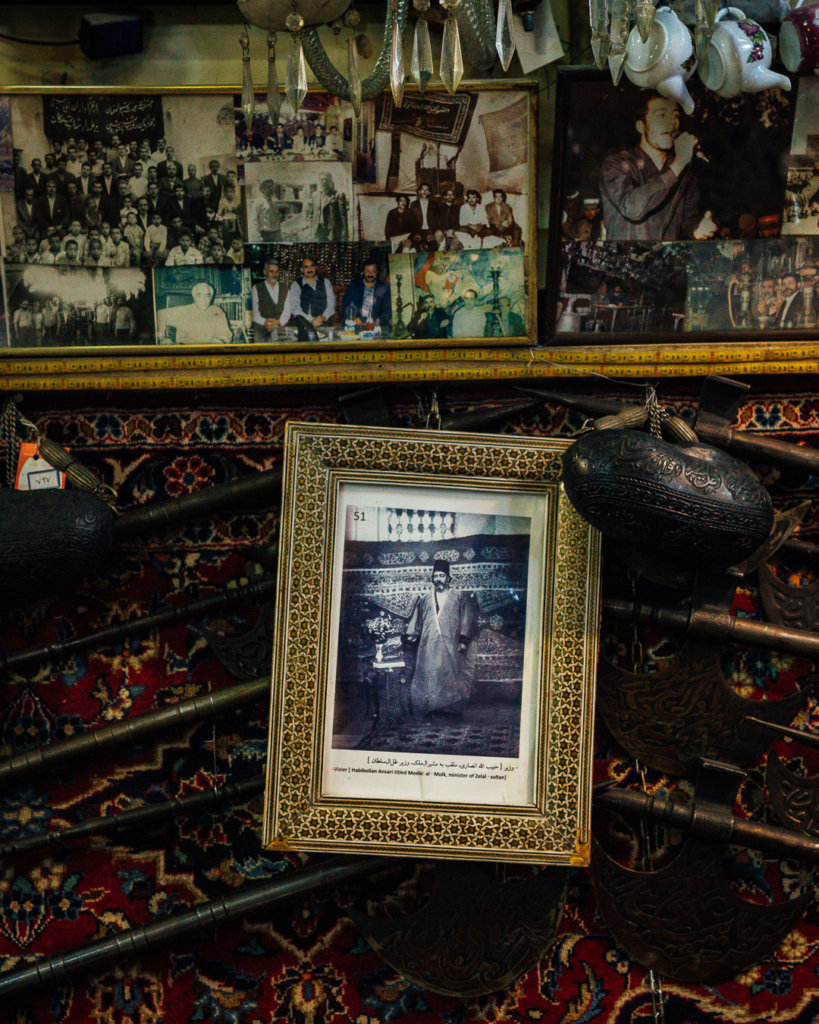
This place is more than just a tea house, but an absolute one-of-a-kind place. The whole interior is made up of original, authentic relics that usually would have ended up in a museum! From old photographs to lamps to antiques I wouldn’t even know the name of, you find them there! They serve delicious Persian food at affordable prices, and around lunchtime, it’s always buzzing.
Grand Bazaar
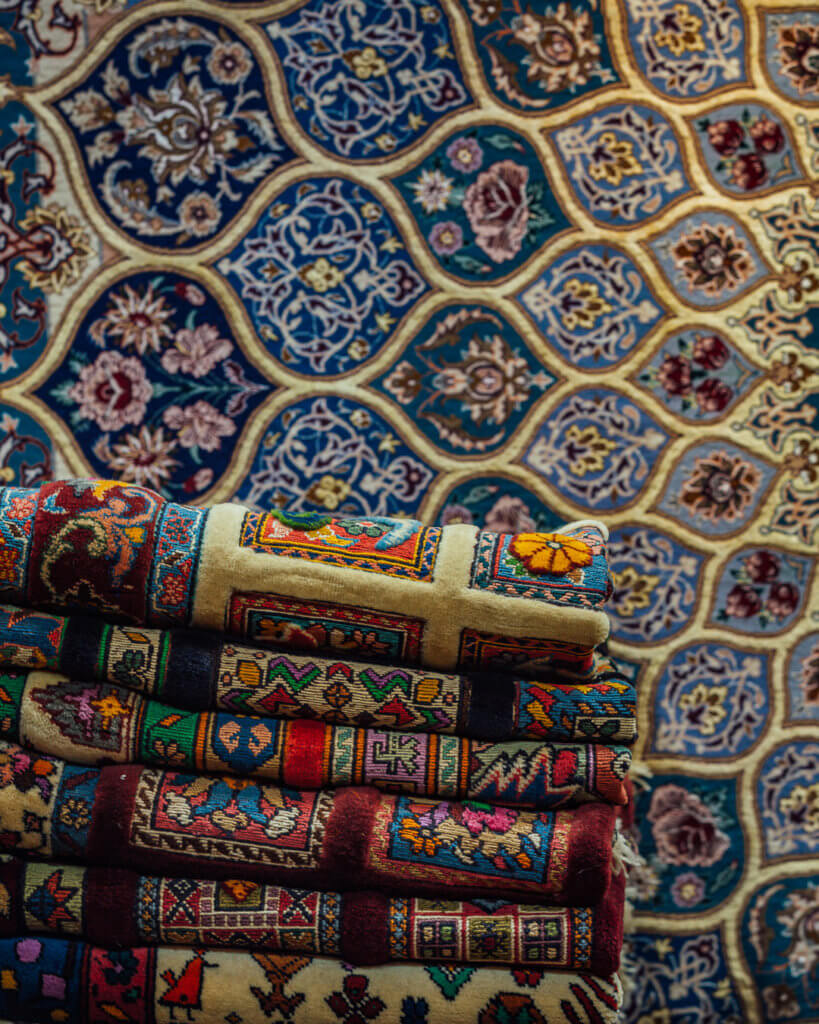
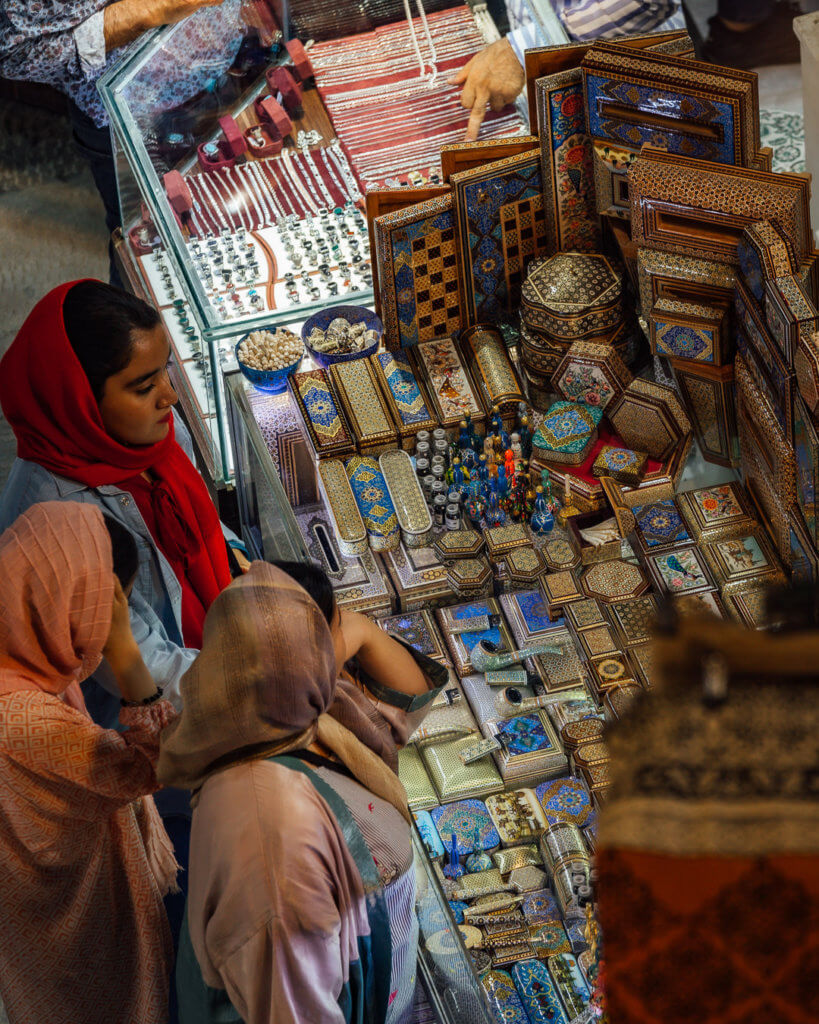
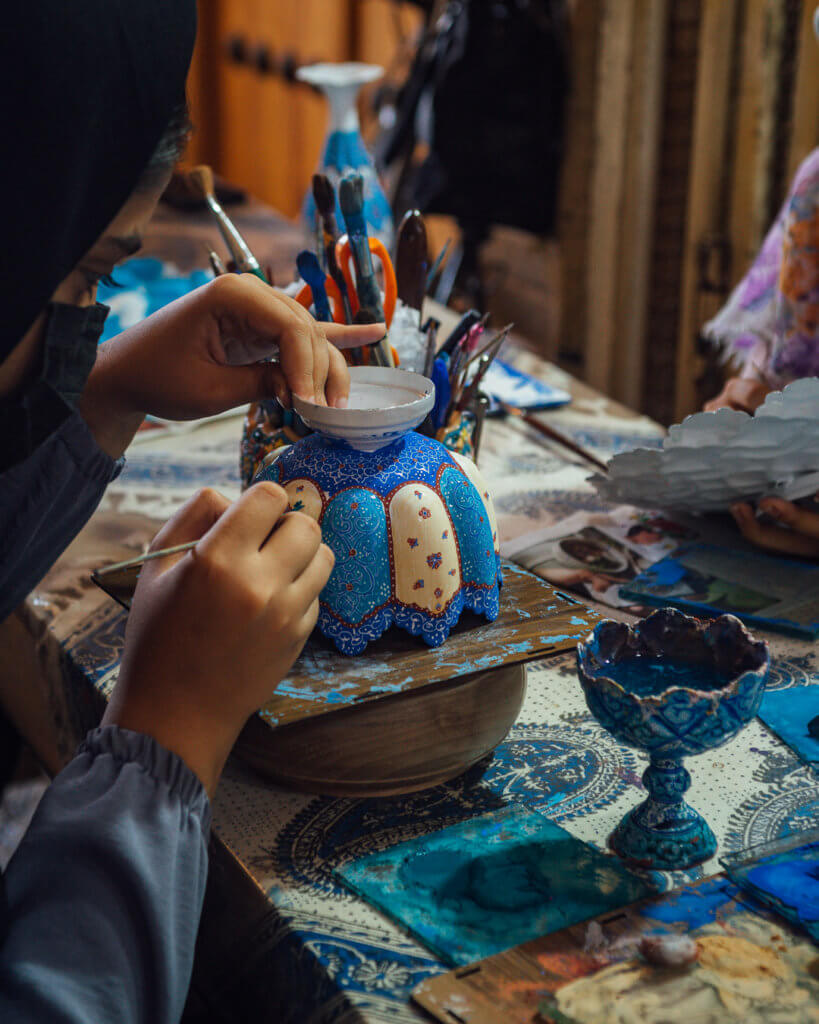
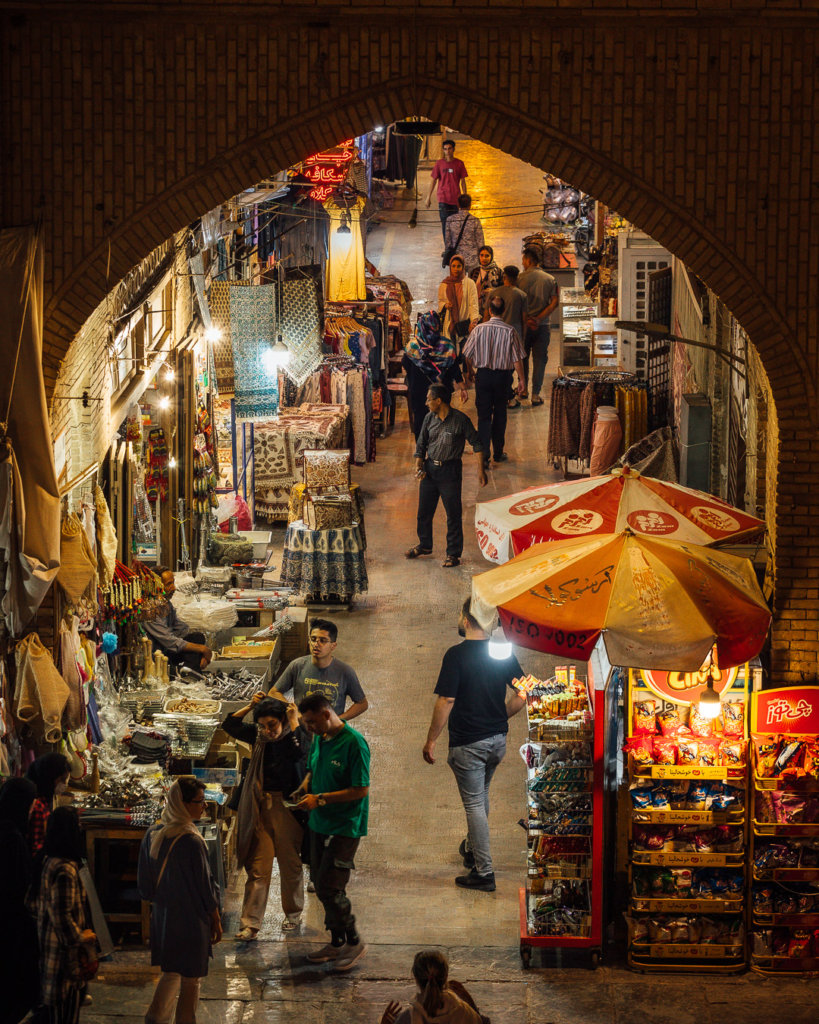
The Grand Bazaar of Isfahan stood out to me because of its size and how you can see the men and women working on their craft, not posed! Especially in the morning, you can see women painting ceramics near the Shah Mosque and it’s the prettiest thing! Strolling over this market is just one of the best things to really see the variety of beautiful artworks, rugs and carpets, spices and sweets there is to Iran!

Naqsh-e Jahan Square
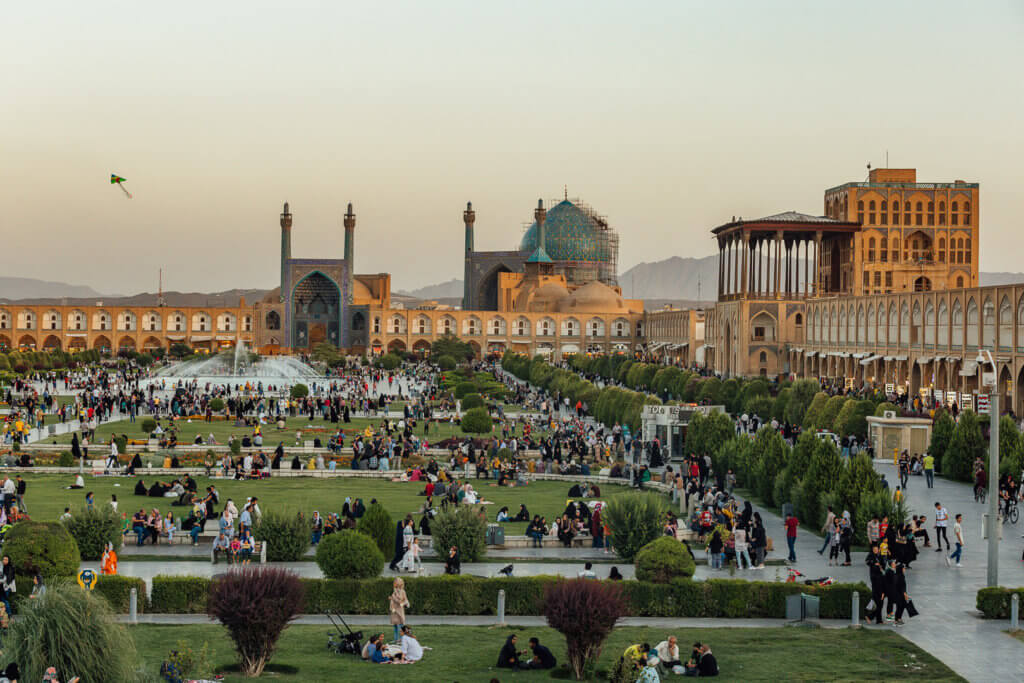
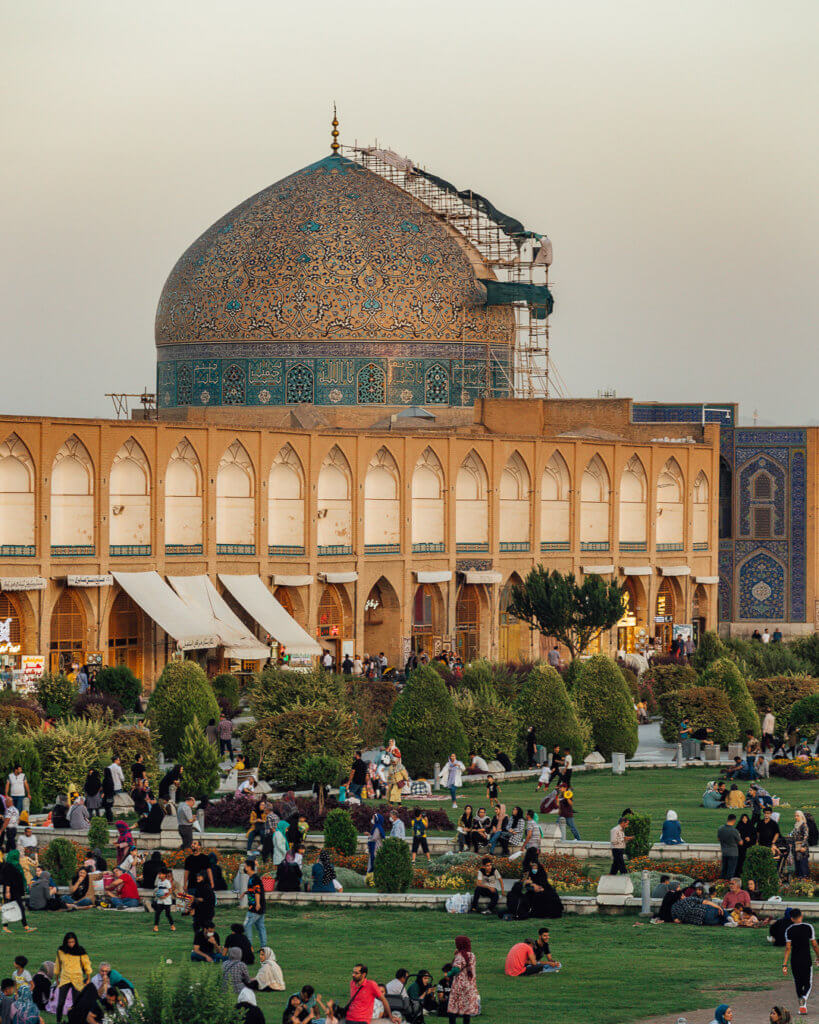
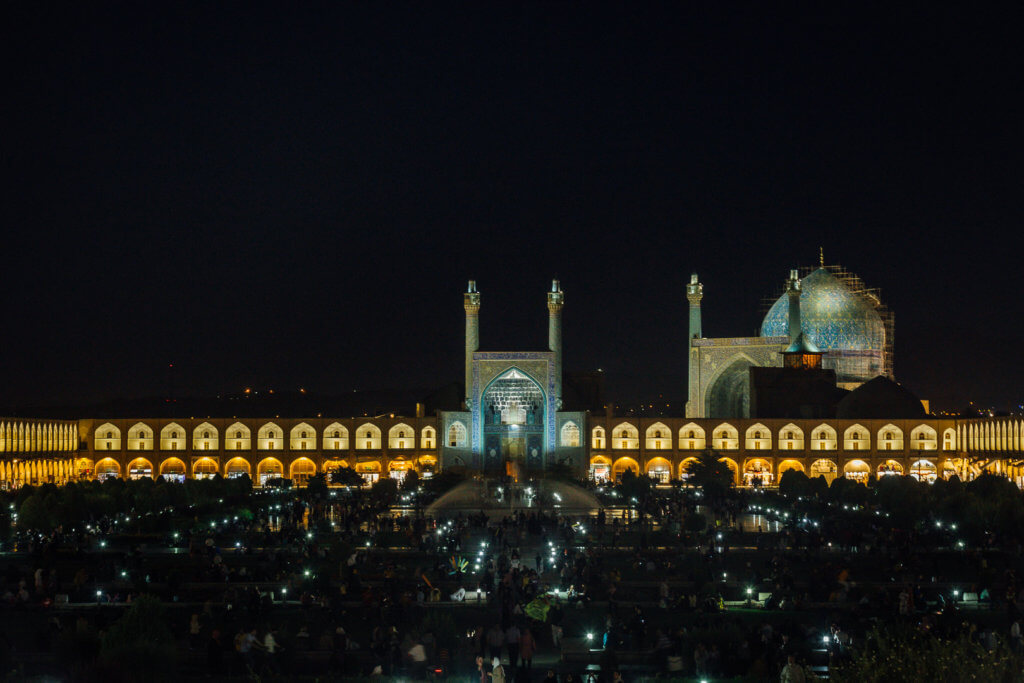
Also known as the Shah Square, Naqsh-e Jahan Square is the main tourist spot of Isfahan and a UNESCO World Heritage site. In Farsi, it means “The Image of the World” and the place really is always buzzing. Especially around sunset, many Iranians flock there for a picnic to enjoy the weather. Visit the square and go up to Aali Qapu Palace for some nice views of the square or head to Cafe Museum terrace to admire the view from above.
Mollabashi Historical House
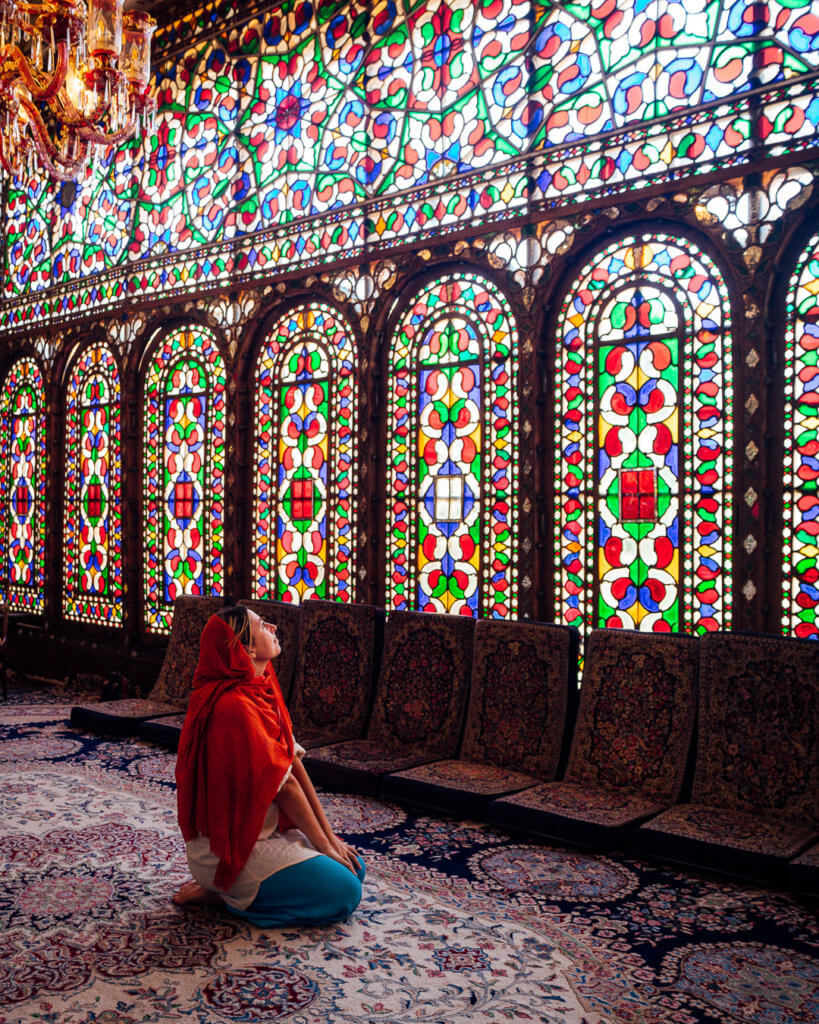
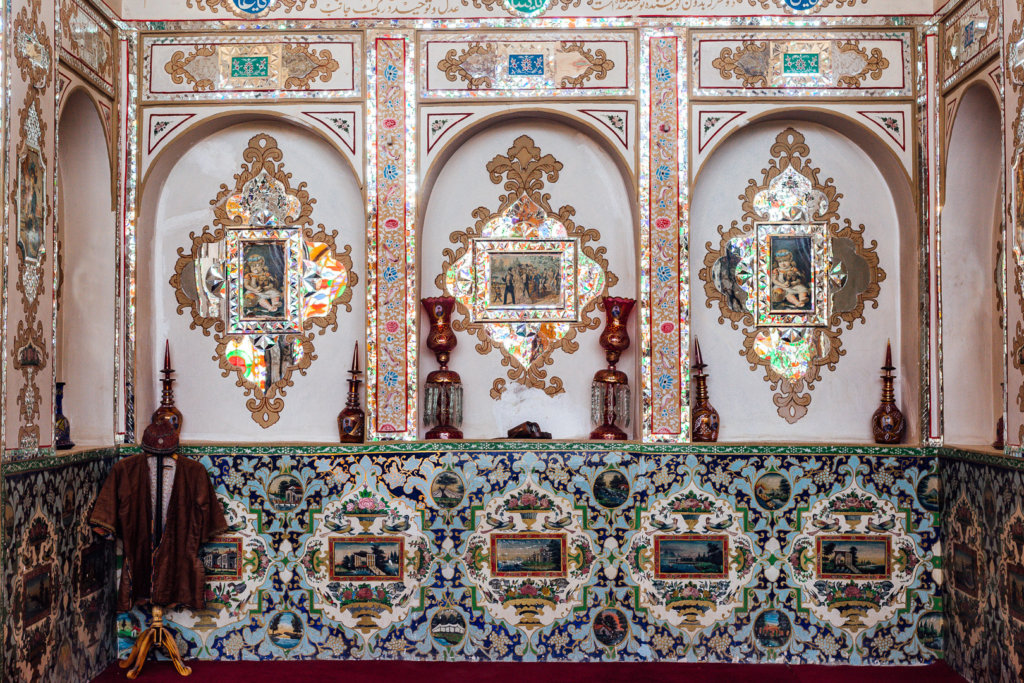
It’s not just Kashan that is famous for Persian historical houses; Isfahan also has its fair share. The historical residence of Mollabashi has an outstanding room with mirrors, beautiful carpets and colored windows that are just picture-perfect.
This place has a gorgeous courtyard! Sit down, admire the garden and have a coffee.
Moshirolmolk Historical House
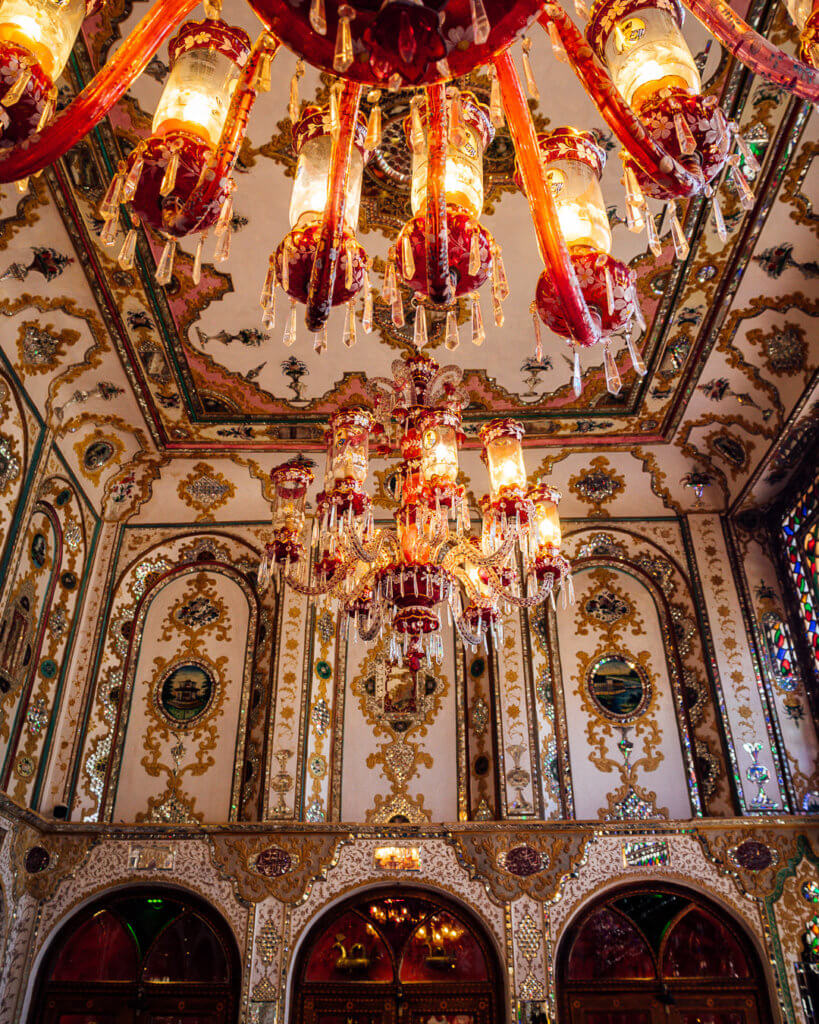
Another beautiful example of Iranian architecture from the Safavid era. It has a fantastic interior with a lovely gallery and a calligraphy exhibition.
Restaurant Isfahan
Emarat Namakdan Cafe as it sits in a museum-like mansion that you can also visit. Amazing food, atmosphere and free to visit the museum!
Getting from Isfahan to Yazd
It takes around 4-5 hours from Isfahan and the cost was around 900.000 for a VIP bus (3 Euros/US Dollars).
Day 8 Isfahan to Yazd
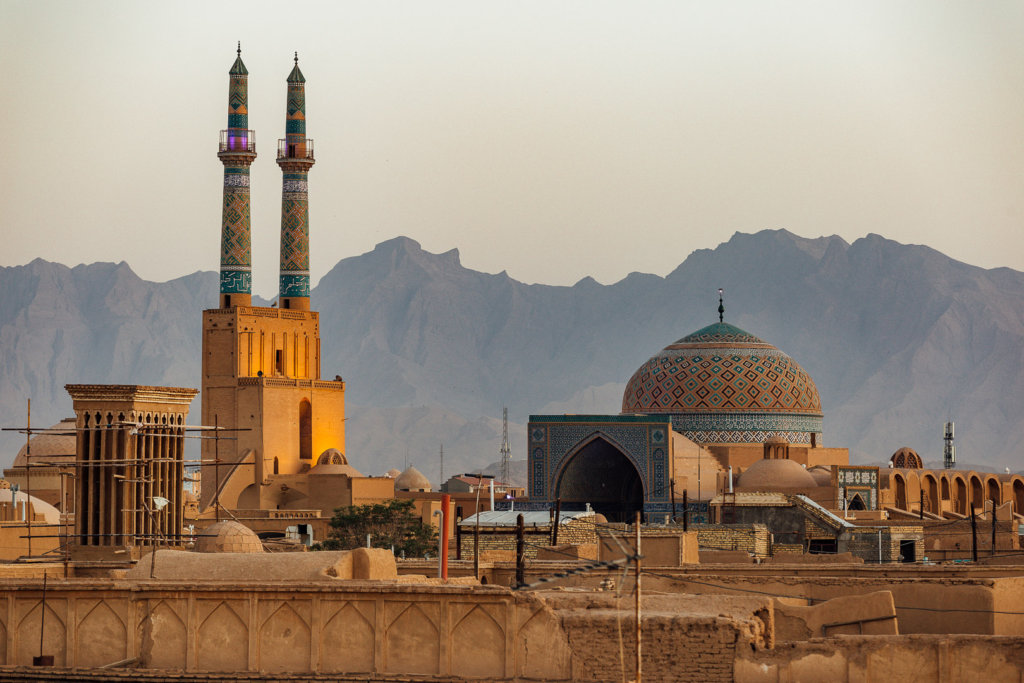
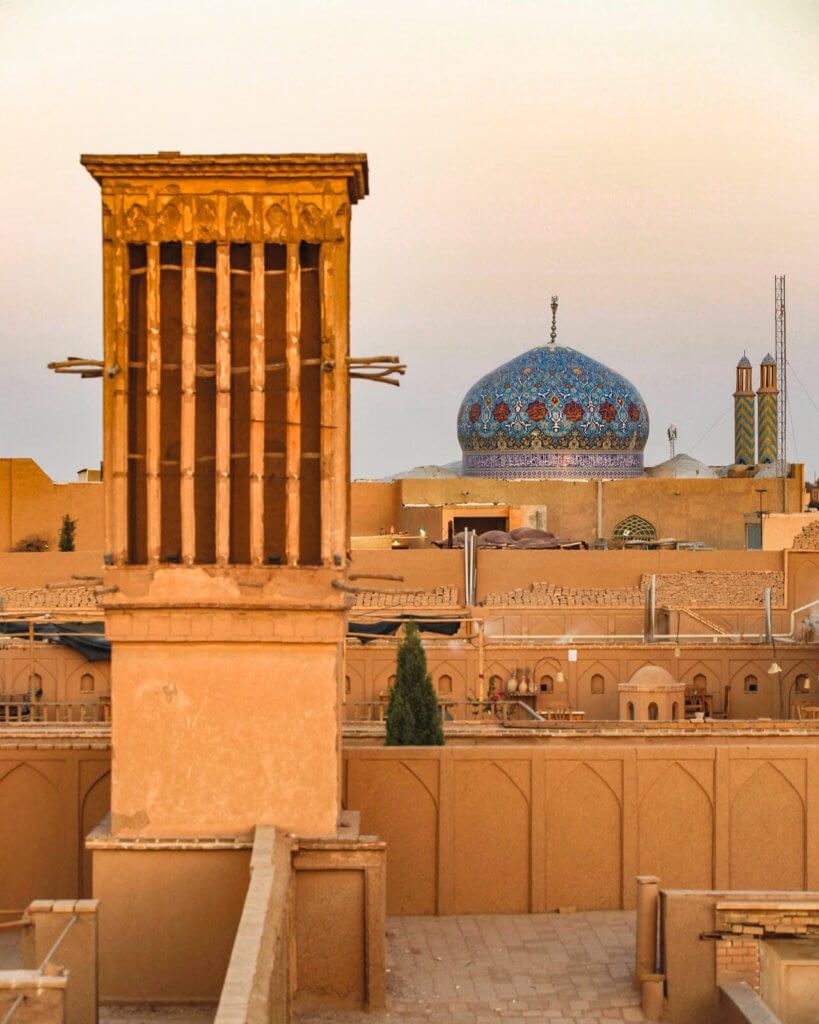
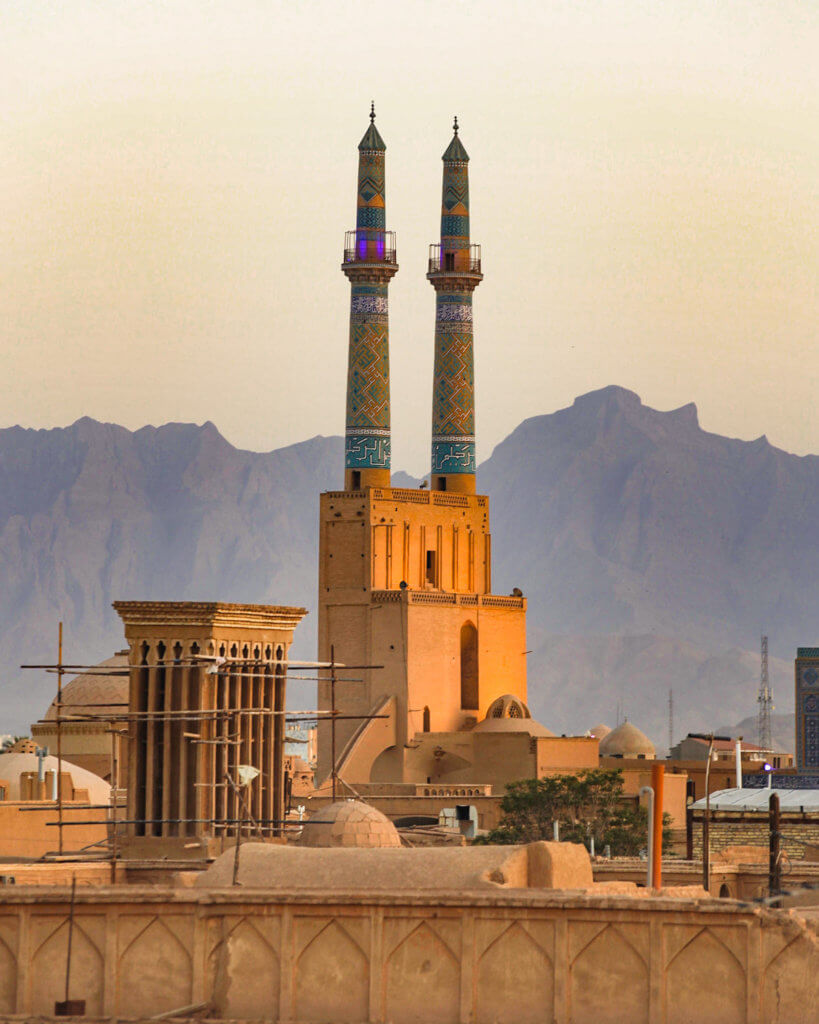
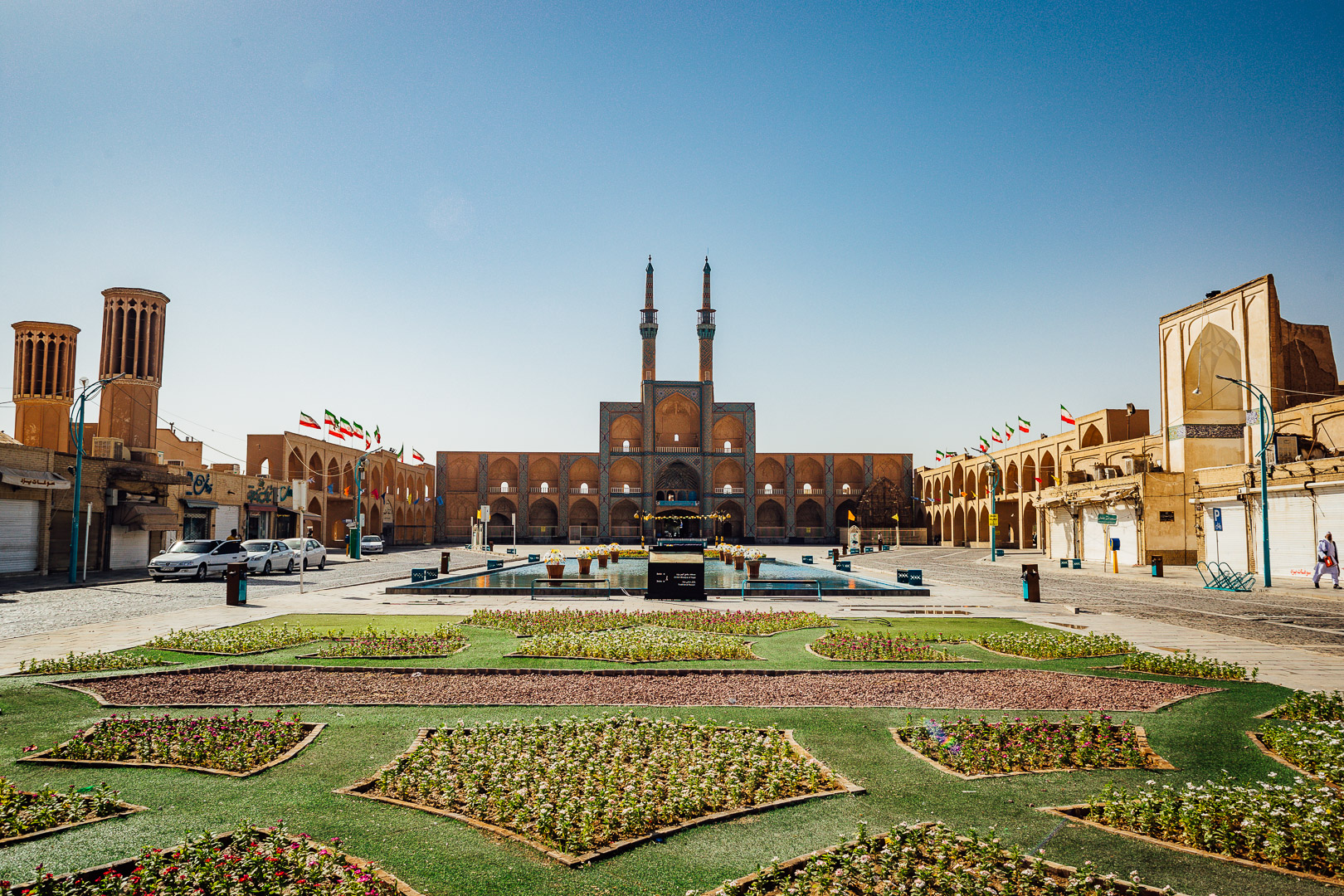
Yazd is another desert town in the province of Yazd. The city is famous for its wind catchers, and towers that are designed to ‘catch’ the wind, direct it downwards and allow the building to be cool. In the old town of Yazd, you also find windy ochre-colored mudbrick walls (similar to Kashan), some unique clothing shops and modern restaurants. I almost missed out on this but I’m happy to include it in this Iran travel itinerary as it was worth the detour!
One thing to note about Iranian cities is that they tend to be very green, with most streets lined with trees. The centers of the cities are always clean, with no stray dogs around.
Where to Stay in Isfahan: Traditional Persian Hotels & Courtyard Houses
Yazd is all about atmosphere. Staying in the historic old town makes a huge difference and turns your visit into an experience rather than just a stop. Traditional courtyard hotels, mud-brick walls, and windcatchers are what make Yazd special, and many accommodations are beautifully restored historic houses.
Luxury: Moshir al-Mamalek Garden Hotel is one of Yazd’s most atmospheric stays. Set in a restored Qajar-era garden estate, the hotel blends traditional Persian architecture with modern comforts. Its location on the edge of the old city makes exploring Yazd’s heritage easy and enjoyable.
Mid-range: A well-reviewed four-star hotel in the heart of Yazd’s historic quarter, Dad Hotel pairs classic Persian design with contemporary amenities. Rooms are comfortable and traditionally styled, and the rooftop and communal spaces are great for relaxing after a day of sightseeing.
Yazd Friendly Hotel: I stayed in this Persian-style hotel with a gorgeous courtyard right in the center of the city. Their private rooms start from 10 Euros, including breakfast. Here you’d have a single room with private bathroom, right in the center of the city.
Book Your Dreamy Yazd Hotel Iran Here
Rooftop Cafes
One of the things that stood out to me was the number of rooftop cafes and restaurants. I highly recommend visiting Art Café. It’s a beautiful space with a boutique on the ground floor and a fantastic rooftop terrace with a 360-degree view of the city. If you purchase one of the fresh-pressed pomegranate juice, you’ll also receive the handmade mug that it comes in. Try to get here for sunset!
Alexander’s Prison
Alexander’s Prison is a legendary place named after Alexander the Great and built during his invasion of Iran. Later, this 15th-century building turned into a school and is now hosting a museum & handicraft shop. In reality, no one ever confirmed whether Alexander the Great constructed this building. Lovely area for a sunset stroll anyway – the light is amazing!
I found the Grand Bazaar to be a special one, with unique leather handbag designs, concept-store-like vibes and trendy coffee shops that I would have expected from Tehran.
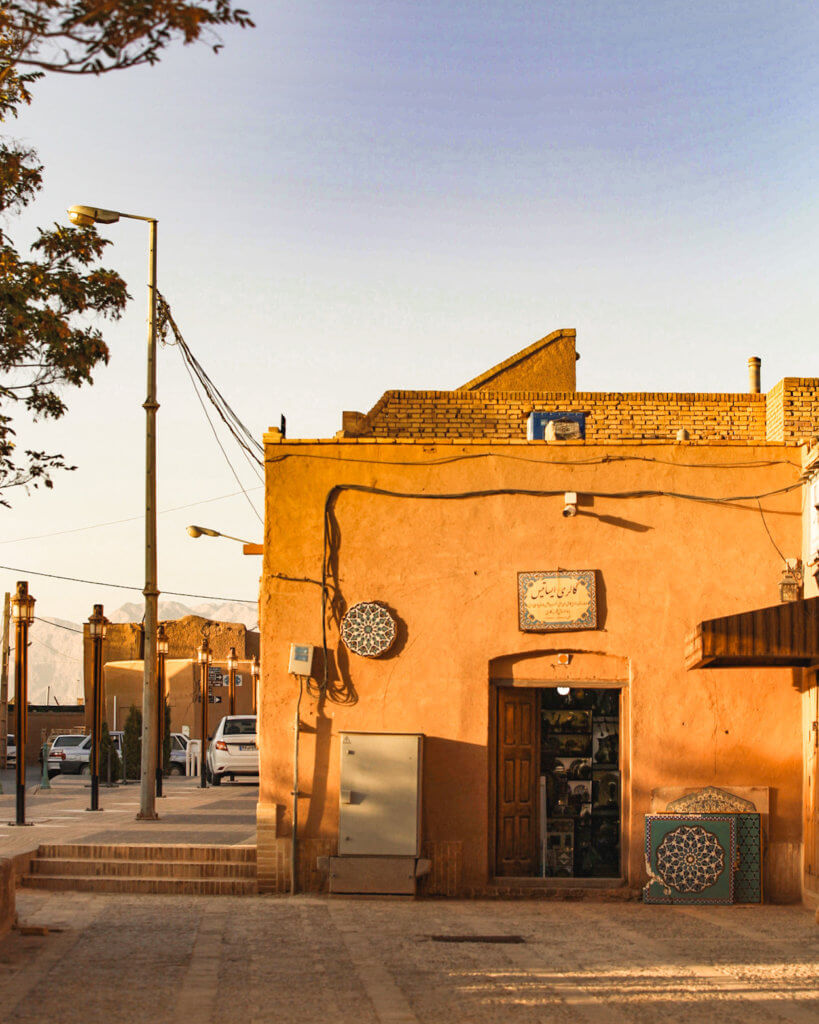
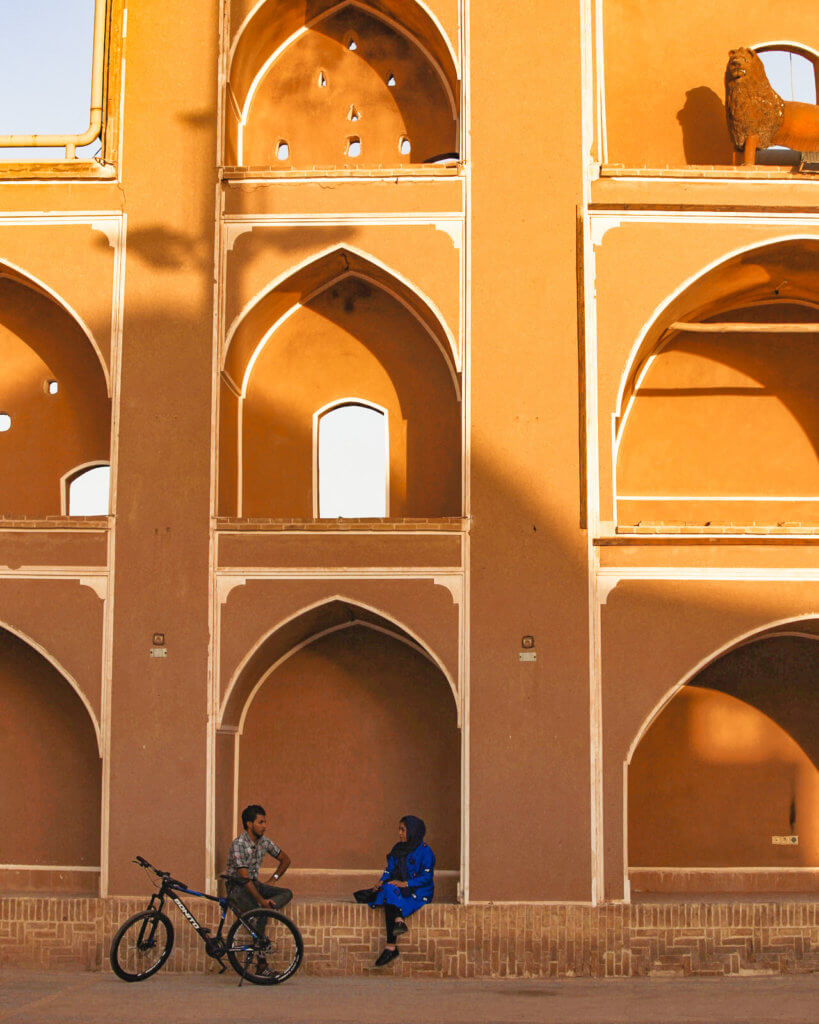
Sadly, I was short on time, but a few great sights are outside of town. Some tours leave Yazd for places such as Meybod, Chak Chak-Kharanaq and different Fire Temples. Most of the guesthouses will help you organize a tour on-site. Definitely plan in some more time for your two-week Iran travel itinerary!
Jameh Mosque of Yazd
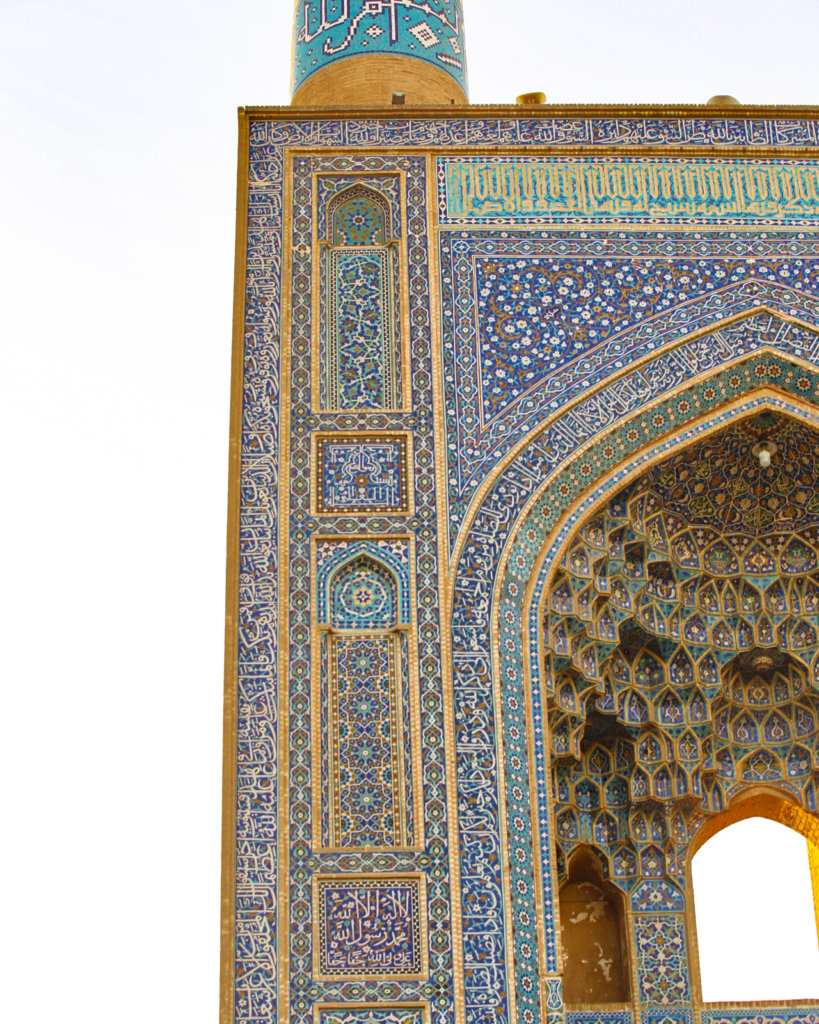
The Jameh Mosque of Yazd dates back to the Sassanid era and sits on the site of a Sassanid Fire Temple. It’s another beautiful architectural masterpiece, with spectacular decorations and tile work.

Restaurant Yazd
Yazd Art House for a drink and rooftop vibes
Fooka Restaurant for traditional Persian food
Papasi Cafe – a new coffee shop that got some boho Bali vibes and great coffee!
Day 9 Yazd – Shiraz
This one is more of a travel day, although in the morning, you still have time to wander the streets of Yazd and perhaps the Fire Temple or the Yazd Water Museum. I suggest taking the bus at midday to avoid the heat and get to Shiraz in the evening.
Shiraz is Iran’s third most populous city, surrounded by mountains and known for its poets, literature, handicrafts and wine (historically the name refers to the wine that was produced in Shiraz).
There are a few buses throughout the day leaving from Yazd to Shiraz. The ticket price is 1.250.000 IRR (4 Euros/US Dollars) for a 7-hour ride.
Where to Stay in Shiraz: Boutique Hotels in Restored Persian Homes
Shiraz is relaxed and poetic, and your hotel should reflect that. I’d stay in a restored historic house close to the old city, somewhere that feels personal, calm, and a little special to end the trip.
Luxury: The Grand Hotel 5-star property, sits right by the Quran Gate, welcoming you as you enter Shiraz. It’s one of the city’s most recognizable hotels with spacious rooms, city and mountain views, and a range of restaurants and cafés. The location also makes it easy to reach major sights like Eram Garden, Hafez’s Tomb, and the Pink Mosque
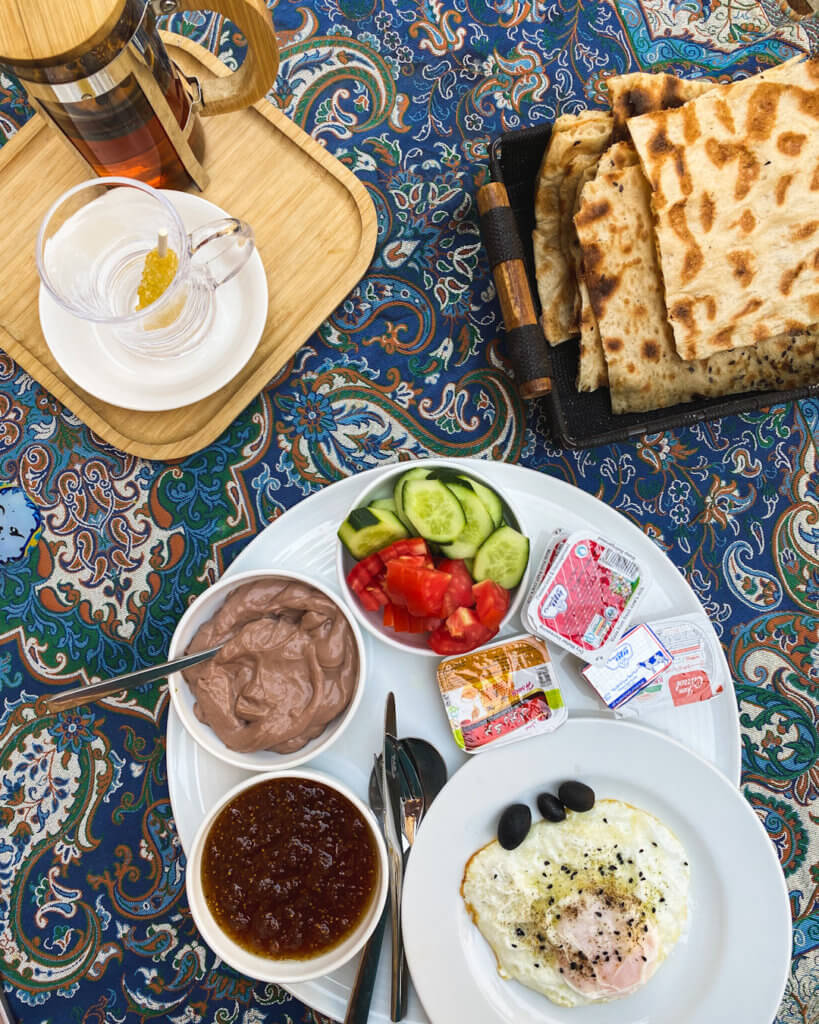
Mid-range: Alan Boutique Hotel is a fantastic, newly renovated 400-year-old Persian residence that’s now a boutique hotel. This was one of the prettiest hotels I’ve ever stayed in. It serves a fantastic, typical Persian breakfast, has a lovely staff, and a beautiful courtyard to unveil in. It’s city central and makes the ideal hotel to end your Iran itinerary.
Budget: Shiraz Arg Hotel is a comfortable three-star option in the heart of Shiraz. The rooms are clean and well-appointed with basics like free Wi-Fi, air conditioning, and tea/coffee makers, and the hotel includes a café and restaurant.
Check for available Shiraz Iran Hotels Here
Day 10, 11, 12 Shiraz
Nasir al Mulk Mosque – Pink Mosque
This one is an absolute must and has to be part of your Iran travel itinerary – the Nasir al Mulk Mosque or also known as ‘Pink Mosque’. The Pink Mosque features stunningly decorated tiles, arches and stained glass that reflect onto the carpet most amazingly. It’s like stepping into a Kaleidoscope.
It should be said that the best time of year to visit the mosque (and to catch this amazing reflection) is winter, in the morning. It all depends on how the sun hits the glass. However, I would say it’s so worth visiting in any time of the year and you will always get some reflection.

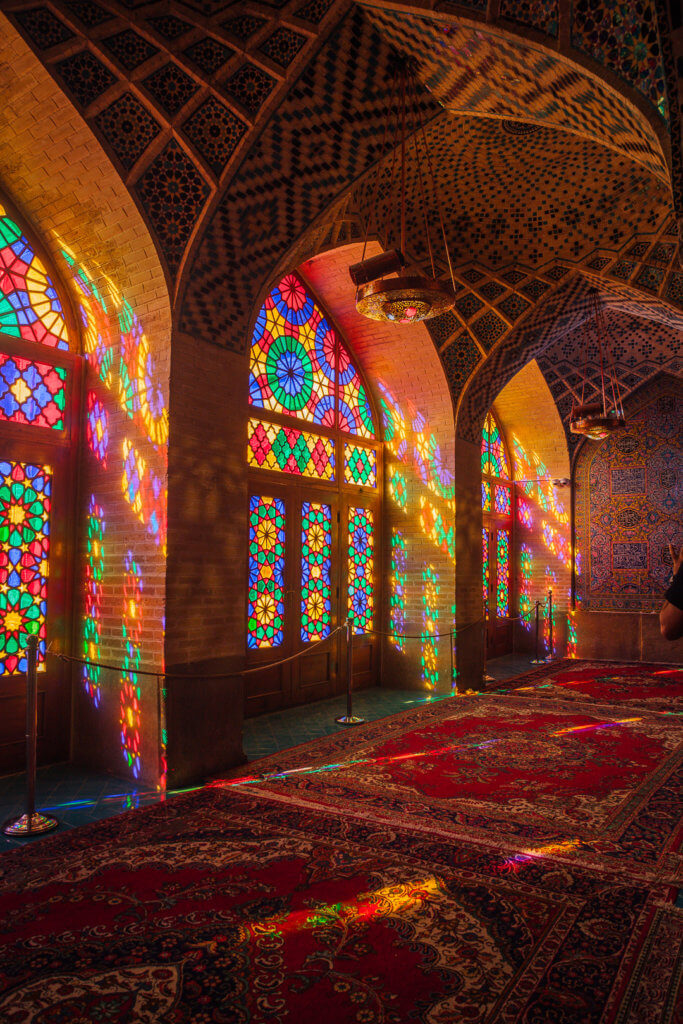
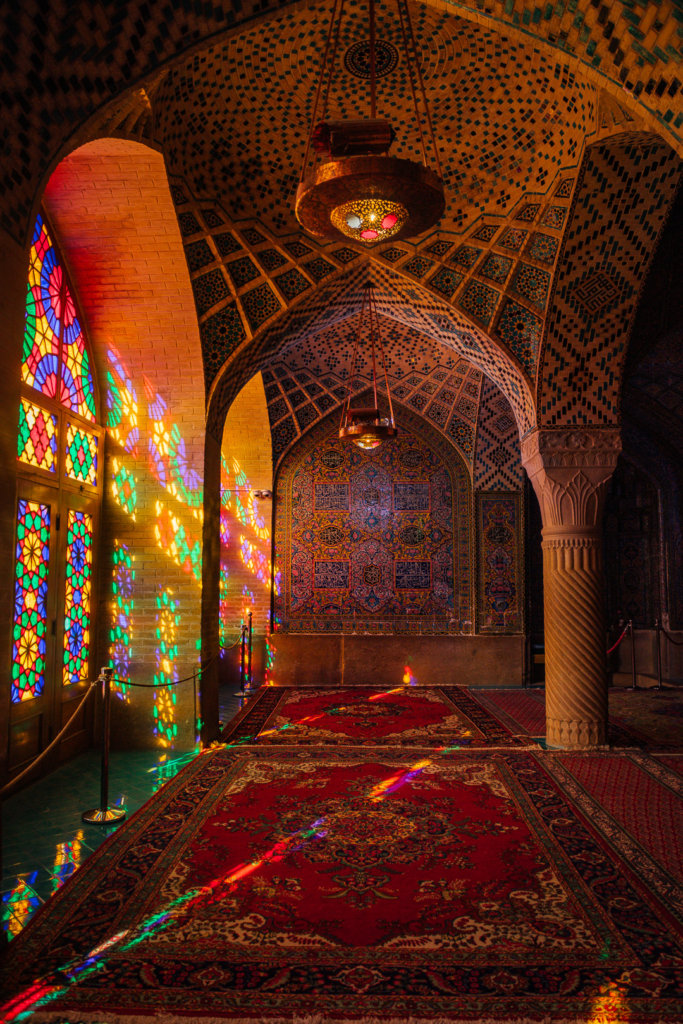
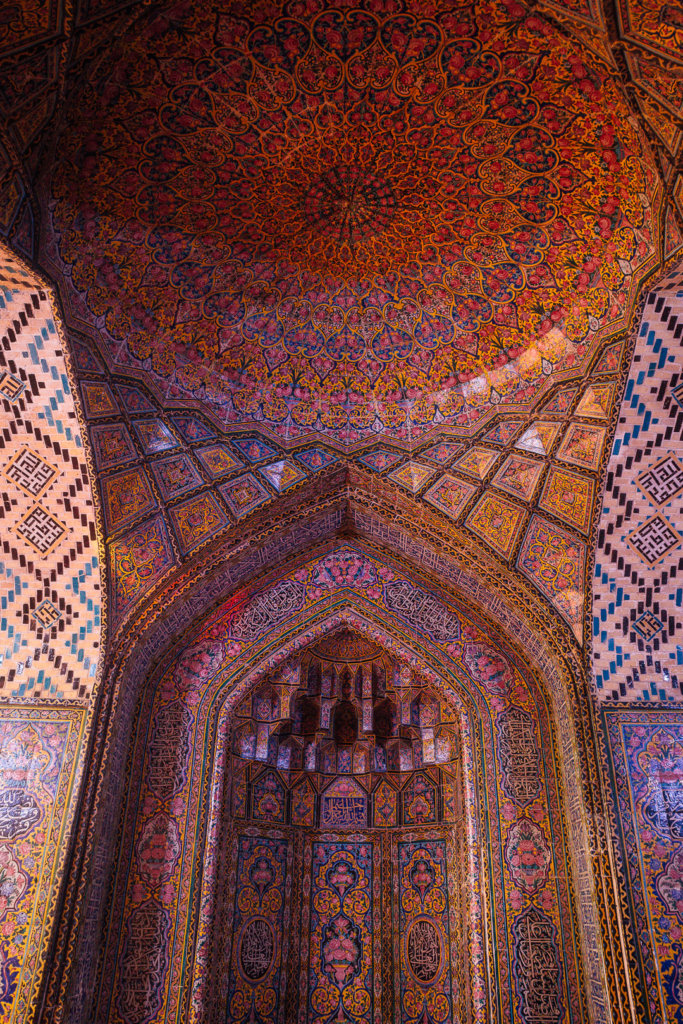
Try to visit early morning, ideally on a weekday!
Remember to wear or bring extra socks to go inside. Also, the staff will give you a Chador to wear on top of your clothes.
At the time of visiting, it wasn’t allowed to take photos with a professional camera.
Shah Cheragh Shrine
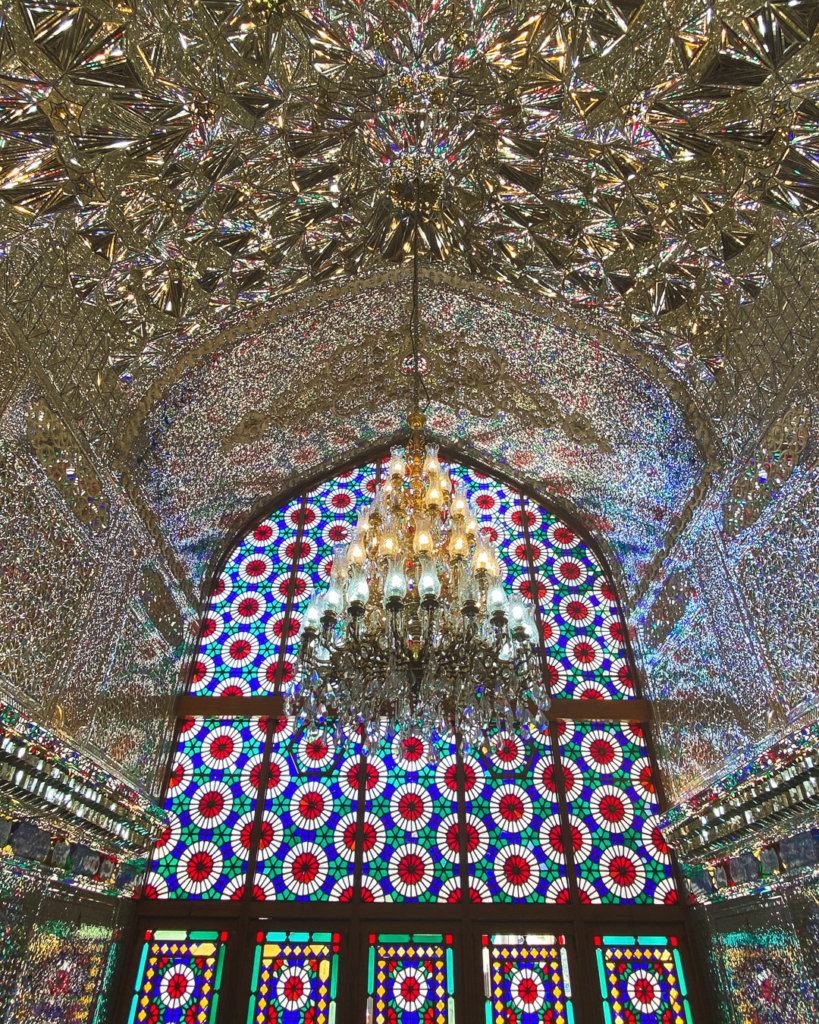
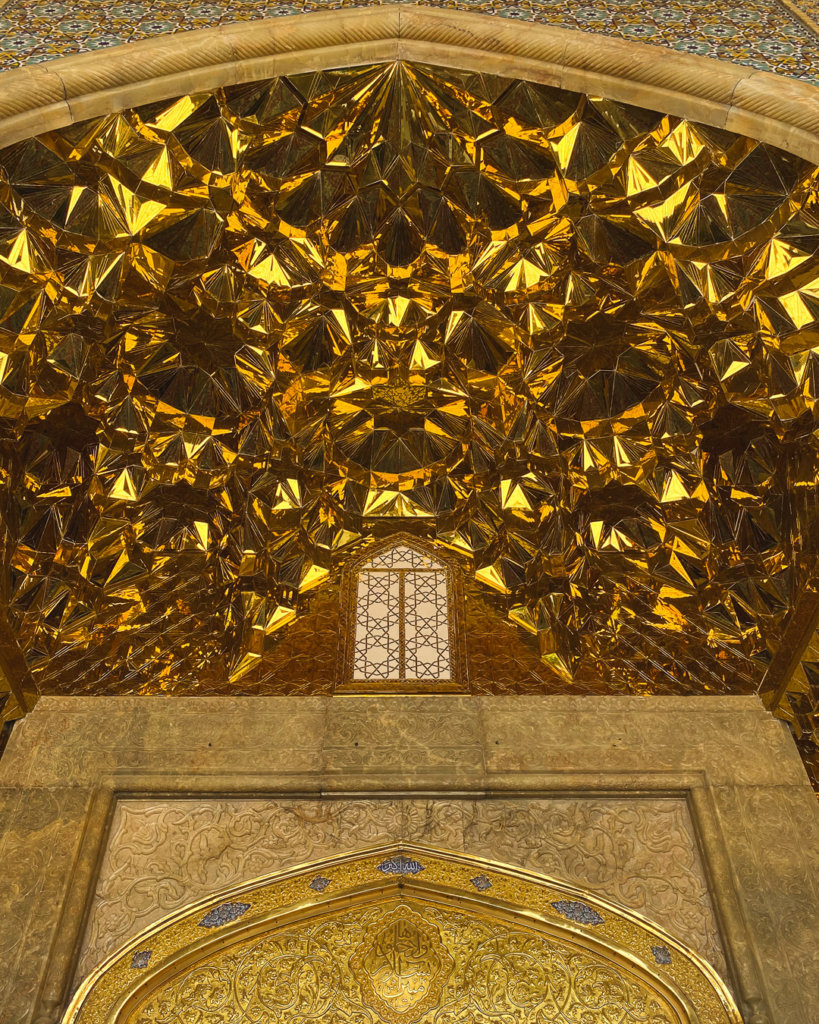
The Shah Cheragh Shrine must be the most dazzling building I’ve ever seen. The mirror work on the walls and ceiling is just unbelievable and makes this one of my Iran favourites!
The shrine is a holy pilgrimage site and hosts the tombs of two brothers from Imam Reza.
There is a different entry for women and men and inside, each gender has a respective area that they can visit. They give every tourist a guide to walk them through the complex, for free! He will accompany you and bring you a general part of the men’s side of the mosque. Already at this point, you can admire the stunning interior and he will give you some explanation.
I’m standing in front of this wall and he asks me what I see. I said, “A distorted version of myself”. He said, “yes indeed, that is what was meant to be”. Humans are not supposed to be whole or ‘perfect’. We are only a part of the whole (like one of these mirror pieces), because being whole or complete is only reserved for God. That’s what separates us.
At the time of the visit in July 2022, it was not allowed to take photos with a professional camera, your phone is ok though.
The Arg of Karim Khan
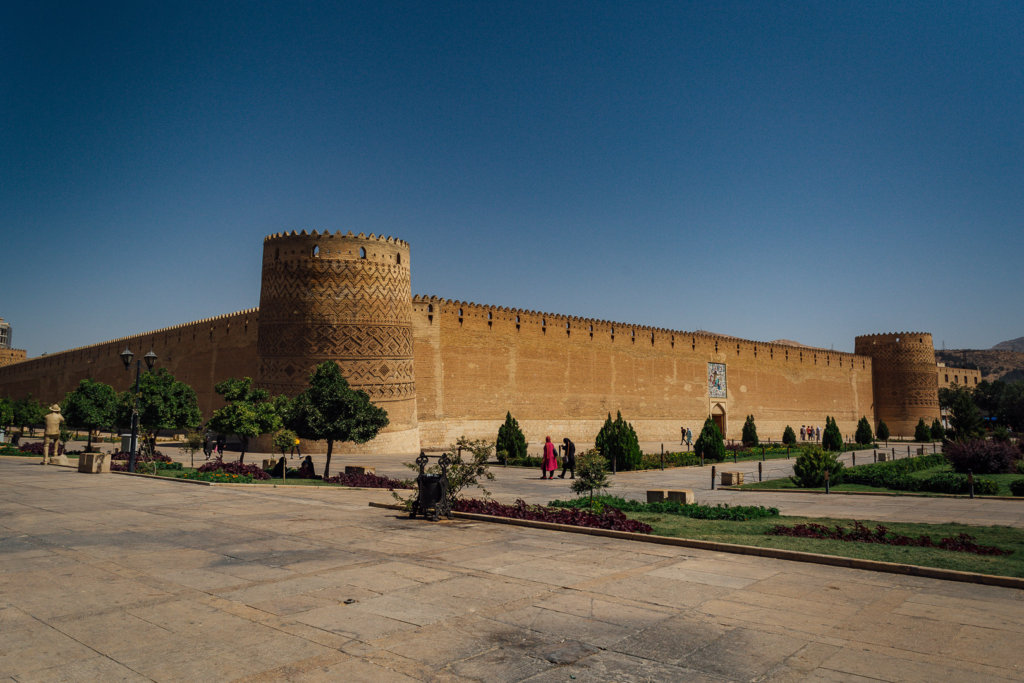
The striking Citadel of Karim is right in the city centre and hard to miss. This beautiful complex with its 12-meter-high walls was built during the Zand dynasty and used to have a few lives. At first, the citadel was one of the richest residences during the Qajar era and once it ended, it became a jail.
Eram Garden
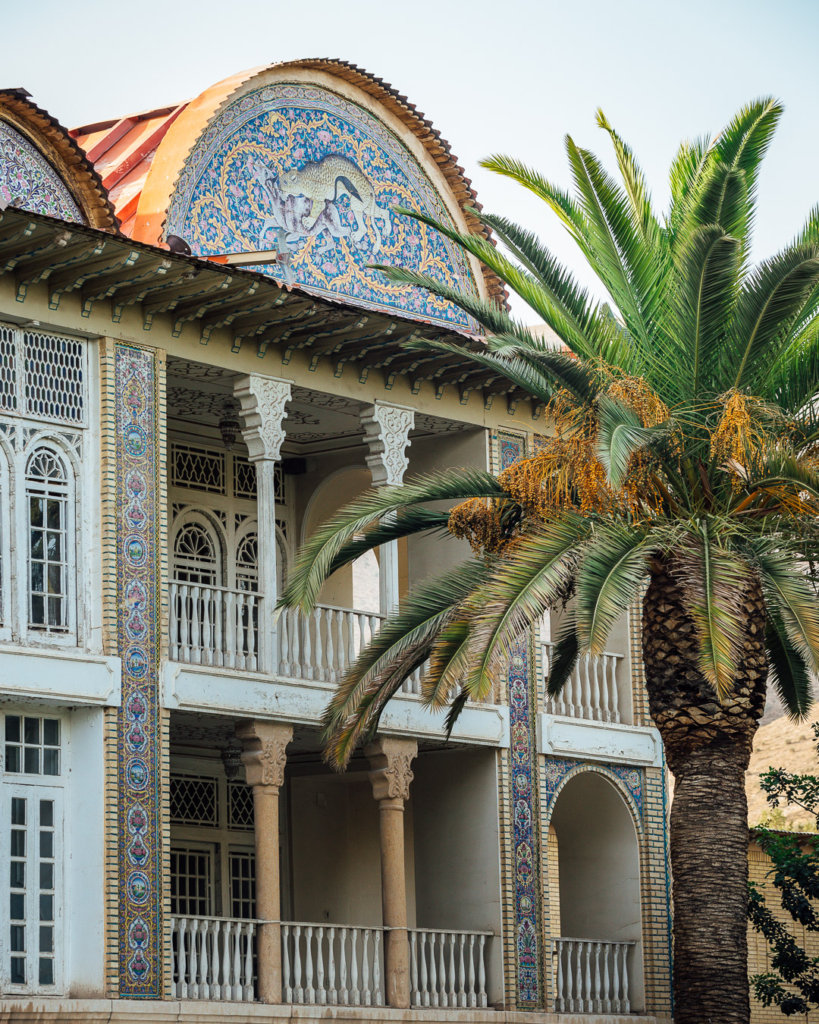
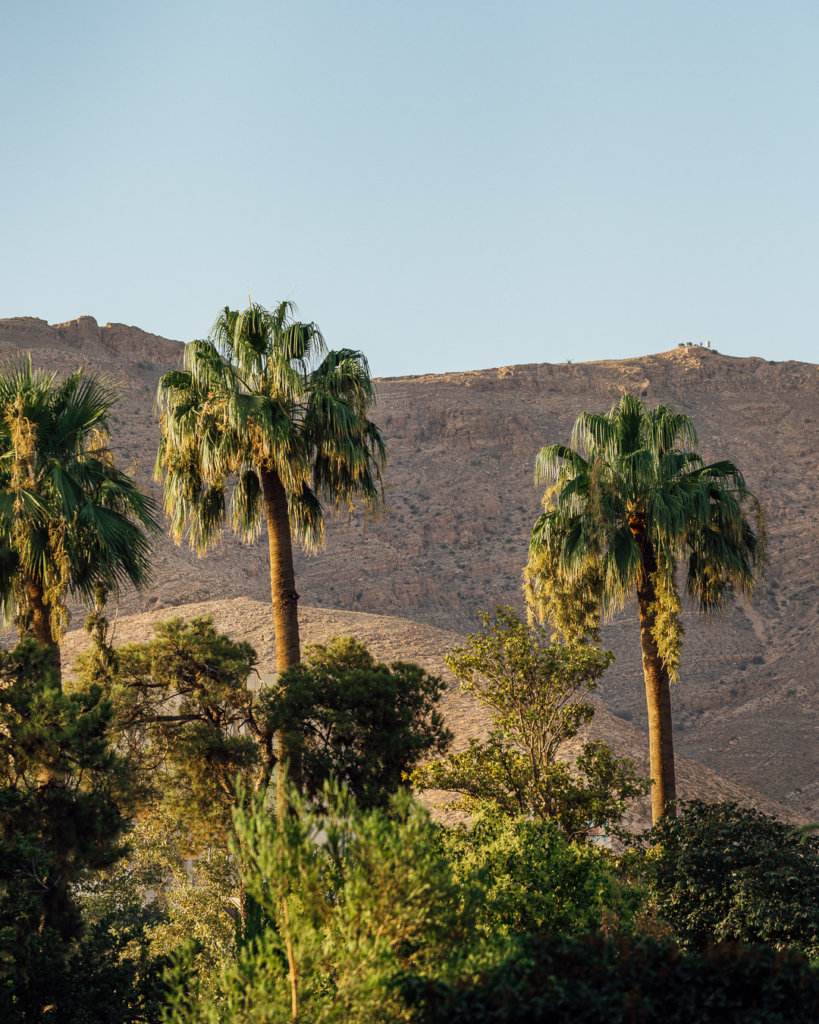
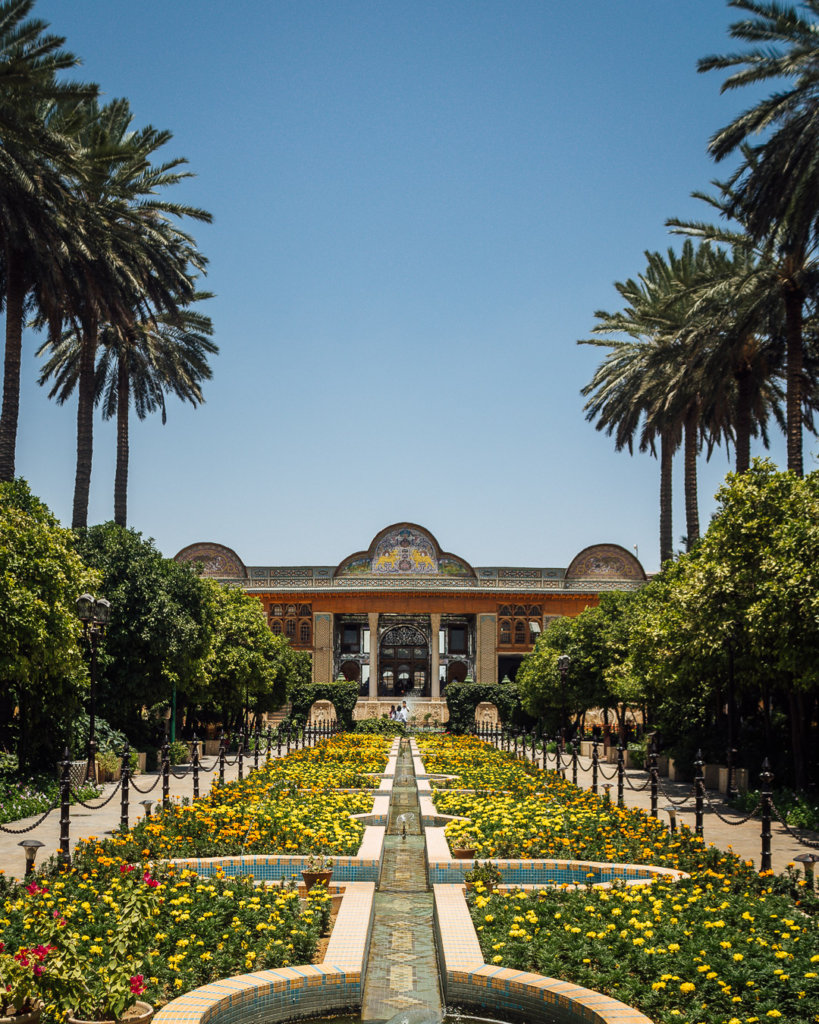
Eram Garden is not only inscribed in UNESCO it also inspired the famous Iranian poets Saadi and Hafez, and was mentioned in many of their poems. This one is a must for any Iran travel itinerary, and many say the garden is most beautiful in spring when all the flowers blossom however, it’s a beautiful one to visit at any time of year.
Tip: Visit the nearby Baba Bastani ice cream shop, which serves Shiraz’s best ice cream. It’s only a 5-minute walk away.
Vakil Bathhouse
If you have been to the Sultan Amir Ahmad Bathhouse in Kashan, you will be disappointed. The Vakil Bathhouse felt more like a tourist trap, although it got some nice ceiling work, and you can find wax figures. That part is somewhat interesting to get an insight into how a bathhouse used to look and what kind of people used to go there.
Vakil Mosque
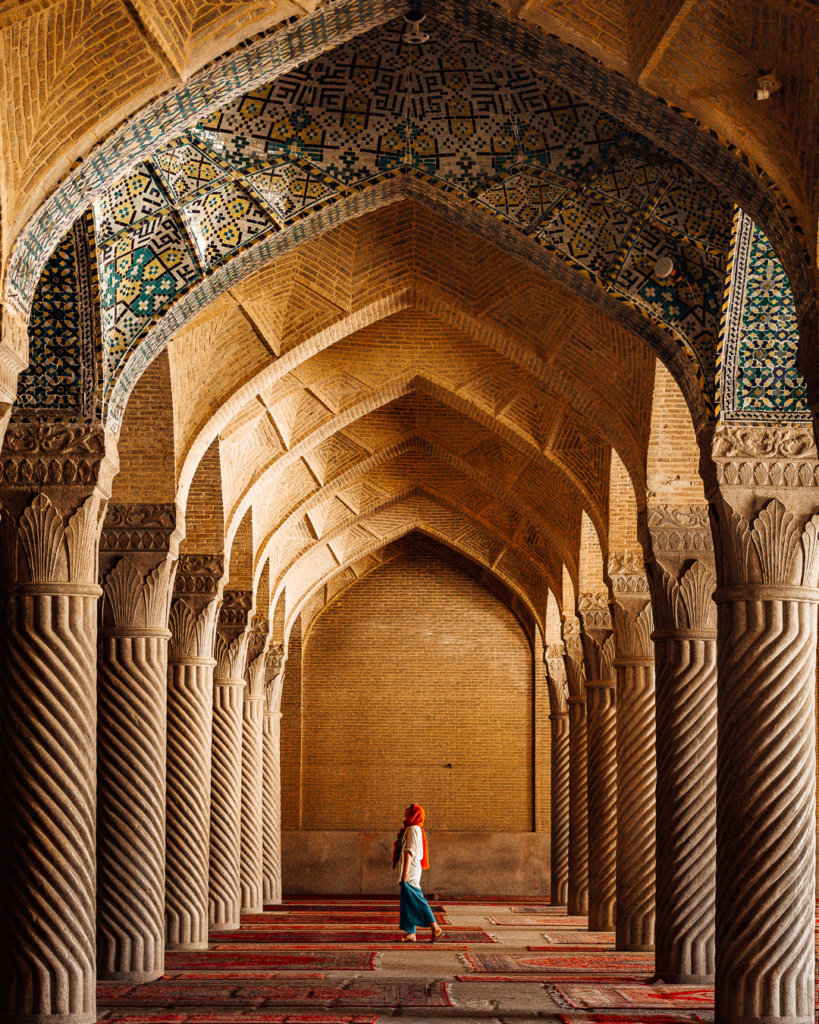
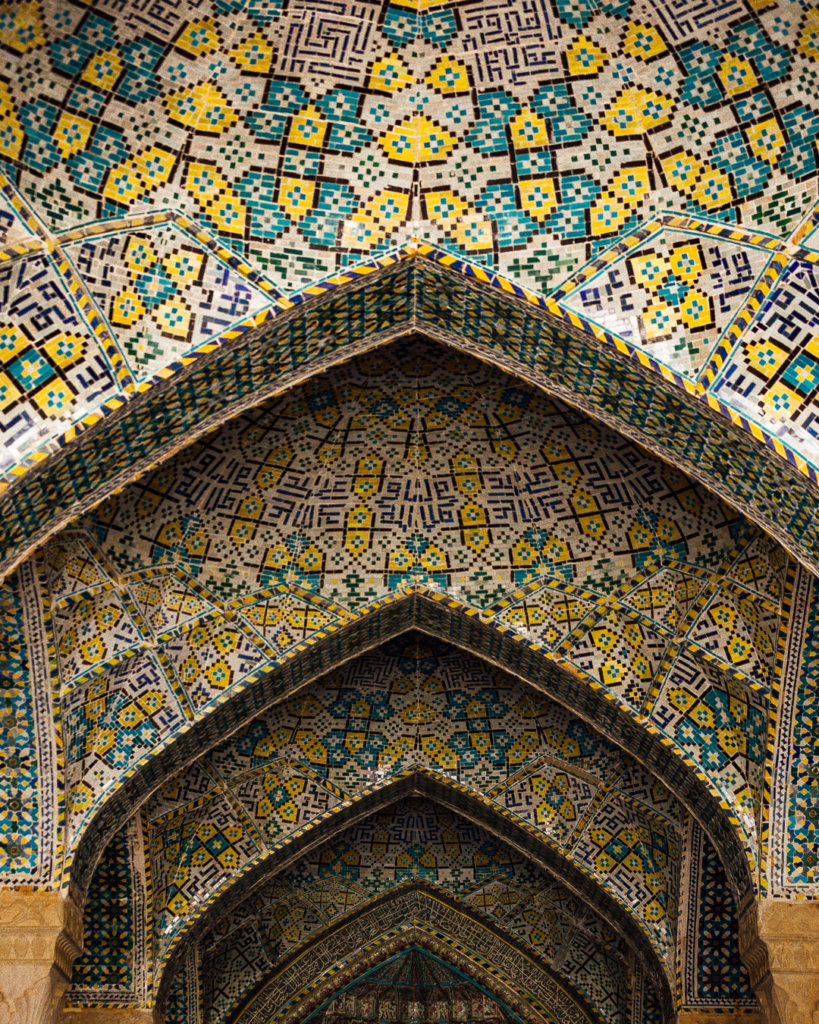
Vakil Mosque sits next to the Vakil Bazaar and is one of the last buildings from the Zand dynasty. Inside, you find 48 integrated stone pillars in spirals that make it a spectacular place to visit! It also got this calm change from other places. It’s incredibly relaxing, and the arches are a dream for photographers.
You can freely take photos, play with compositions and admire the architecture.
Grand Bazaar
Once you stay in the old city, it’s hardly possible to overlook the Grand Baazar. Divided between North and South, it gives insight into how the locals shop, buy and wear. What I noticed was that in Shiraz, the fabrics of the Hijabs and clothing were way more sparkling and colorful than in the other cities.
Qavam Traditional House
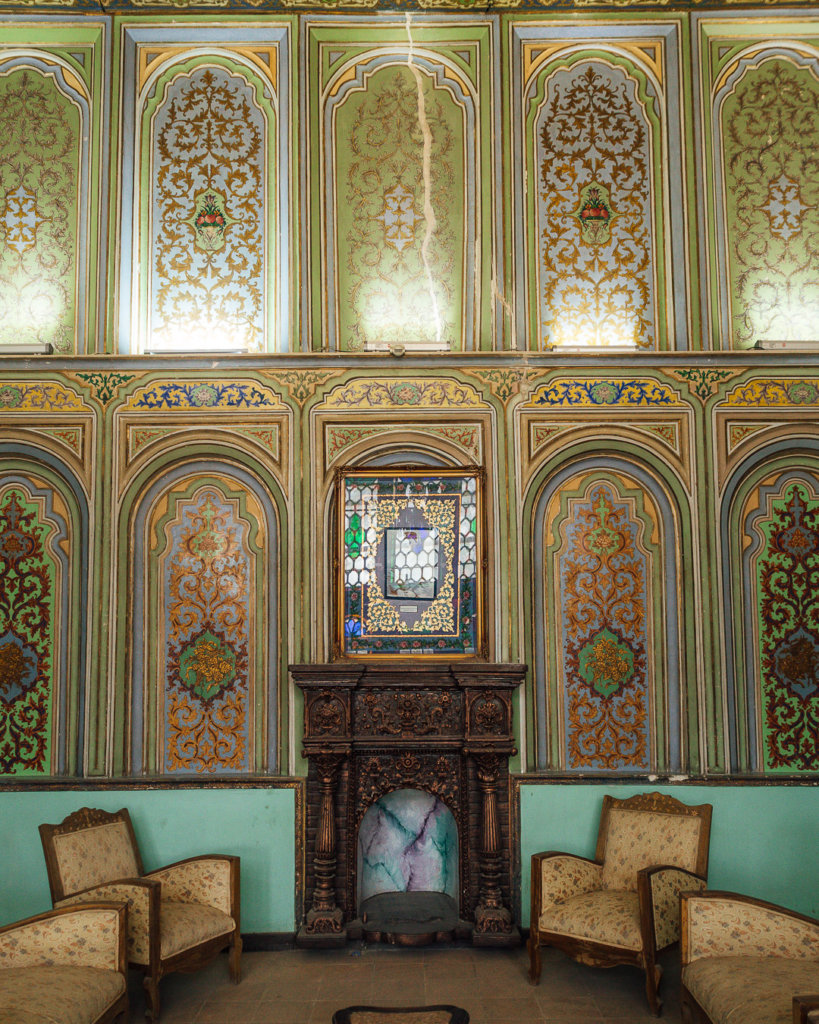
Shiraz of course, also has some stunning Traditional Houses that show how the rich merchants resided back in the day. Qavam house features a fantastic garden area and hosts various rooms with different styles – mirrors, paintings, and tile work. On the ground floor, you find a painting school and interesting souvenirs as well as a boutique selling the prettiest scarves.
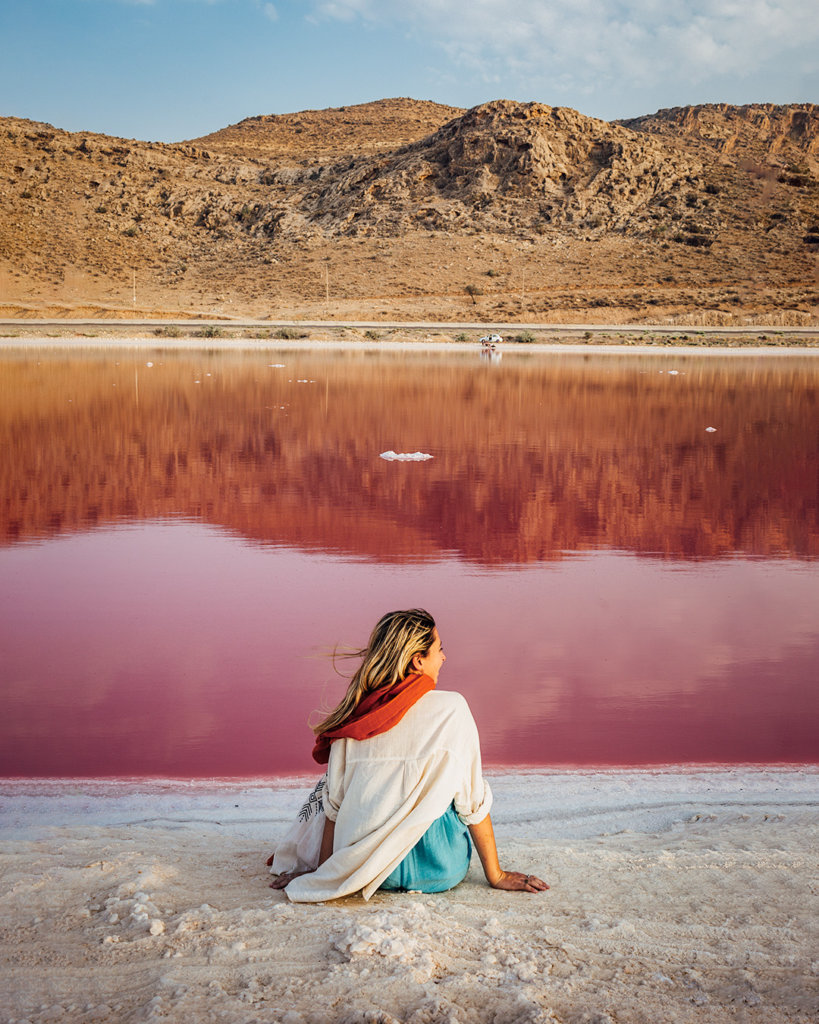
Maharloo Lake or Pink Lake
Did you know there is a Pink Lake in Iran? I initially didn’t and when I heard of it, I knew I had to go. Maharloo Lake is a seasonal salt lake just 25km south of Shiraz.
Due to heavy evaporation, the lake’s bed is covered by salt, making it one of the most surreal places I’ve seen. The pink colour comes about because of a certain type of algae that you can only see in summer.
If you go for sunset, you can witness how the colour changes from faint baby pink to a dark Shiraz-like or burgundy reddish pink. The combination with the white salt makes this a fantastic sight. Also, the haziness of the heat, made this visit one of the most memorable sunsets in Iran.

Persepolis
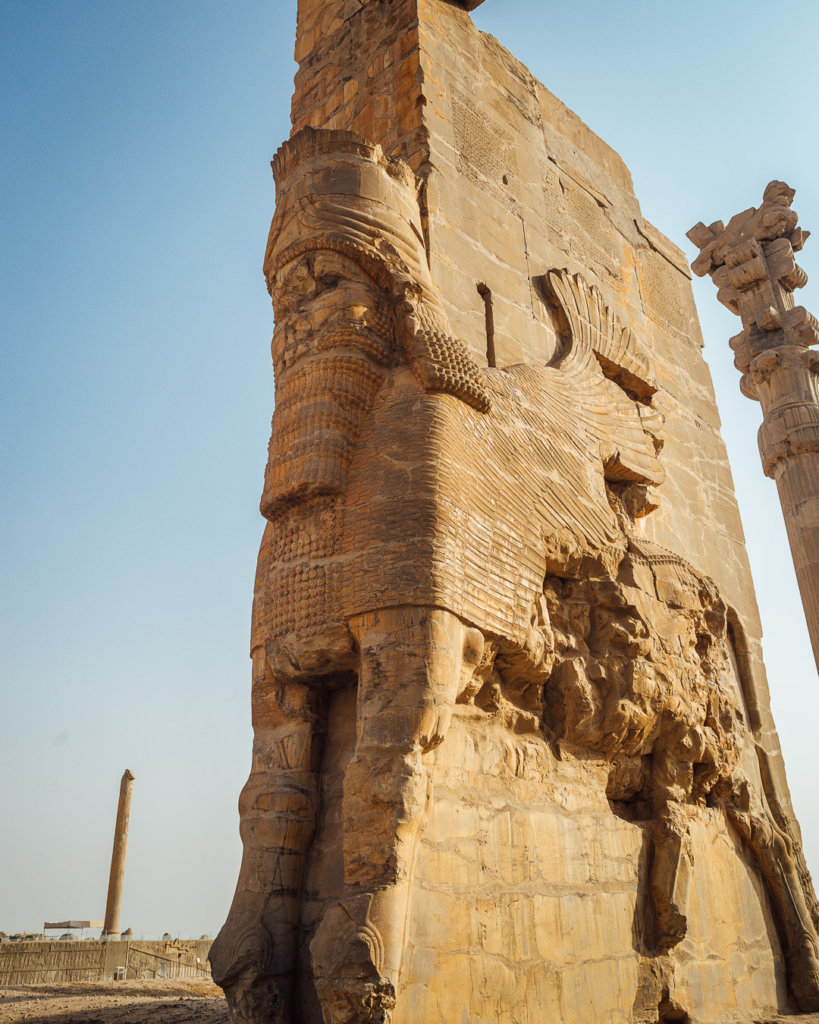
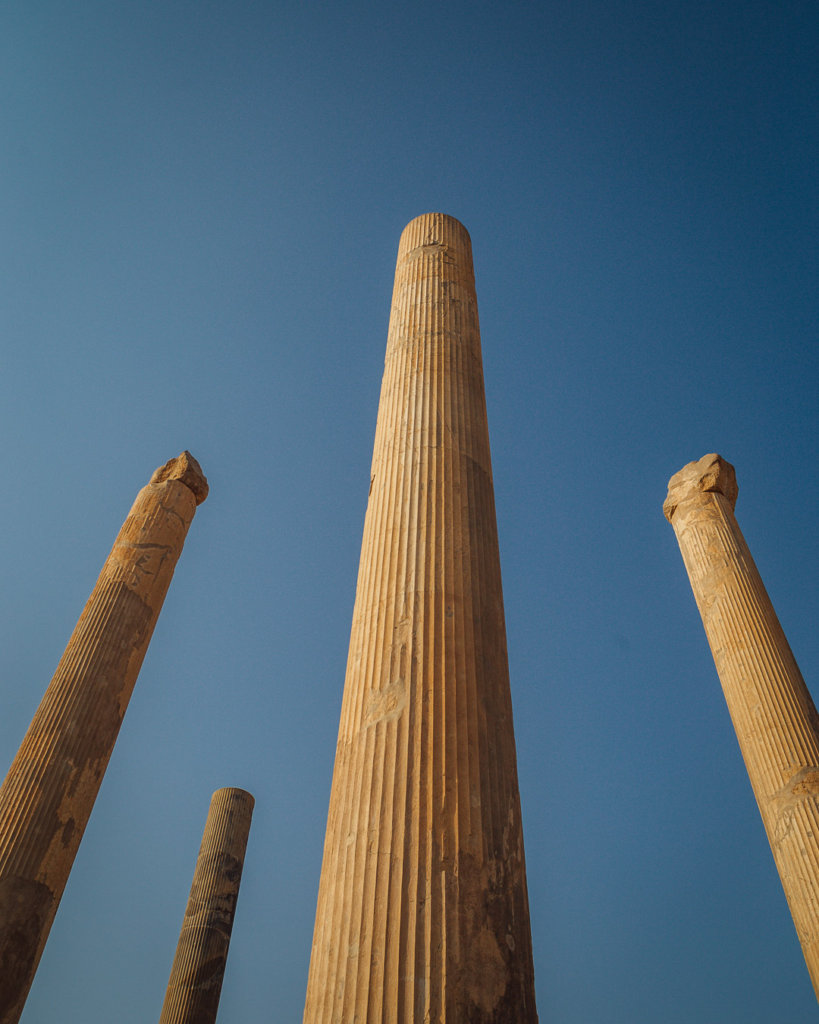
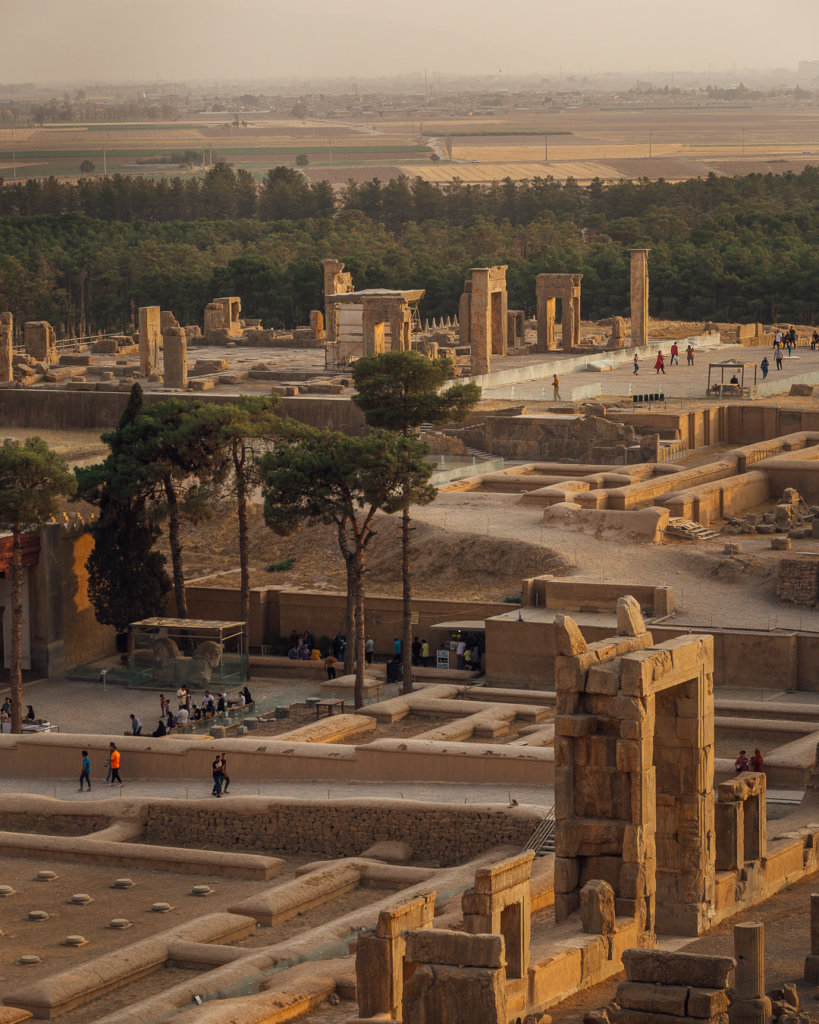
No Iran travel itinerary would be complete without visiting the ancient site of Persepolis. The ceremonial capital dates back to 500 – 330 BC and was especially used for the Iranian Nowruz celebration, the Persian New Year. Persepolis, as part of UNESCO, is one of the world’s greatest archaeological sites.
The area of the ruins is massive and you can easily spend half a day wandering around. Besides some wonderful, well-preserved rock reliefs, you can also find ancient texts, tombs and palaces.
In the end, it was Alexander the Great who destroyed Persepolis, leaving it in ruins that can barely represent the grandeur and meaning it used to hold.
On-site are various guides available, and as I found this place interesting, I chose to have one.
Naqsh-e Rustan
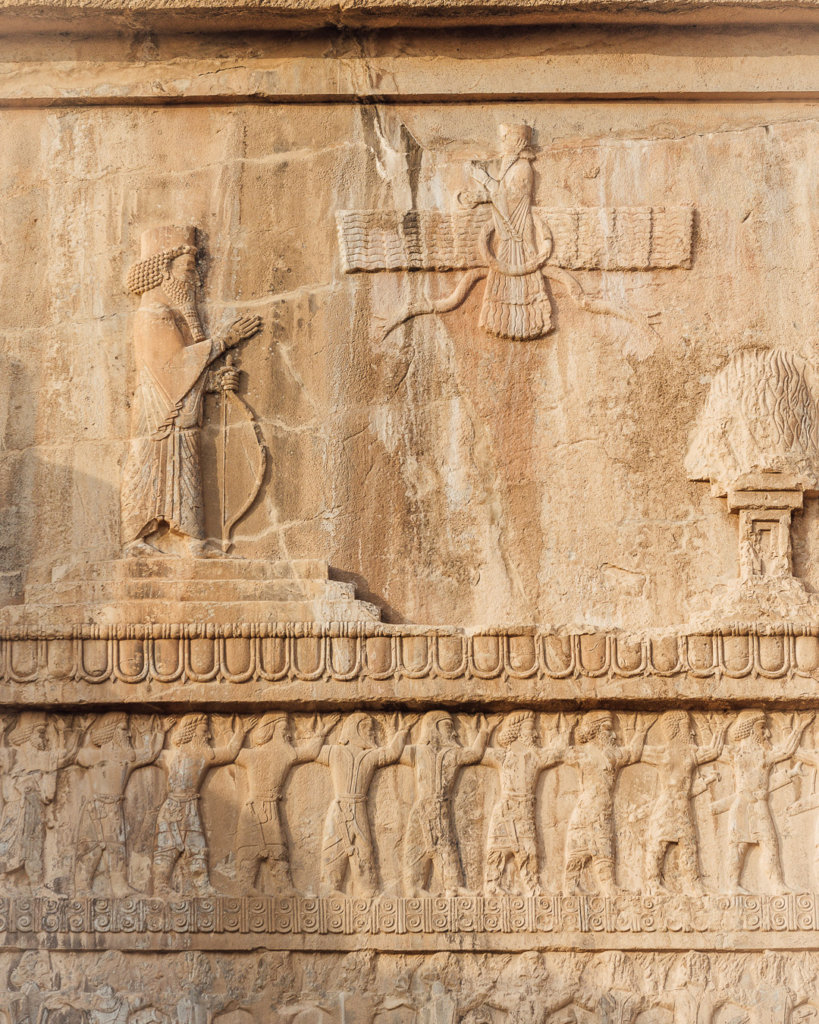
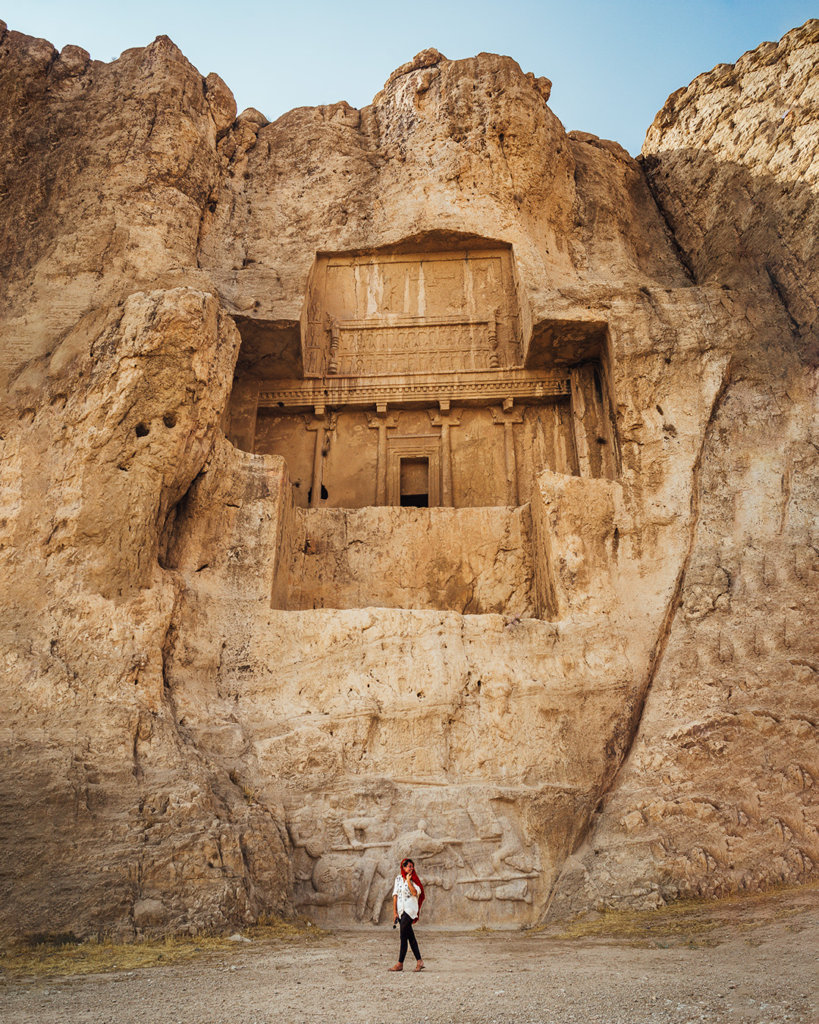
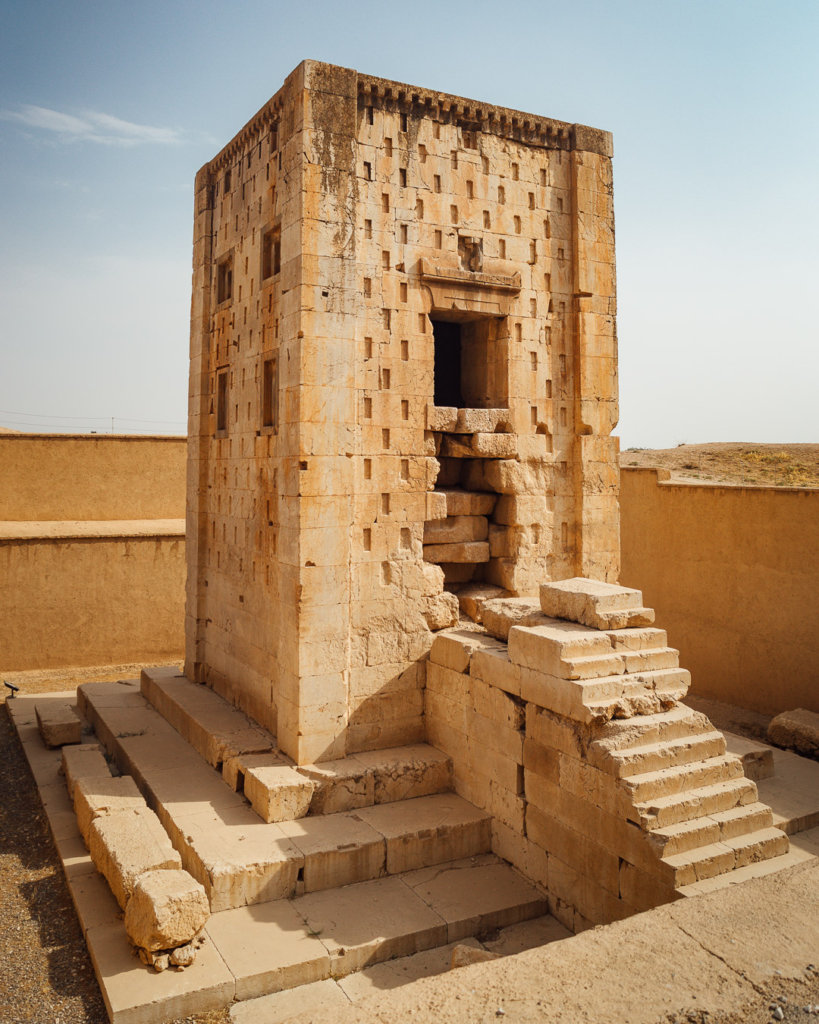
A place that fascinated me even more so was the burial site of Naqsh-e Rustan. The often-overlooked burial place of four Achaemenid kings is an eye-catching site that shouldn’t be missed in your Iran travel itinerary, especially when visiting the nearby site of Persepolis.
These colossal tombs are some 22 meters in high and were cut directly out of the mountain face, sitting far above the ground to prevent violation.
What an impressive reminder of the powerful Persian Empire that ruled between 500 BC and 330 BC.
Restaurant Shiraz
Joulep Bistro for dinner and great views of the little square
The coffee shop next to Joulep Bistro
Parhami Restaurant for great Persian dishes and atmosphere
Baba Bastani for the best ice cream in Shiraz. Prepare to queue!

Cost of Travel for Your Two-Week Iran Travel Itinerary
Yes, Iran is very affordable for travelers, but you do need to plan ahead.
International credit and bank cards do not work in Iran, so you need to bring enough cash for your entire trip. That sounds intimidating at first. Using a Mah Card made things much easier and safer day to day.
While the cost of living is high for locals, travel costs are low for visitors.
• Hostel or guesthouse private rooms cost around 10–20 euros per night, often with breakfast
• Dorm beds start from about 4 euros
• Boutique hotels can be as low as 40 euros per night
Food is inexpensive.
• Restaurant meals usually cost 3–7 euros
• Street food and kebab shops are even cheaper
Transport and sights are budget-friendly.
• Bus and metro rides cost roughly 2–6 euros
• Museum and attraction tickets are usually 2–4 euros
• Golestan Palace is the main exception at up to 20 euros
I spent around 550 euros total for two weeks of travel.
People
If I remember one thing about this country, it’s the people and how friendly and curious they are. Considering their not-always-easy past, they have been nothing but welcoming, interested and excited to see (and to be able to speak to) a foreigner. Some want to practice their English, some even their French or German!
I’d suggest leaving some spare time within your two-week Iran travel itinerary to spend time with people wherever you might meet them!
Iran Culture
For Iranians, it’s a thing called Ta’arof, that they have to offer you something of whatever they are eating, drinking or having – more often than not, it’s not to be taken seriously. It’s more out of politeness that they offer you a free taxi ride or a bite of their ice cream. You just insist, and pay as you normally would ? However with tea, in my experience, it was safe to assume they mean it and really want to share it with you.
Tea or chai is a big part of Iranian culture, something that most buses carry with them, that most men cook on an open stove and that is always offered. I had more than one bus ride where the driver brought me some chai – Merci!
This article contains affiliate links. If you purchase using these links, I earn a small commission at no additional cost to you. Thank you for your support! I only recommend services and tools I know and trust myself.
If you want to see more of my travel photography, head over to my travel portfolio.
Pin this Iran Travel itinerary for later!