A trip to Uzbekistan reveals so many beautiful places, from desert castles in Khiva to impressive Madrassas and places like Bukhara. Of all the places I’ve seen in Uzbekistan, Bukhara is the one I loved the most.
If you’re planning a trip to Uzbekistan and wondering what’s actually worth your time, this guide is for you. It’s especially useful if you’re travelling independently, short on time, or want to experience Bukhara at a slower pace without missing the important sights.
I’m sharing the places that genuinely stood out to me, the must-see landmarks, and the few tours that actually add value, not just fill a schedule.
With the relaxed vibe, the sand-colored buildings and the charming ancient sights on every corner, Bukhara quickly becomes a town you’ll love.

Quick Travel Planning for Bukhara
How To Get To Bukhara
Bukhara fits naturally into most Uzbekistan itineraries, whether you’re arriving from Samarkand in the east or continuing on to Khiva through the desert.
Bukhara has its own airport with domestic and limited international flights, which is useful if you’re short on time or want to avoid long drives across the desert.
The high-speed train is the most popular option and links Bukhara nicely with other major cities. Seats on the high-speed train sell out fast, so booking a guaranteed ticket for the high-speed train in advance saves you from last-minute stress. If you prefer flexibility, hiring a local driver is an easy and comfortable alternative.
If Bukhara is part of a bigger journey, a 7-day Uzbekistan itinerary covering Samarkand, Bukhara, and Khiva is a smooth way to see the country’s highlights without constantly re-planning transport and hotels.
How Many Days in Bukhara
Two full days are enough to see Bukhara’s main highlights at a comfortable pace, especially if you stay inside the Old Town. Three days is ideal if you enjoy slow travel, photography, and lingering in courtyards, tea houses, and bazaars without rushing.
Bukhara’s charm lies in early mornings, quiet afternoons, and evenings when the lights come on around Lyabi-Hauz and Po-i-Kalyan. If your itinerary allows it, an extra day gives you space to experience the city beyond the monuments.
If you want to see Bukhara without worrying about transport, timing, or missing key sights, a 7-day Uzbekistan Tour itinerary that connects Samarkand, Bukhara, and Khiva is the easiest way to experience the country without rushing
How To Get Around Bukhara
Bukhara Old Town is a small area and easy for you to walk around. Strolling towards the Bukhara Arc takes around 10 minutes and even to the Mausoleum, it’s a leisurely 20-minute walk tops. There are Yandex taxis you can take to get to the outskirts to visit Sitori and Necropolis independently.
Best Time To Visit Uzbekistan & Bukhara
The best time to visit Bukhara and see all the best things is in Spring (April to May) and Autumn (September to early November). Summers can get extremely hot with regular 40 degrees Celsius, and winters can also be brutally cold. I’d recommend doing most of your sightseeing before 1 pm and after 5 pm.
How to Pay in Uzbekistan
Uzbekistan is still very cash-based. I’ve been using the Wise travel card for years because it lets me hold and convert multiple currencies in one place, withdraw locally, and avoid the painful exchange fees that add up fast on longer trips.
Bukhara Old Town & Surroundings Map
For you to get a better idea, here are Bukhara’s must-see landmarks, hotels, and hidden gems. This map makes it easy to plan your visit, from the Old Town’s iconic mosques and madrassas to quieter corners and day trips outside the city.

Where to Stay in Bukhara for Culture & Exploring
Staying inside Bukhara’s Old Town completely changes the experience. You wake up to quiet courtyards, walk to major sights in minutes, and see the city before tour groups arrive. If it’s your first visit, this is where you want to be.
Most boutique hotels are converted madrasahs or traditional homes, which adds to the feeling of living inside history rather than observing it.
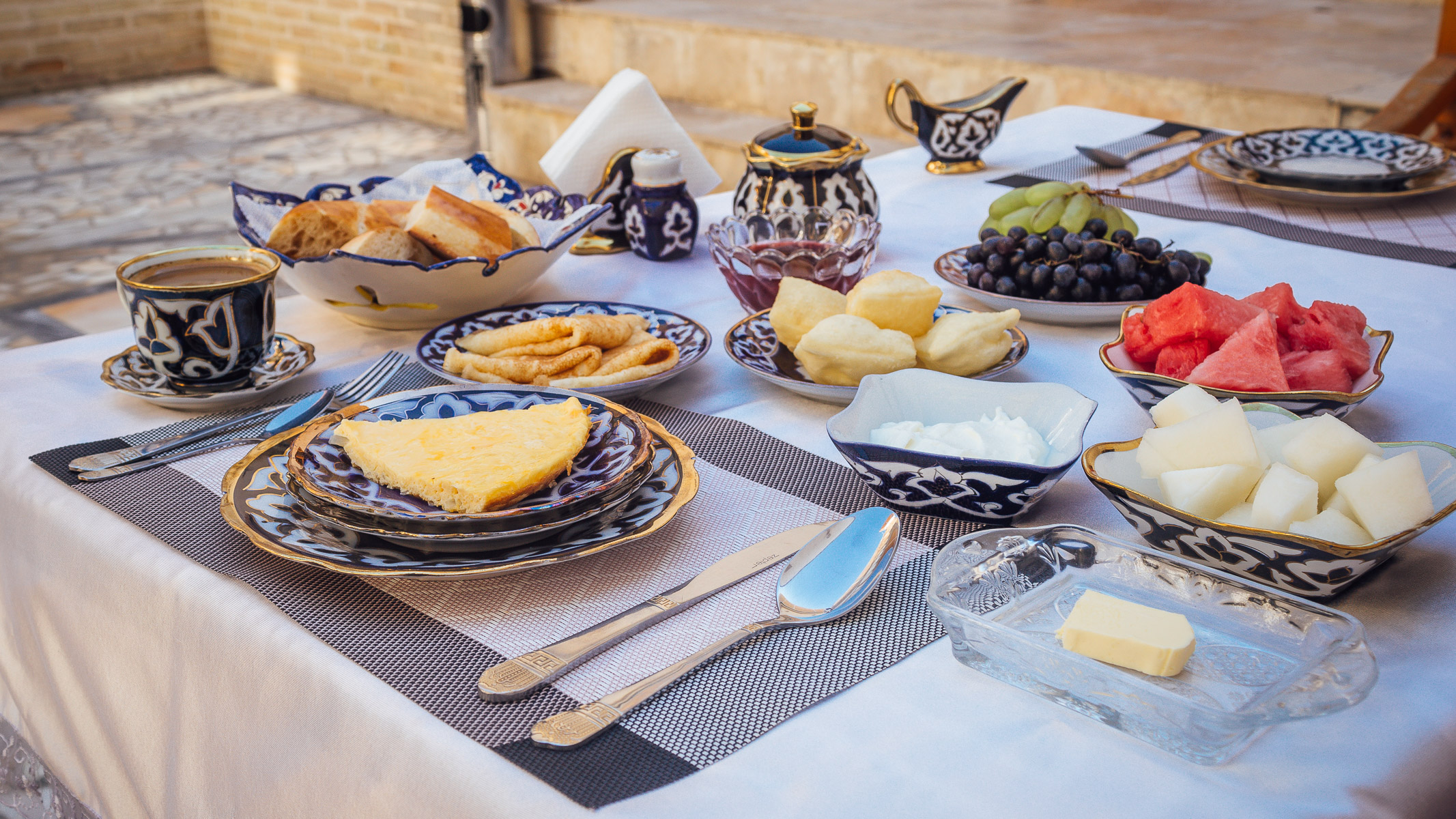
I stayed for over a week at Hotel Old Bukhara Boutique and loved it! It’s got a beautiful modern Uzbek interior, welcoming staff and they serve the best traditional breakfast in their gorgeous courtyard. I kept on extending my stay for a few days.
DUSTON Boutique XIX is a small, atmospheric hotel set in a restored historic building. Expect traditional details, calm interiors, and a very local feel. It’s a good choice if you want to stay somewhere that reflects Bukhara’s past without feeling touristy.
Mercure Bukhara Old Town is the most polished and upscale hotel in the city. It combines international comfort with local design elements and offers spacious rooms, a spa, and excellent facilities. Perfect if you want a more refined stay without leaving the Old Town area.
Book The Best Hotels in Bukhara Here!
Things to See in Bukhara – The Heart of Bukhara Old Town
Bukhara, the city that holds hundreds of well-preserved mosques, madrassas, bazaars and caravanserais, is one of the most beautiful places in Uzbekistan.
If you only have one full day, I’d start at Po-i-Kalyan early, wander the bazaars late morning, rest midday, and return for sunset around Lyabi Khause.
If it’s your first time in Bukhara, booking this guided Old Town Walking Tour is the easiest way to understand how all these landmarks connect.
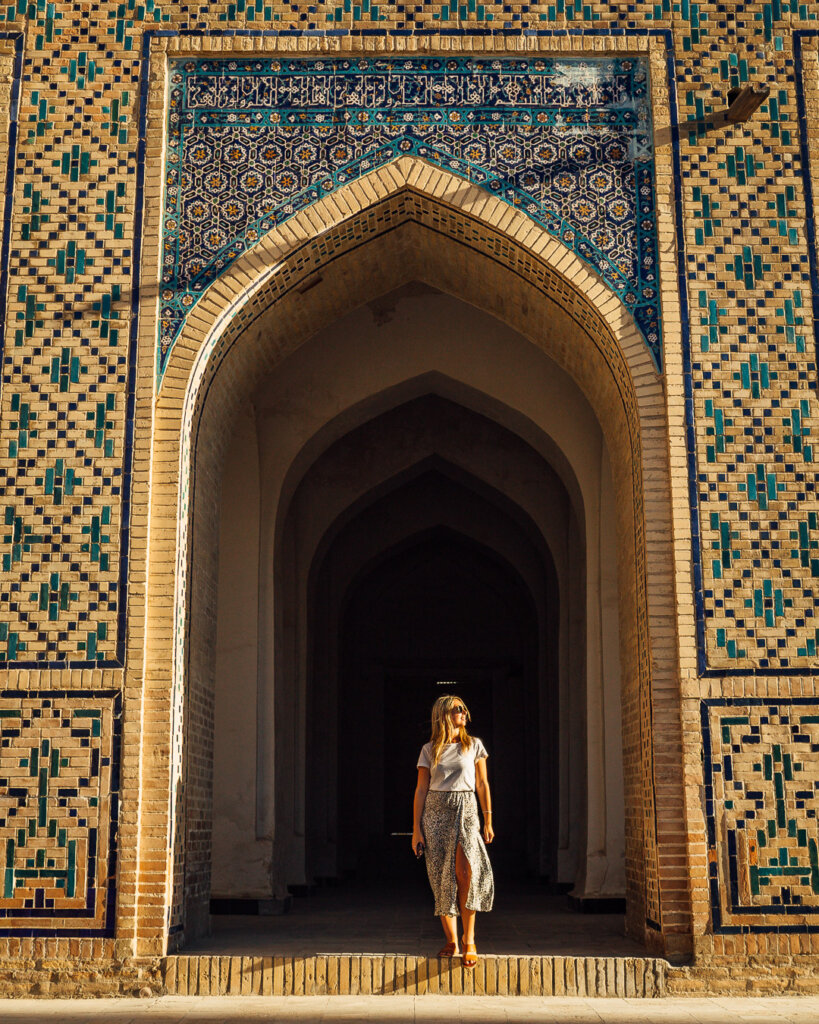
Kalyan Mosque
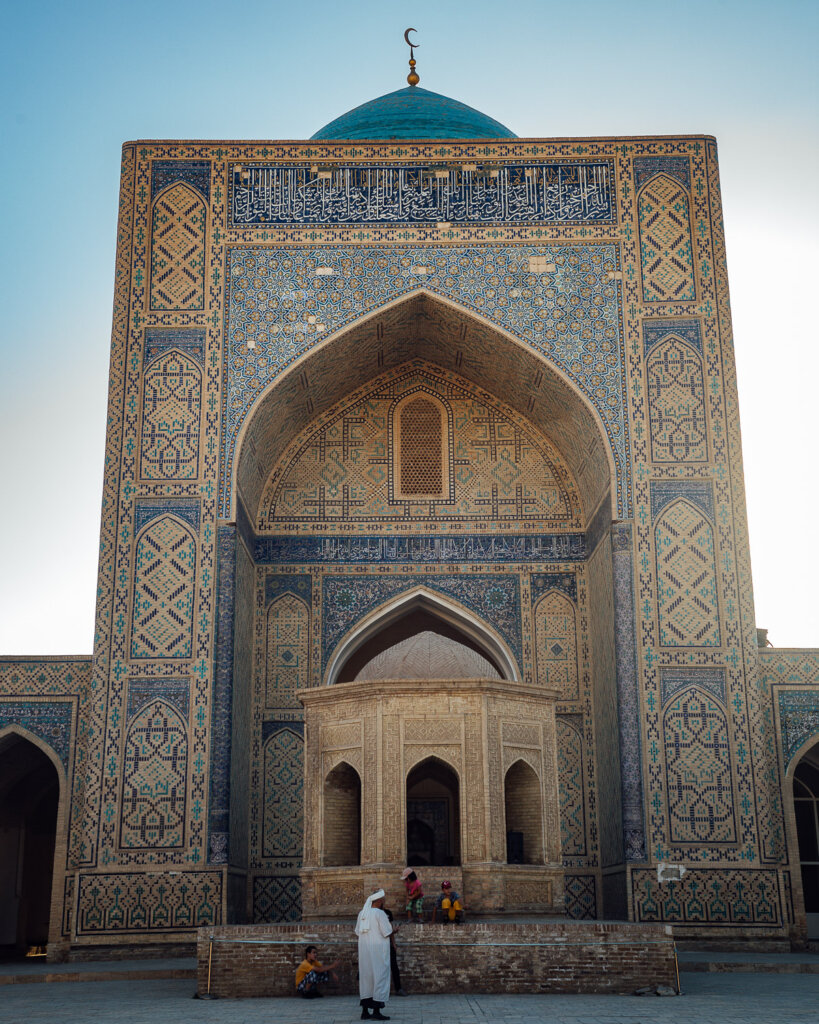
The Kaylan Mosque, as part of the Po-i-Kalyan Complex, is hands down one of Bukhara’s most outstanding monuments. Dating back to the 15th century, it used to be the second largest mosque just behind the Bibi Khanym Mosque in Samarkand, hosting up to 12.000 people.
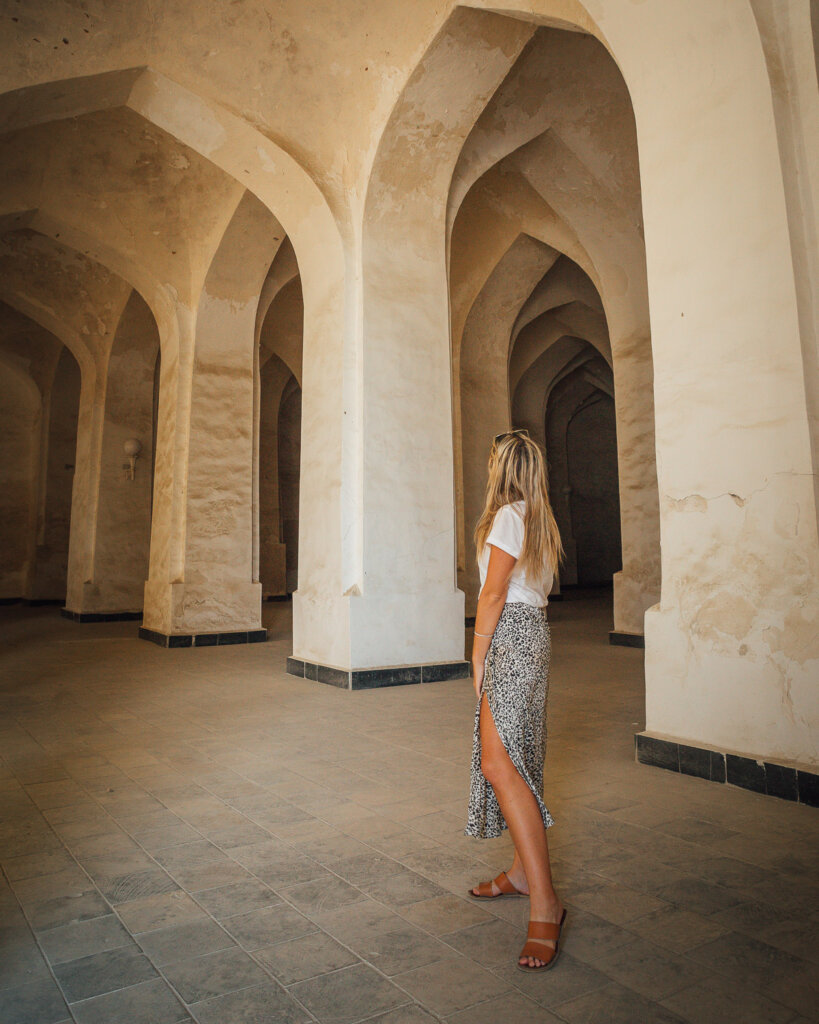
The Kaylan Mosque is the main mosque of Bukhara for about 500 years. On the sides of the main building, you can find two blue domes as well as a vault with 209 pillars.
Tip: Visit just before sunset, you might be lucky and walk right into the call of prayer. There is almost nothing more magical!


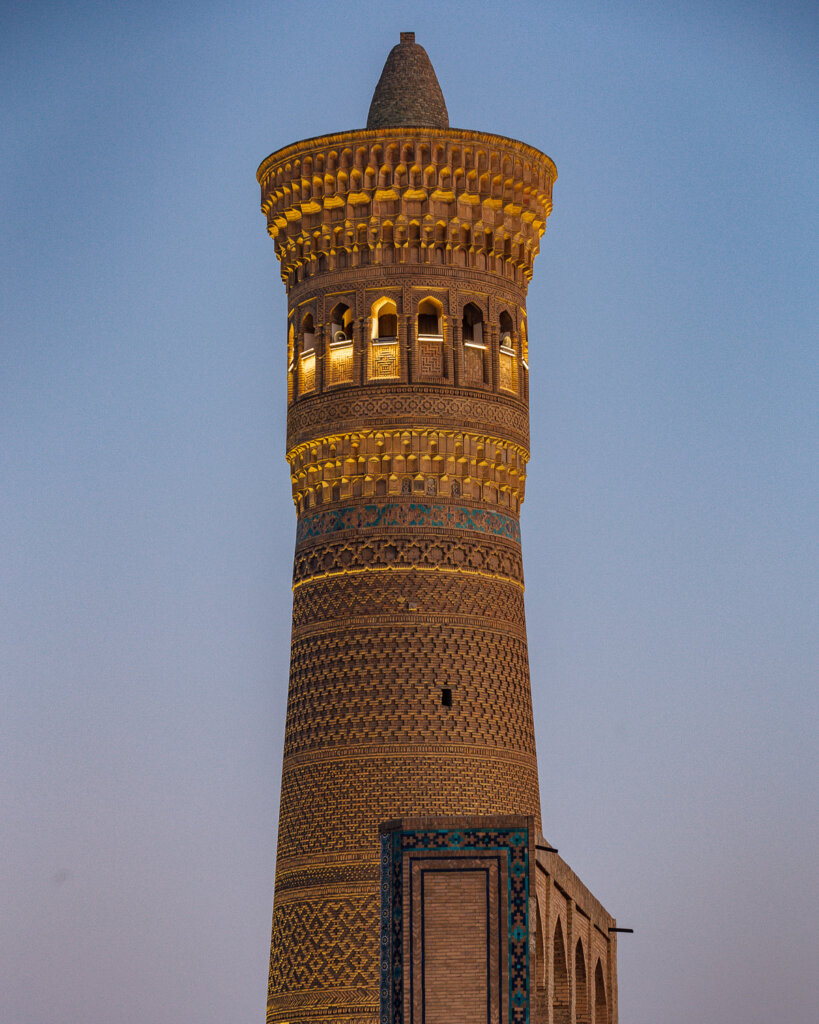
Kaylan Minaret
With 48 meters, the Kaylan Minaret is the tallest in Central Asia. It’s also called the Tower of Death because criminals were executed by being thrown off it until early in the 20th century.
The mighty symbol of the city is about 9 centuries old and has never been restored. Therefore, stay a little longer and admire this structure by day and especially, night!
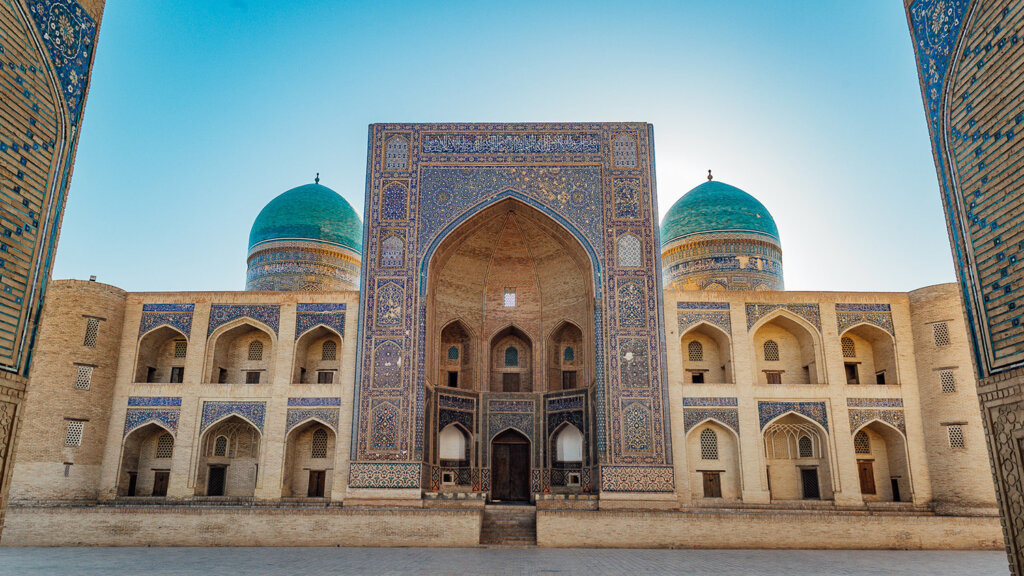
Mir-i-Arab Madrassa
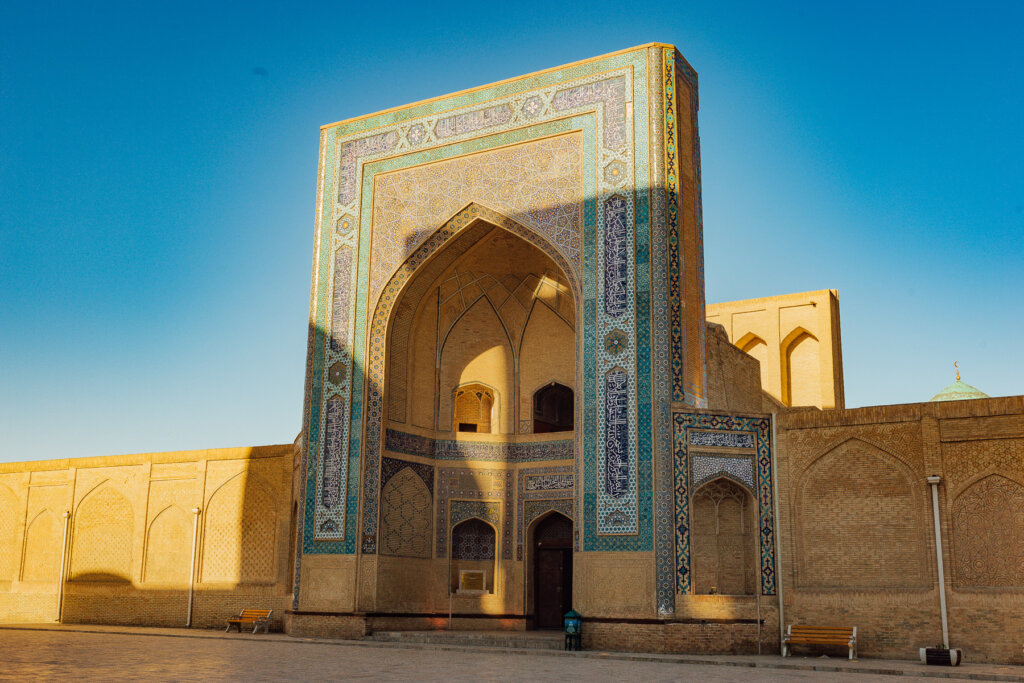
The Mir-i-Arab Madrassa is one of the must-see places of Bukhara, Uzbekistan and is hard to miss. It’s situated opposite the Kaylon Minaret, just a masterpiece of Islamic architecture.
It was built in the 1530s and has always been a place of Islamic spiritual education. To this day, it is an acting institution for future imams and religious mentors and cannot be visited. Make sure to come here for sunset and nighttime to admire the light show!
Lyabi Khause
A stone’s throw away, you have the famous Lyabi Khause and its pond. Surrounded by benches, a restaurant and a Mosque, you can also see a 1400-year-old Mulberry Tree.
Back in the day, the city of Bukhara was home to many of these ponds, used for people to gather and socialise. Sadly, as the water wasn’t changed very often, it became a breeding ground for diseases. Nowadays, this one is the only pond left, while another one is about to be built.
The adjacent restaurant is decent enough, and I enjoyed a few evenings here. There is live music, the pond’s fountains get turned on later at night and it’s always buzzing.

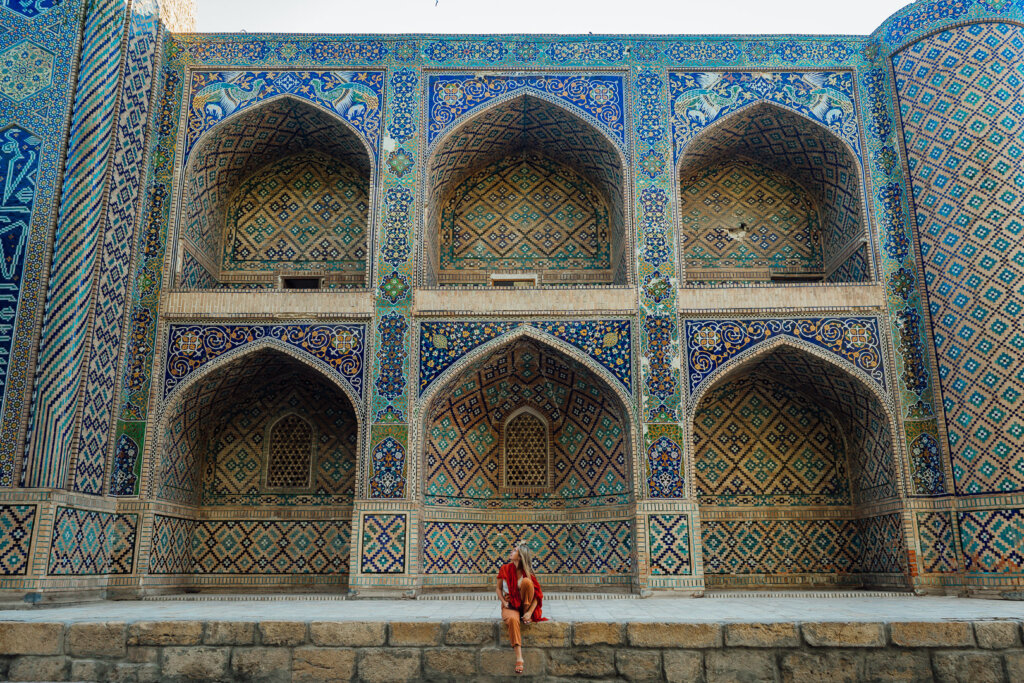
Nadir Divan-Begi Madrassa
One of the top things you need to see when in Bukhara is the Nadir Divan-Begi Madrassa. With its outstanding mosaic-covered gate and big courtyard, it’s a gem to visit.
With its overflowing amount of blue tiles, the arches on both sides of the gate make a great photo location, not only for Uzbek wedding shots. It’s free to visit the Madrassa and browse through the various stalls selling cute souvenirs.
At night, there is a daily Uzbek Dance Performance in which you get transported into long-gone times. If you’ve been looking for striking photography places, this Madrassa in in Bukhara, Uzbekistan, will make a great choice!

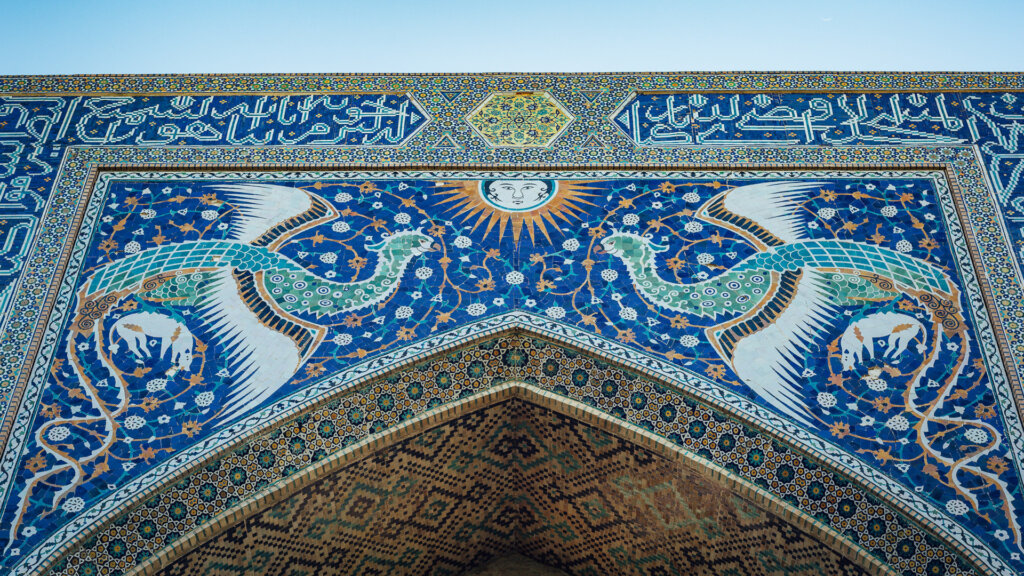
Ulugbek Madrassa
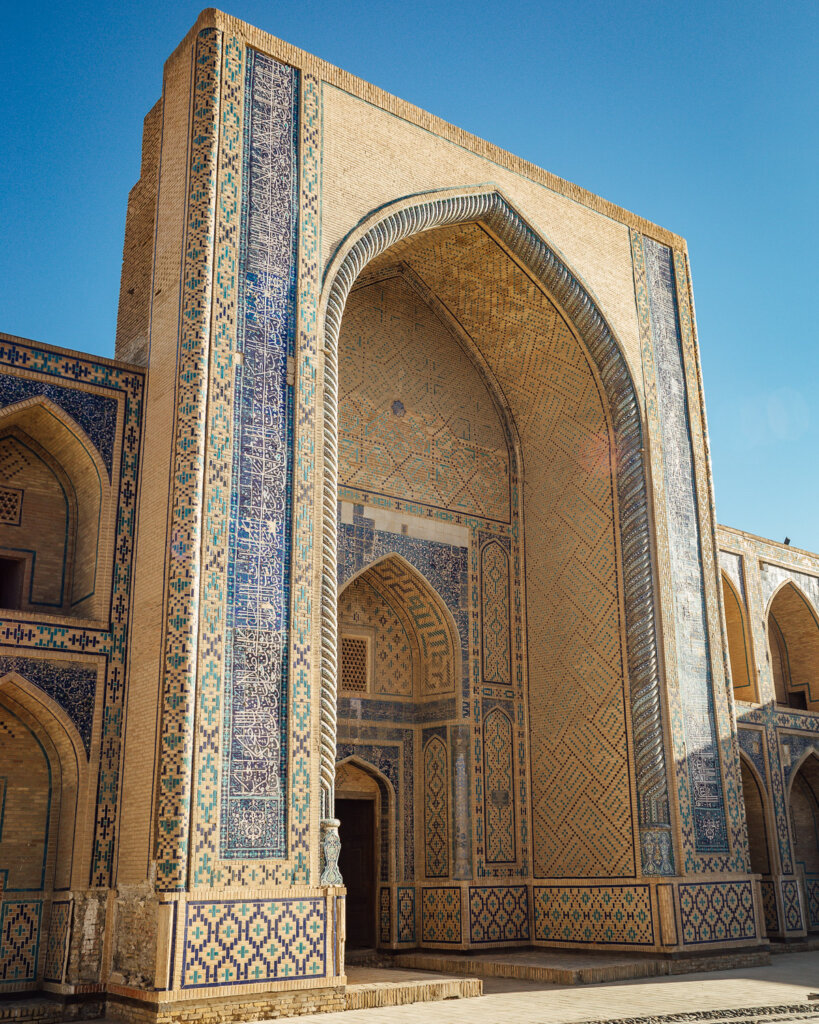
As one of only a handful of Timurid-era buildings, the Ulugbek Madrassa survived in Bukhara till today. It was built by Timur’s grandson, Ulugh Beg and completed in 1420.
At its gate, you can find a carved inscription from the Koran: ‘The pursuit of knowledge is the responsibility of every Muslim man and woman’.
Nowadays, you can visit for free inside but you need to pass several souvenir stands. I actually found the prices to be one of the most competitive. Therefore, if you haven’t yet bought souvenirs, this is a great place to do so!
Abdulaziz Khan Madrassa
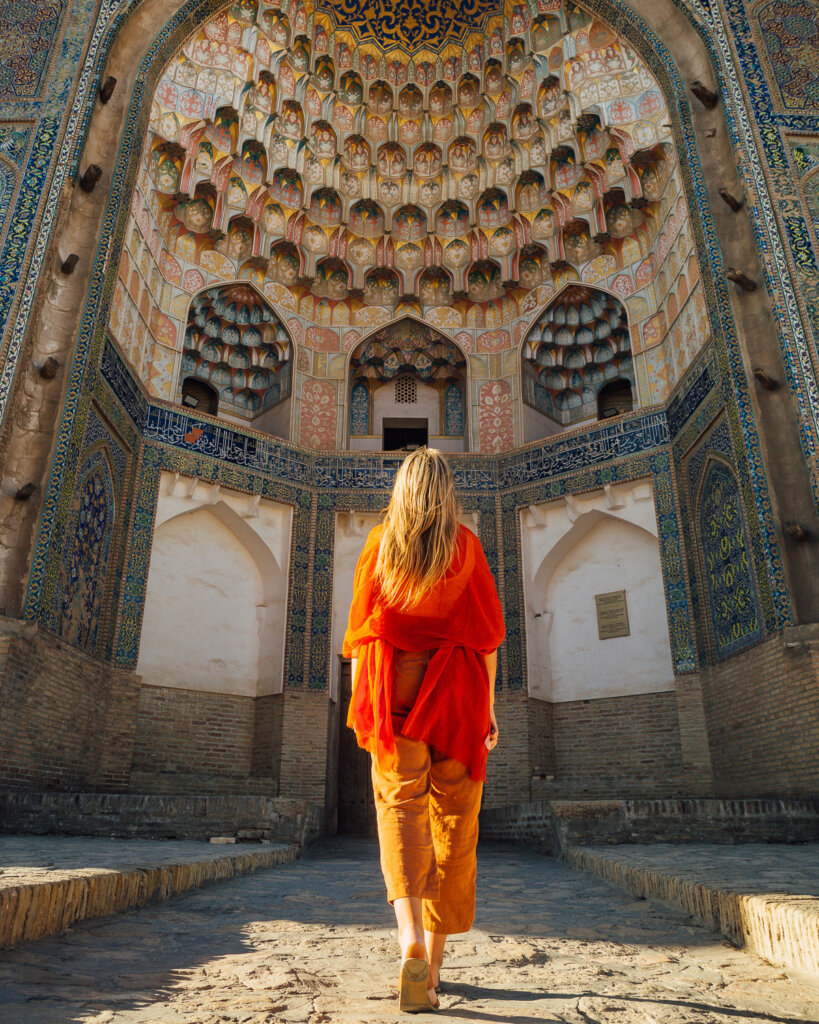
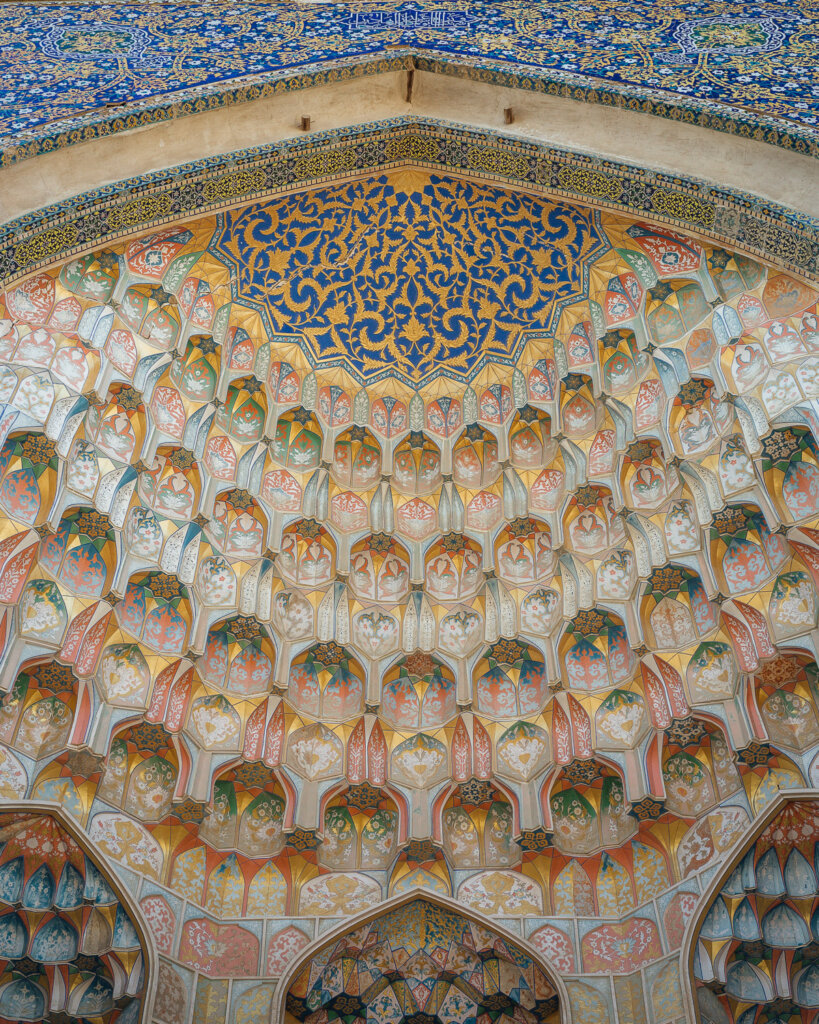
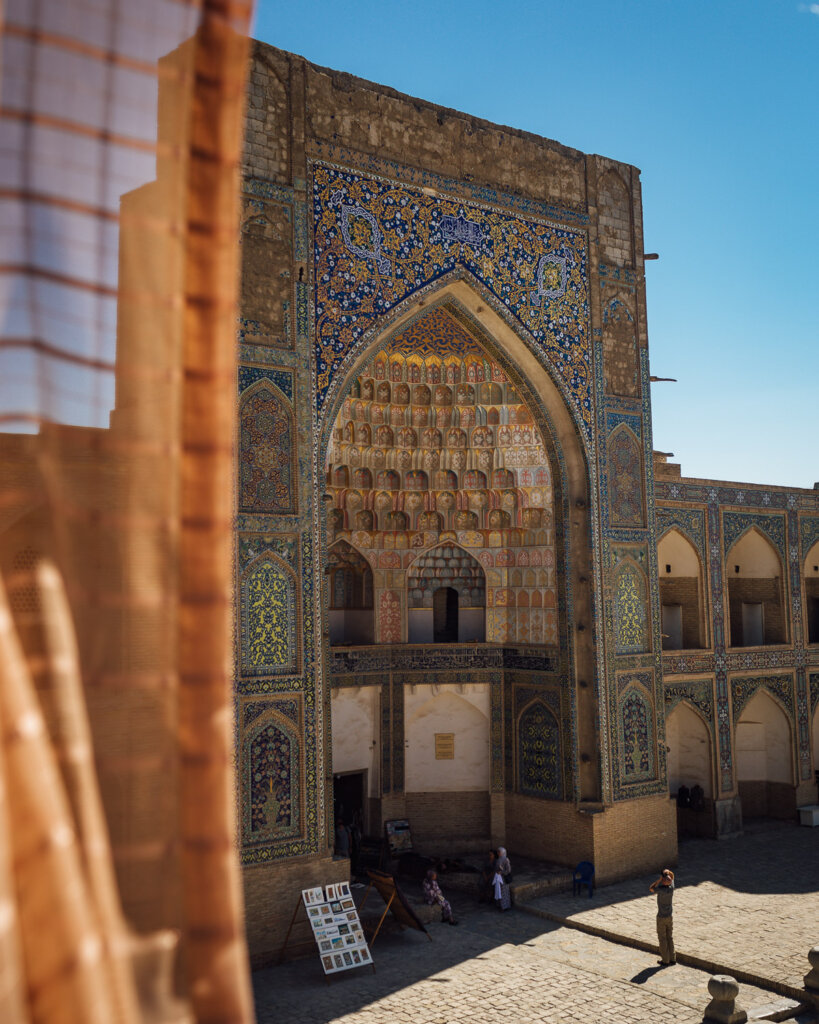
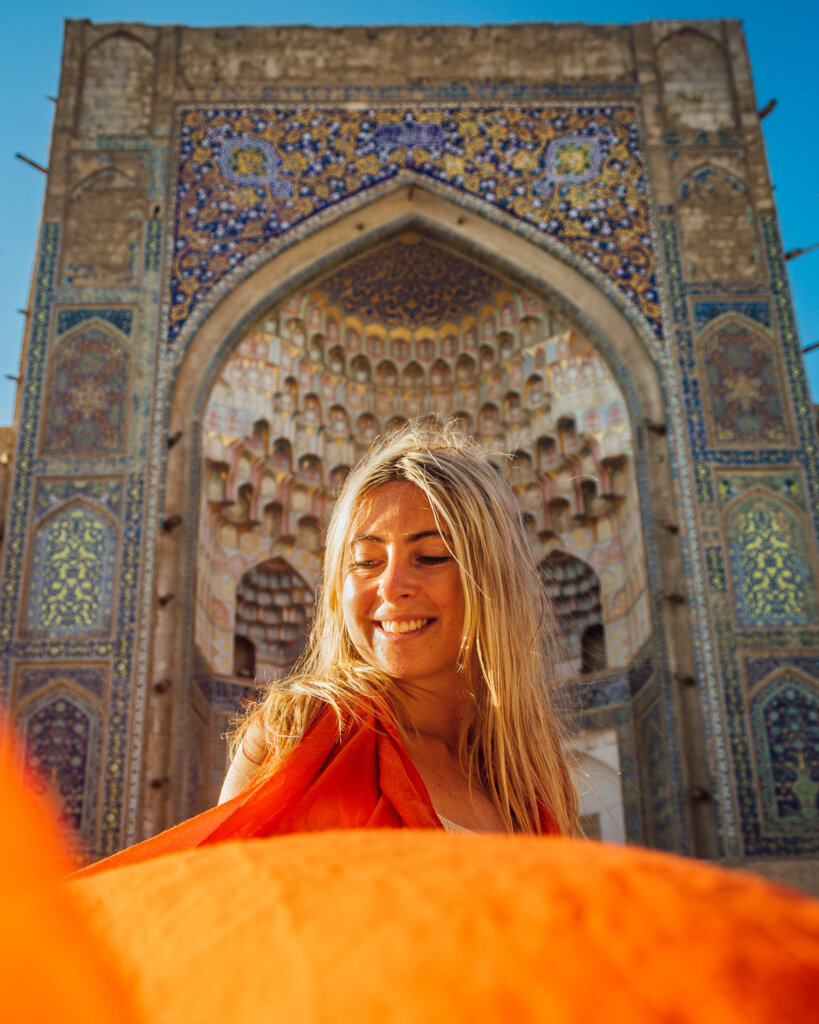
One of my favourite photo spots and things to see, the Abdulaziz Khan Madrassa sits in the middle of the Old Town. With its amazing pink mosaic, wavy plant designs and even a Chinese dragon, it’s very distinctive from the rest. This unique structure will make it one of the best places you’ll see in Uzbekistan and Bukhara!
The Abdulaziz Khan Madrassa has never been restored over the 9 centuries. Inside, you can still see the cracks that happened over the last 370 years.
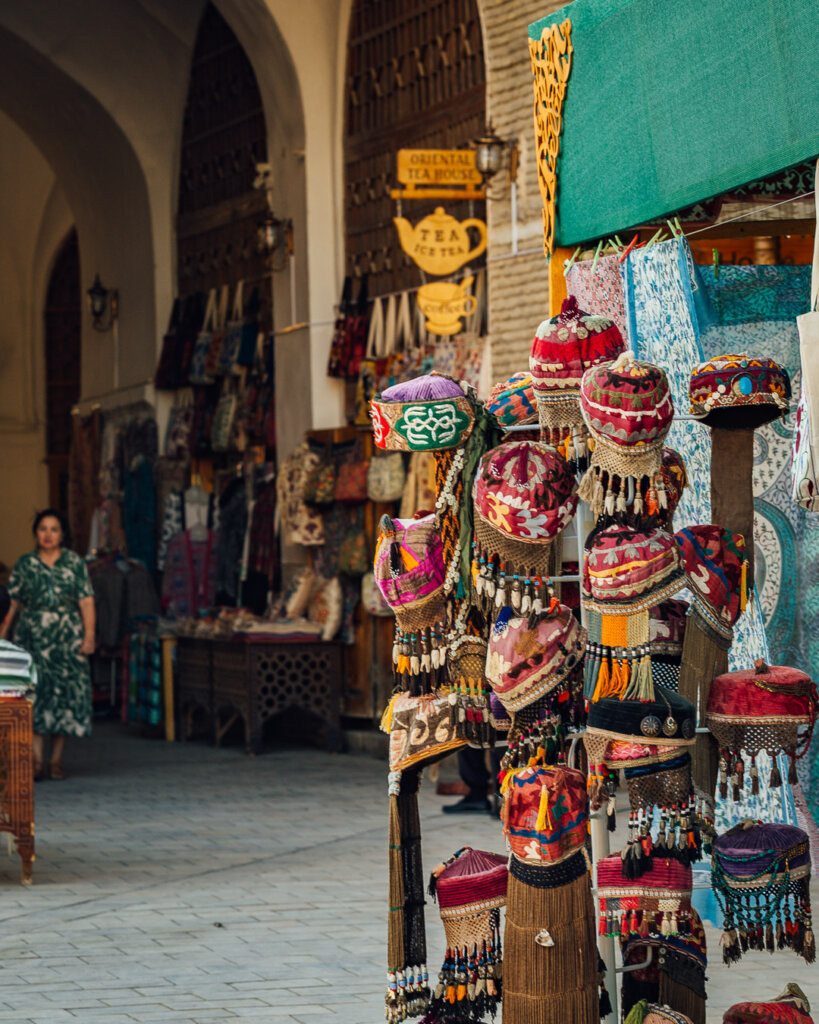
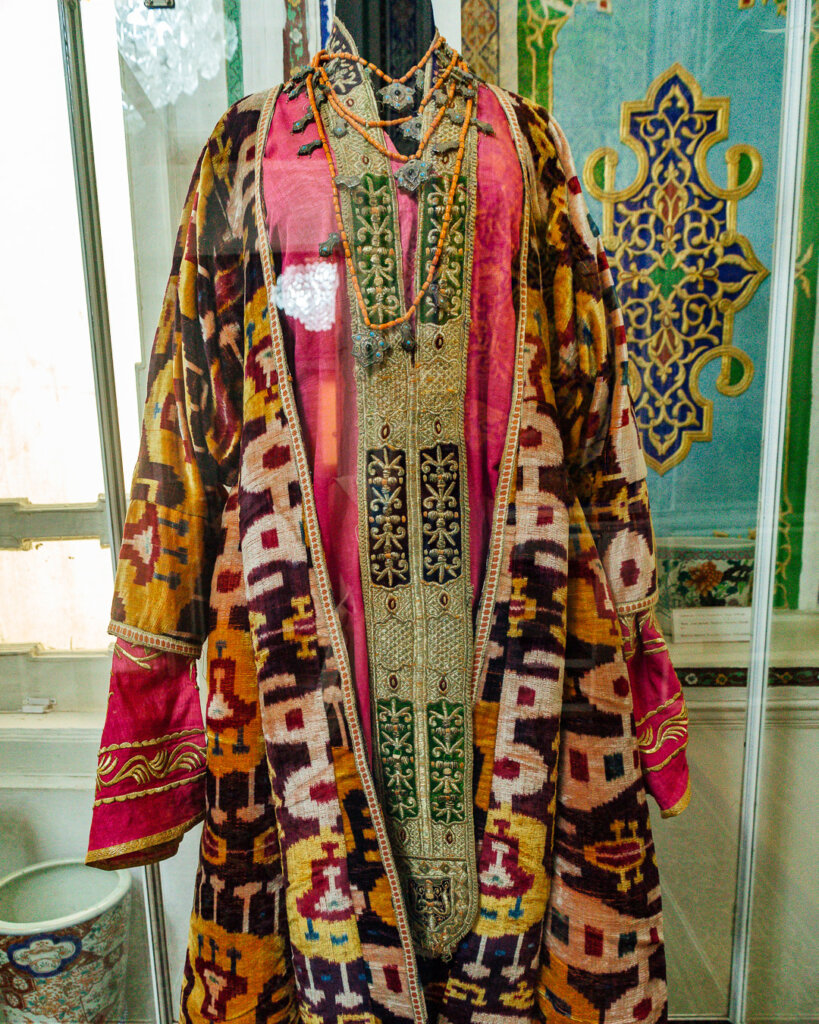
Inside, you can visit a summer and winter mosque and admire its splendid decoration. Besides this, you’ll also encounter many souvenir shops with interesting headpieces. Super interesting to learn about their past traditions.
Old Bazaar – Toqi Sarrofon Bazaar
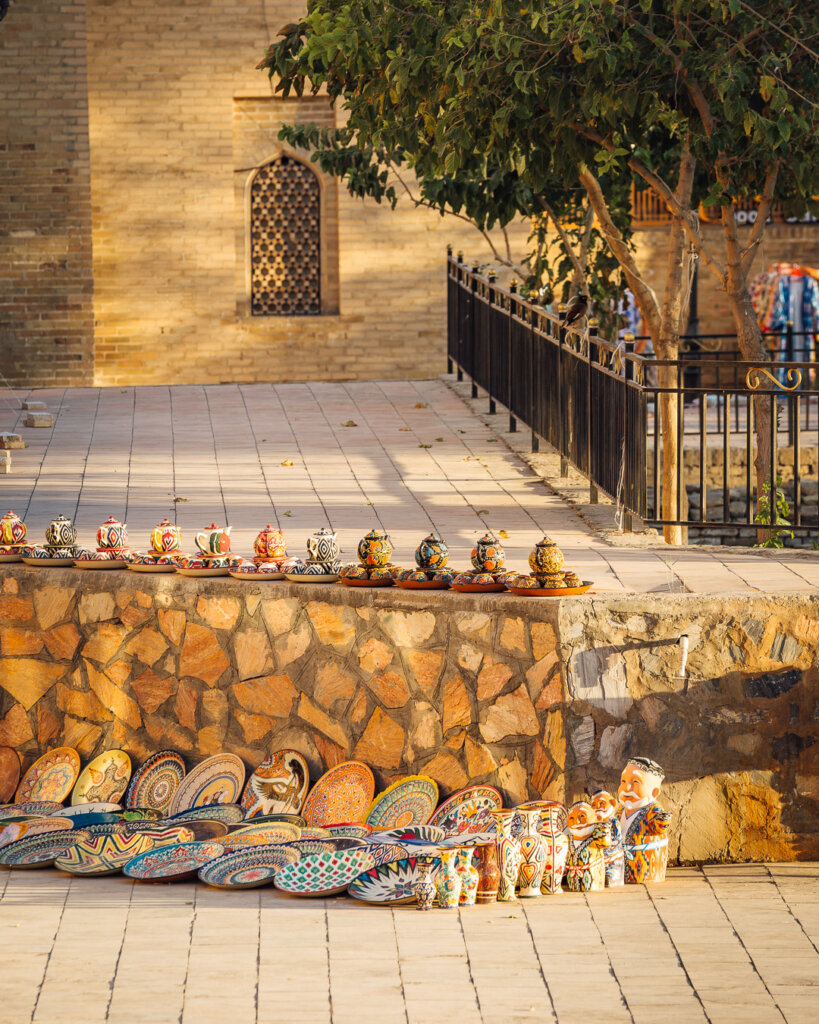
In the Old Town are about 4 different bazaars you will likely come across, like the Toqi Sarrofon, Toqi Zargaron or Toqi Telpak.
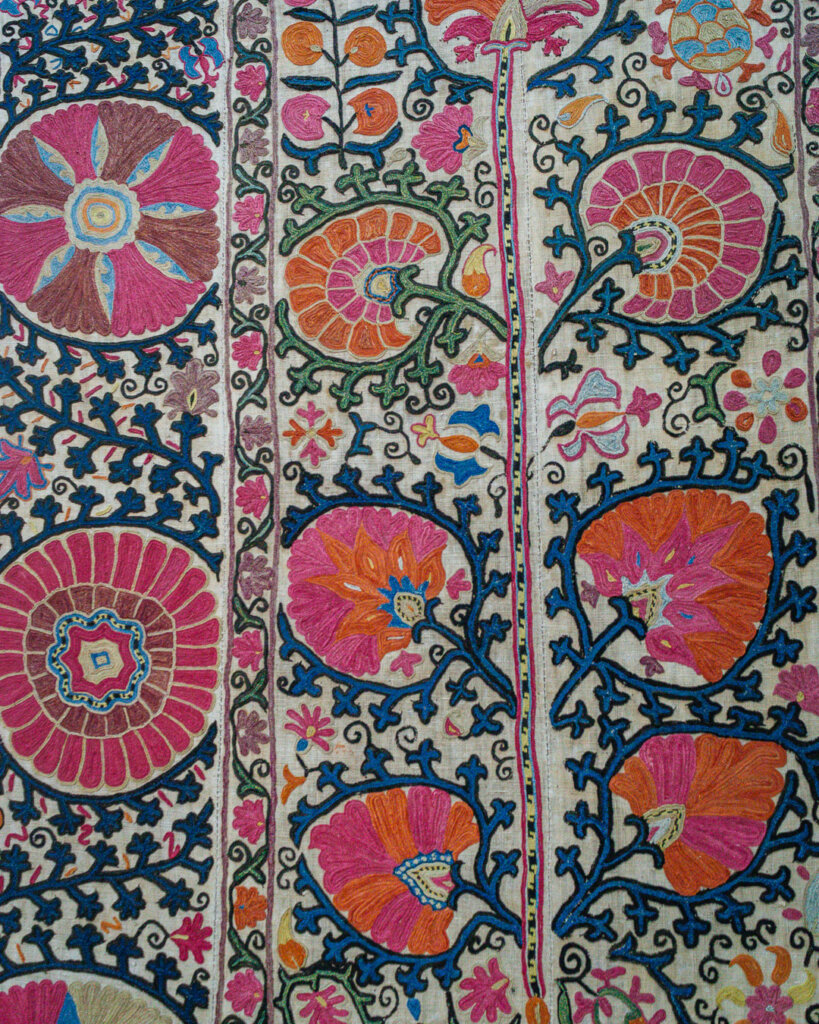
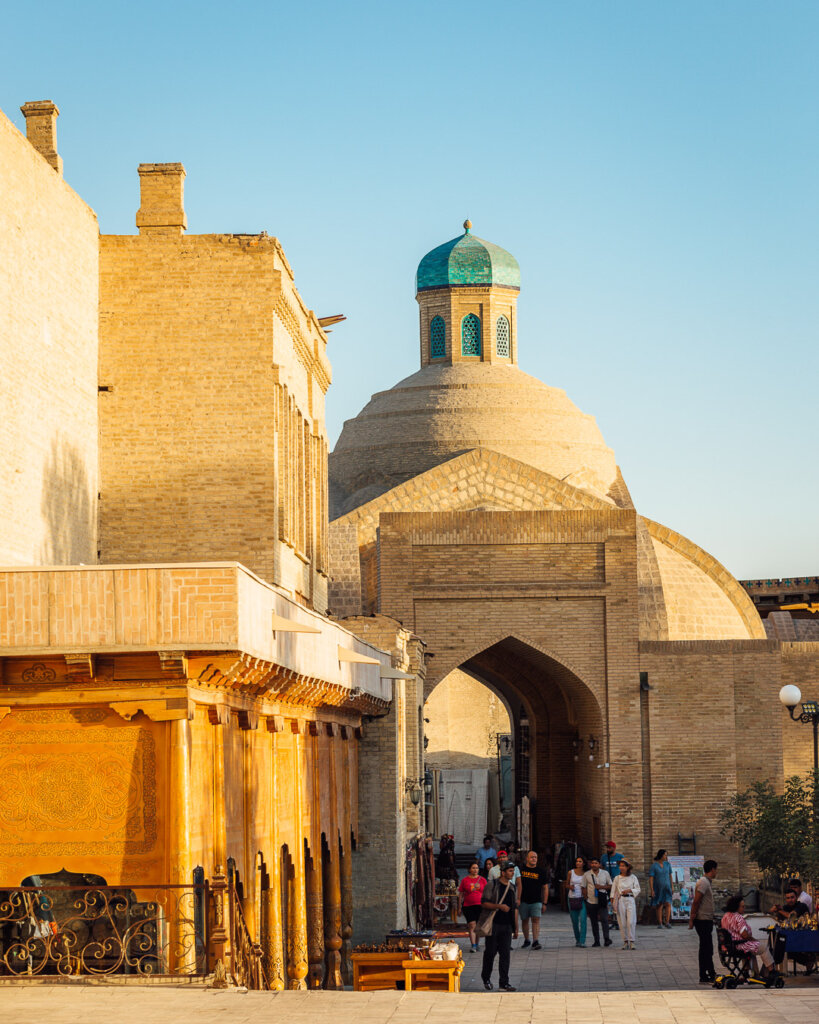
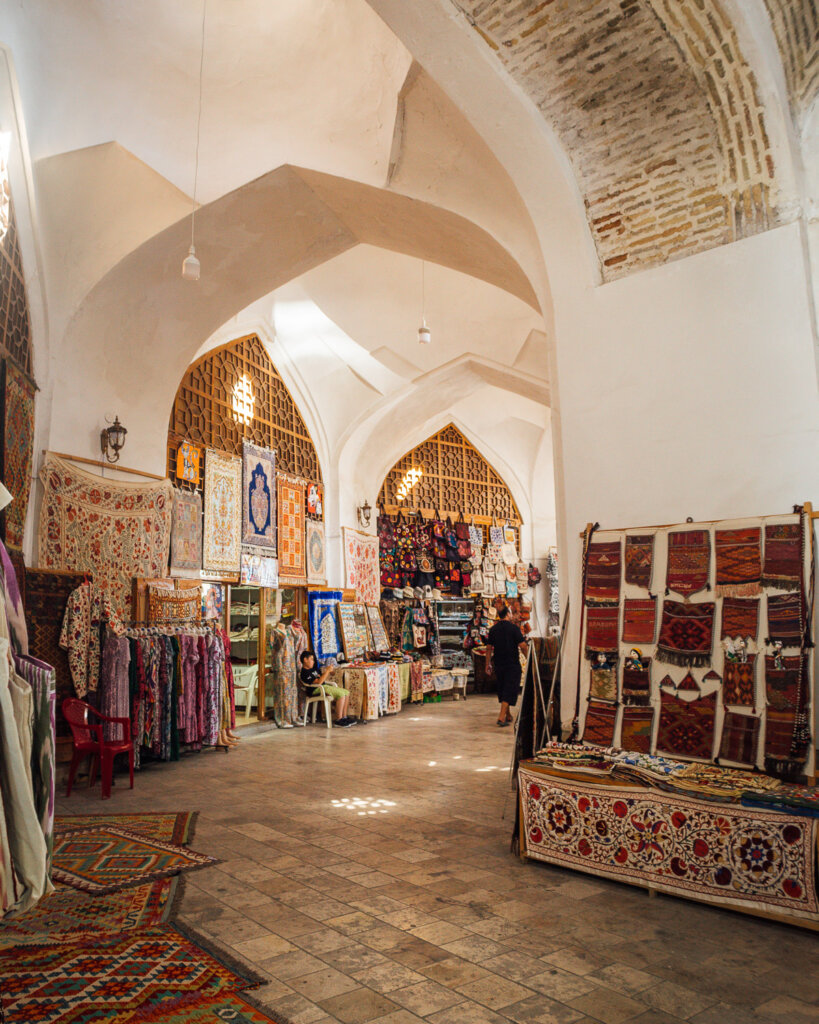
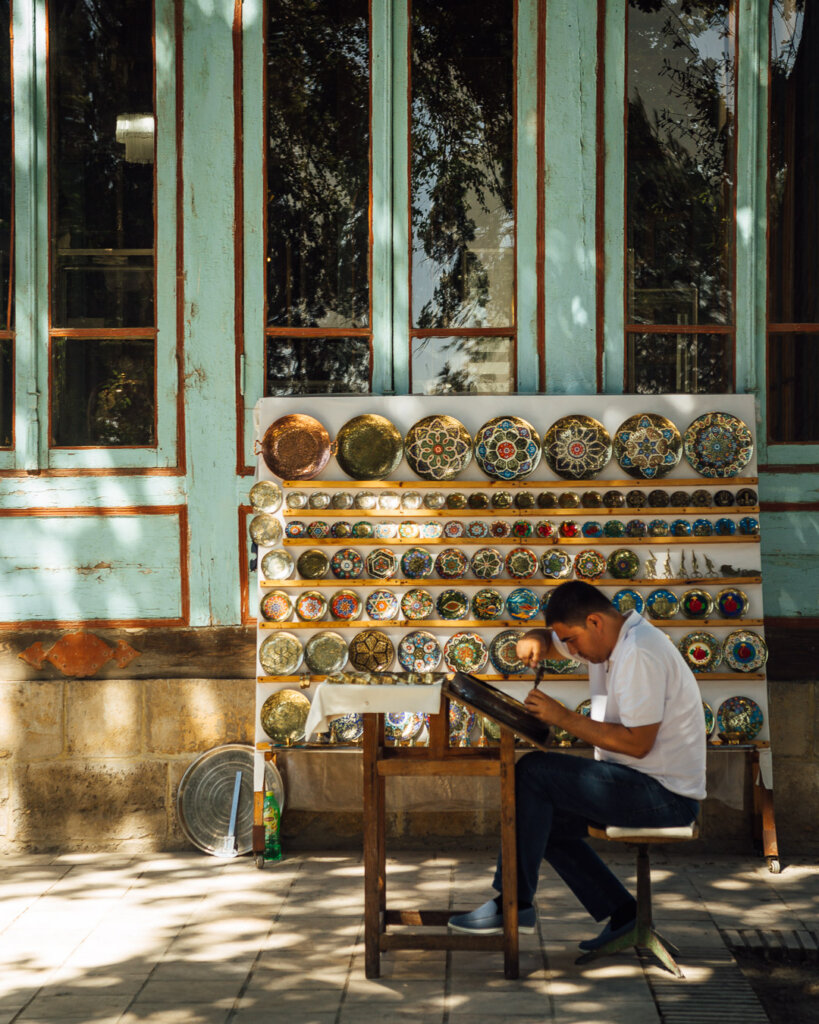
The colourful and lively markets are one of Bukhara’s main highlights. Nestled in small buildings with opulent domes, they are hard to miss while strolling through town. Take your time to get to know them all, each one has something different and alluring to offer. From vintage chapans and tunics, to copperware, hand-embroidered silk pillows and colourful scarves that make you drool.
Prepare to haggle your way to some beautiful pieces to remember your time in this city!
Bukhara’s Quiet Corners & Offbeat Spots
Chor Minor
Tucked away in the city of Bukhara lies this little gem, the Chor Minor Madrassa. Relatively unknown to most tourists, it’s a quirky and charming building that is different to any of the city’s other sights.
The madrasah with four minarets was built in 1807 and each of its domes is differently decorated. You can also climb to the top, just ask the shopkeeper and leave a small donation 🙂
Definitely, one of my favourite places to visit in Uzbekistan and things to see in Bukhara, especially for sunrise!


Qosh Madrassa
The Qosh Madrassa consists of two ensembles, the Modari-khan Madrasah and Abdullah-khan Madrasah. Built in 1588, the school aimed at spreading enlightenment, culture and science in the city. Also, it contains more than 70 classrooms!
The school is certainly one of a kind, especially due to its majestic Islamic decoration and mosaic. The highlight of this place is that you can ask the gatekeeper to take you up to the roof. For a little tip, he happily takes you up and is keen to take pictures of you sitting on the top of the mosque.

Ark of Bukhara
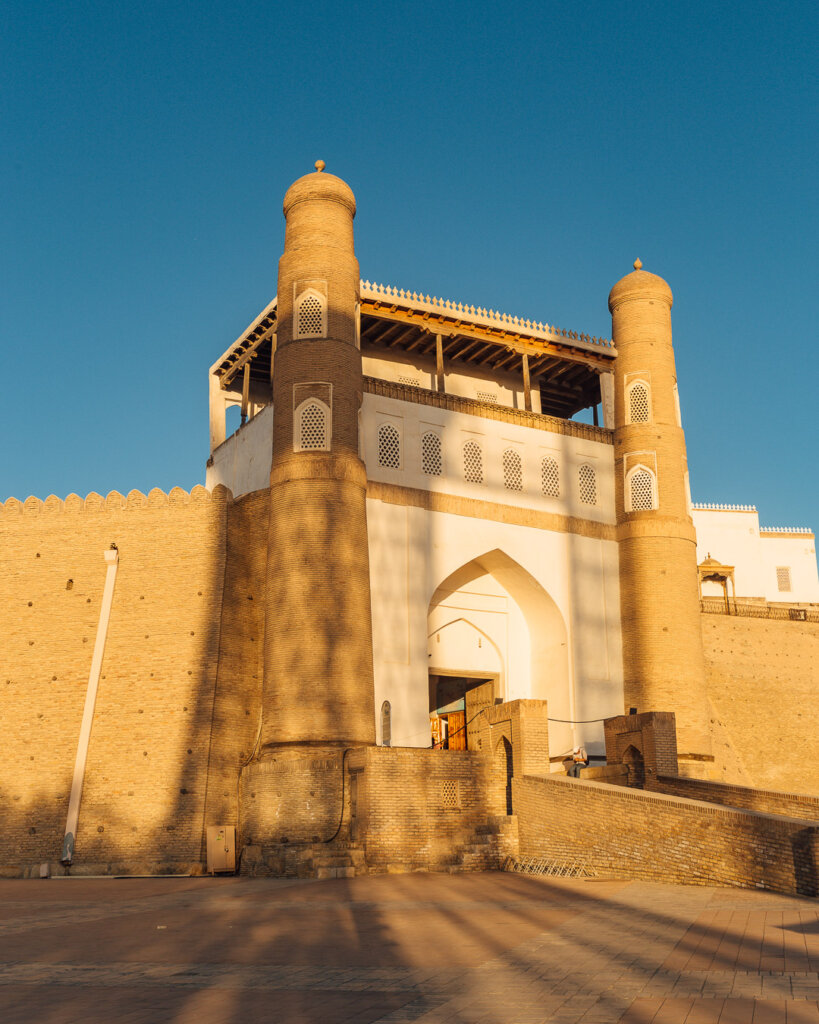
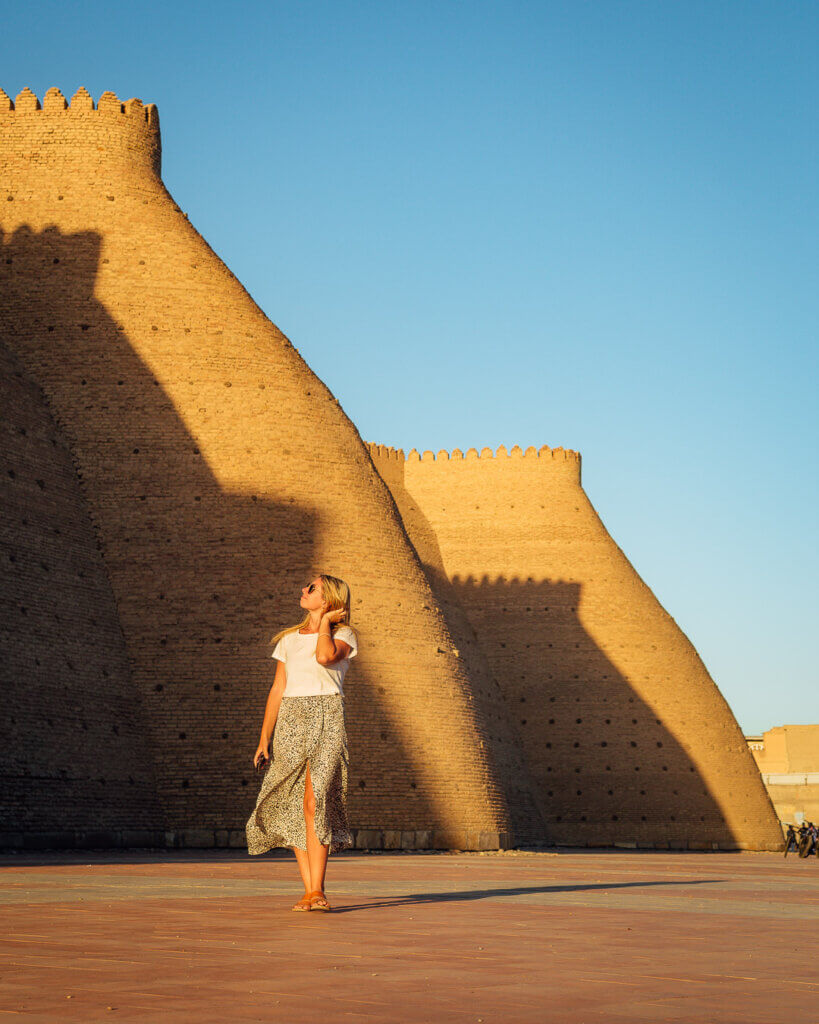
Bukhara’s oldest structure, the massive Ark-Citadel, is a wonderful sight you cannot miss. The sand-colored fortress dates back to the 5th century and was home to over 3000 people. Its massive structure lets us imagine how much of a city in a city it actually was.
Mainly, it was known to be the residence of the Bukharan emirs, but also included royal palaces, government offices and stables.
Inside, you can visit the Friday Mosque with its stunning carved column heads, as well as the former living quarters of the emirs. Nowadays, there are a few interesting museums, housed in other former royal quarters. Another one of these beautiful places you need to put on your bucket list for when you’re visiting Uzbekistan!
If you’re keen to learn more about the history and how it all came together, I recommend booking this immersive Old Town Walking Tour.
Bukhara Museum
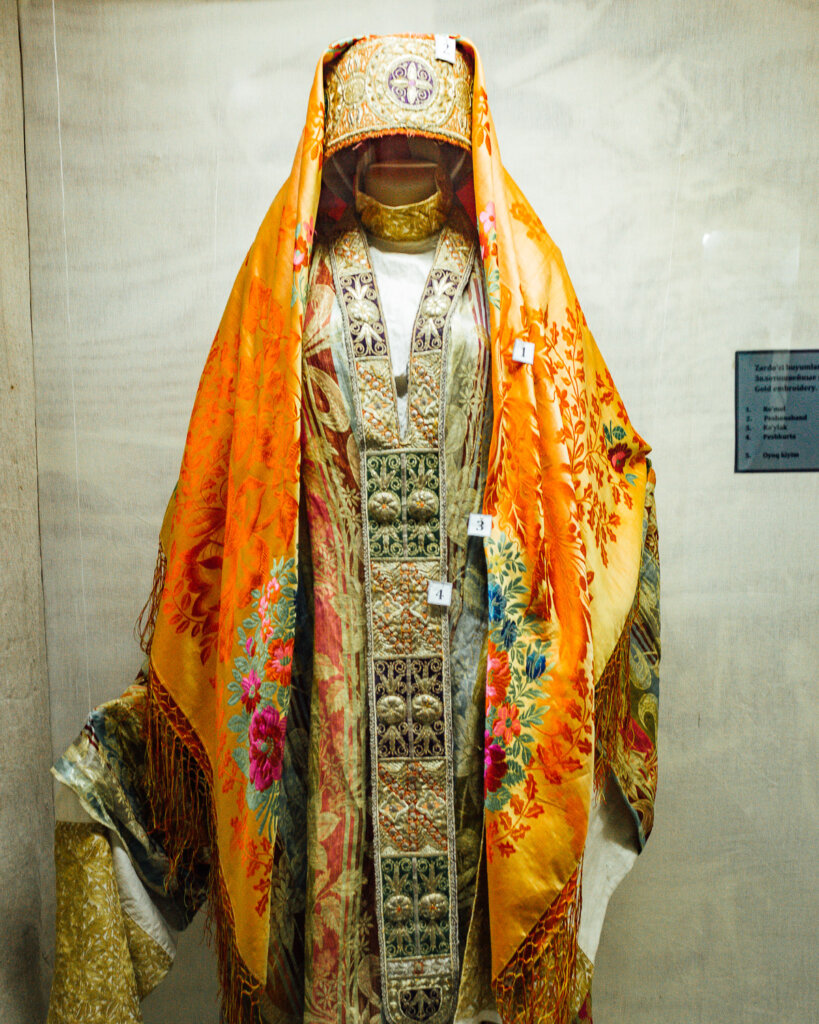
Situated in the Ark Citadel, its a great addition to your visit. The Architectural Art Museum or Bukhara Museum, was established in 1945 and displays 18 permanent exhibitions. Placed in architectural monuments, it also features over 100.000 objects of the spiritual culture of the region.
Bolo Hauz Mosque
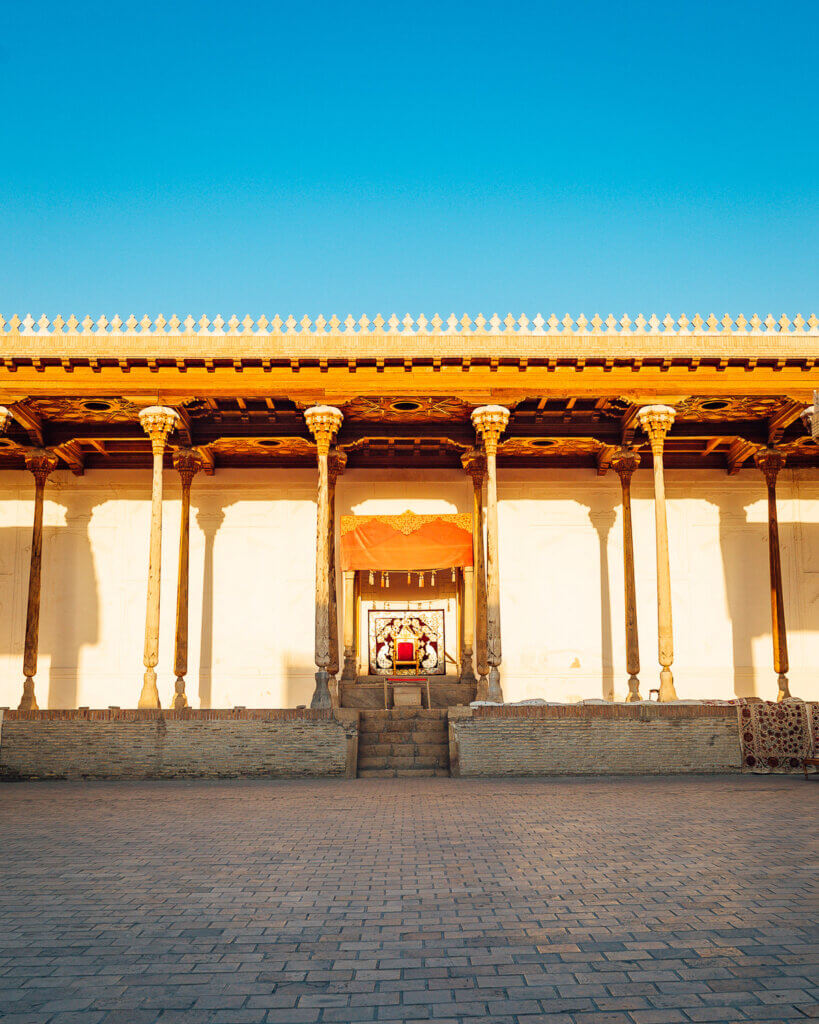
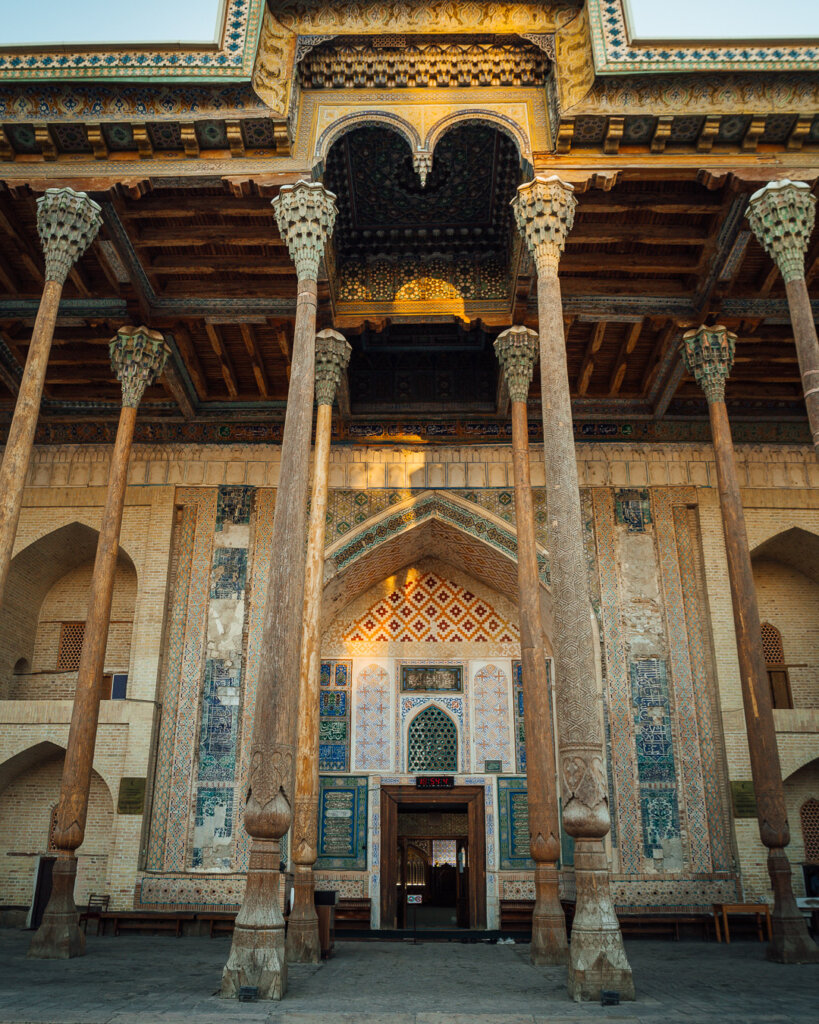
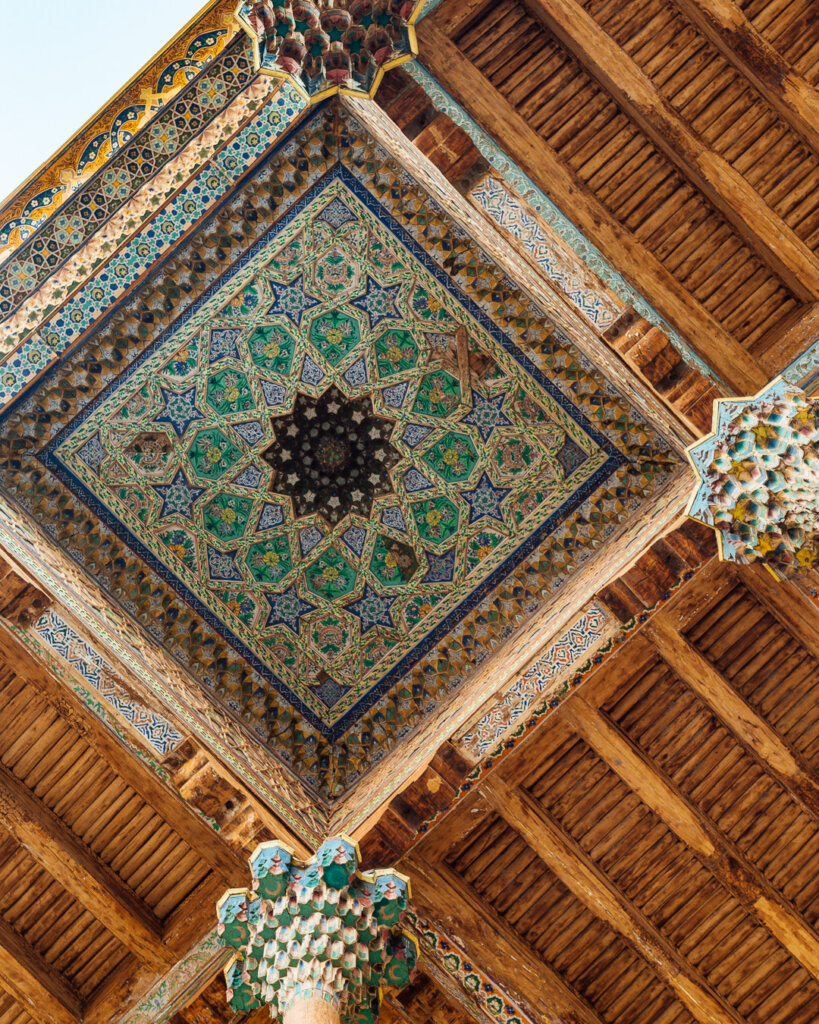
A very different-looking mosque, the Bolo Hauz Mosque features the most unique wooden ceiling and columns. The complex is situated opposite the Ark Citadel and includes a Friday mosque, pond and a minaret. It is also listed among the UNESCO World Heritage Sites and was built in 1712.
If you visit during sunset, you’ll be greeted with some of the nicest colours, reflected in its colourful tiles. Definitely recommend going at this time!
Women are allowed to enter with a covered head but only up to a certain point.
Khoja Gaukushan Ensemble
One of Bukhara’s UNESCO World Heritage Sites, the Khoja Gaukushan Ensemble used to be a former animal trading area. It translates to ‘Killing Bulls’ and was a butchery in the year of 1570.
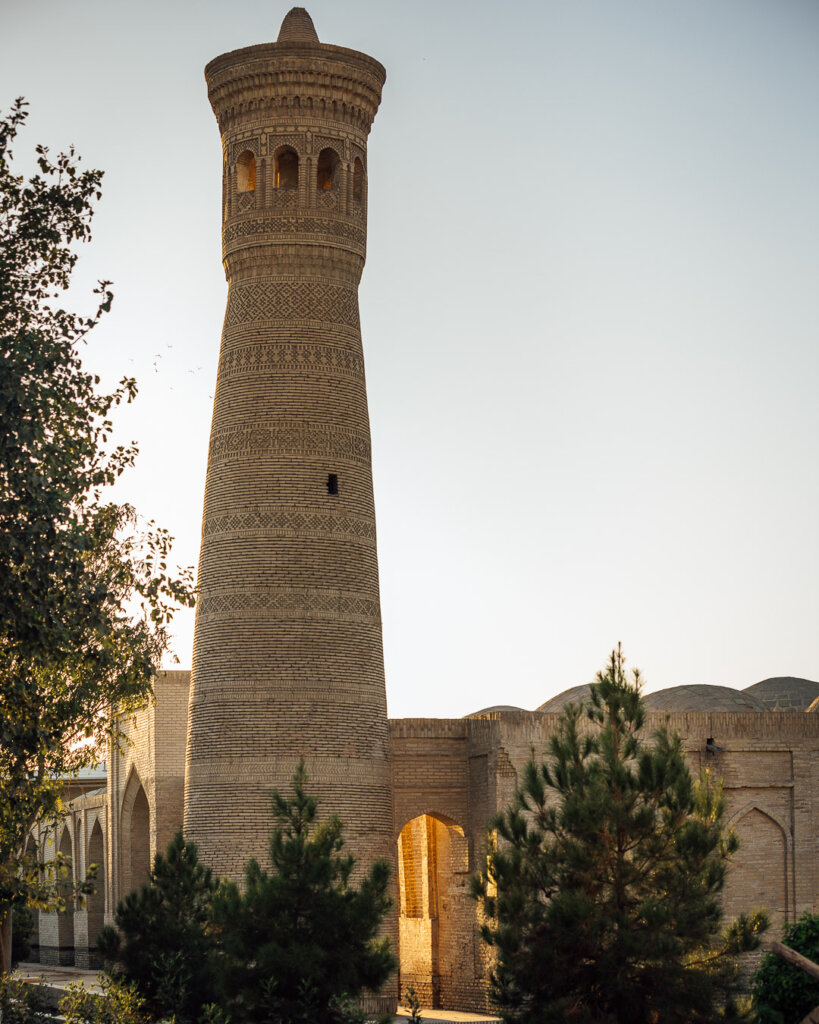
The whole complex consists of a madrassah, mosque, minaret and pond, which is partly under restoration. Its minaret is the second in height to the Kaylan Minaret and people believe it was a copy of it.
Caravanserai Excavations
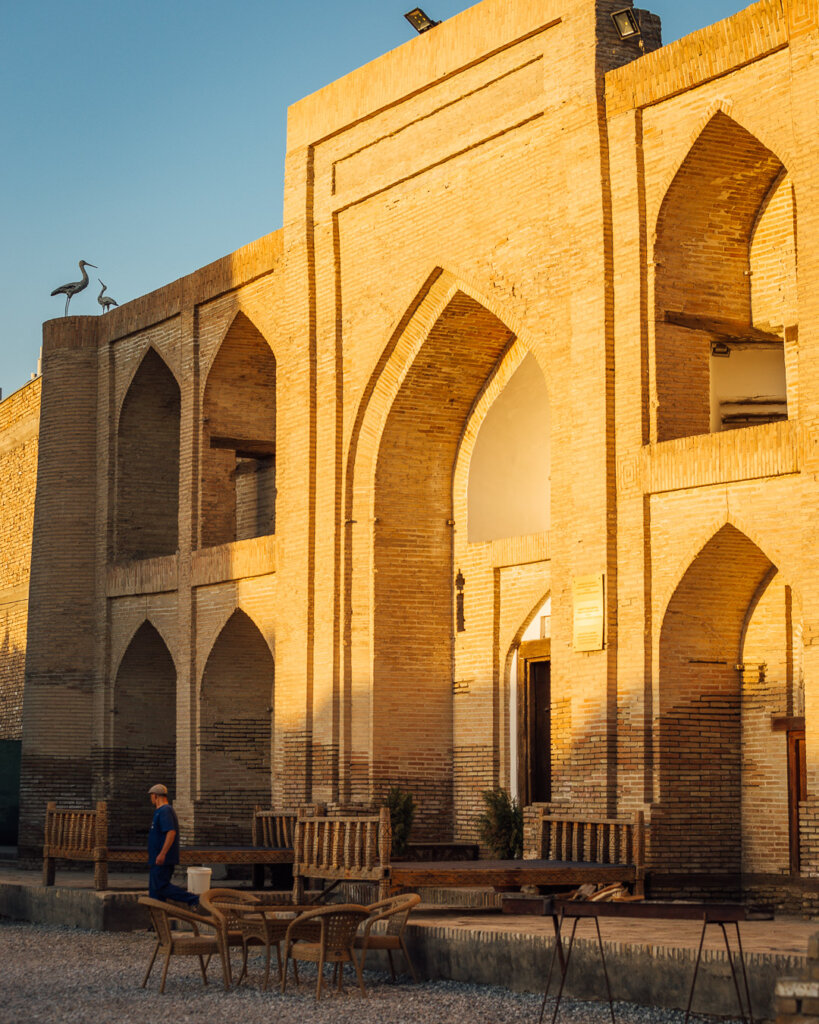
As Bukhara was a major place on the Silk Road, it comes to no surprise that there are remains of a former Caravanserai. Catering to back-then merchants traveling through the area, many sights date back to this time.
Right outside the Toqi Sarrafon Bazaar, you can marvel at some recent Caravanserai excavations. According to locals, there is the foundation of an old bathhouse.
It’s only possible to view the excavations from outside of the fence.
Outside the Bukhara Old Town
To see Bukhara beyond its walls, a half-day countryside and architectural tour including Sitori-i-Mokhi Khosa Palace, Chor Bakr, and the Naqshband Mausoleum is ideal if you don’t want to rely on taxis.
Sitori-i-Mokhi Khosa Palace
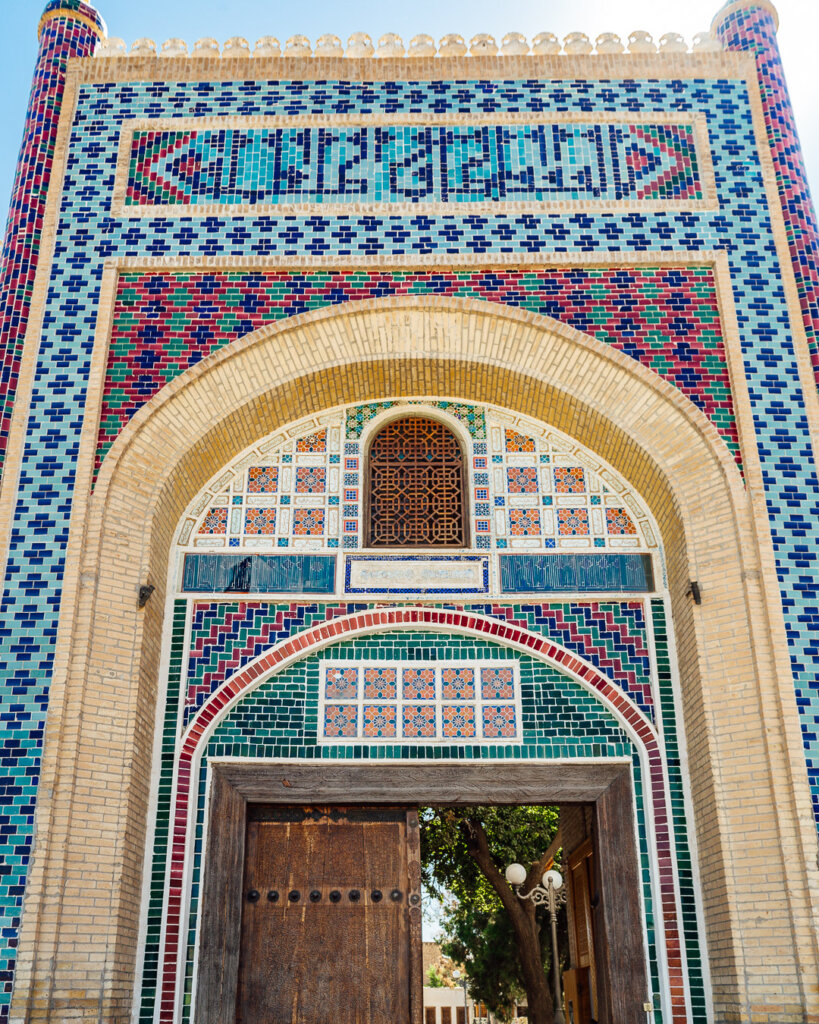
Sitori-i-Mokhi Khosa Palace was the summer palace of one of the last emirs of Bukhara and makes for a wonderful visit.
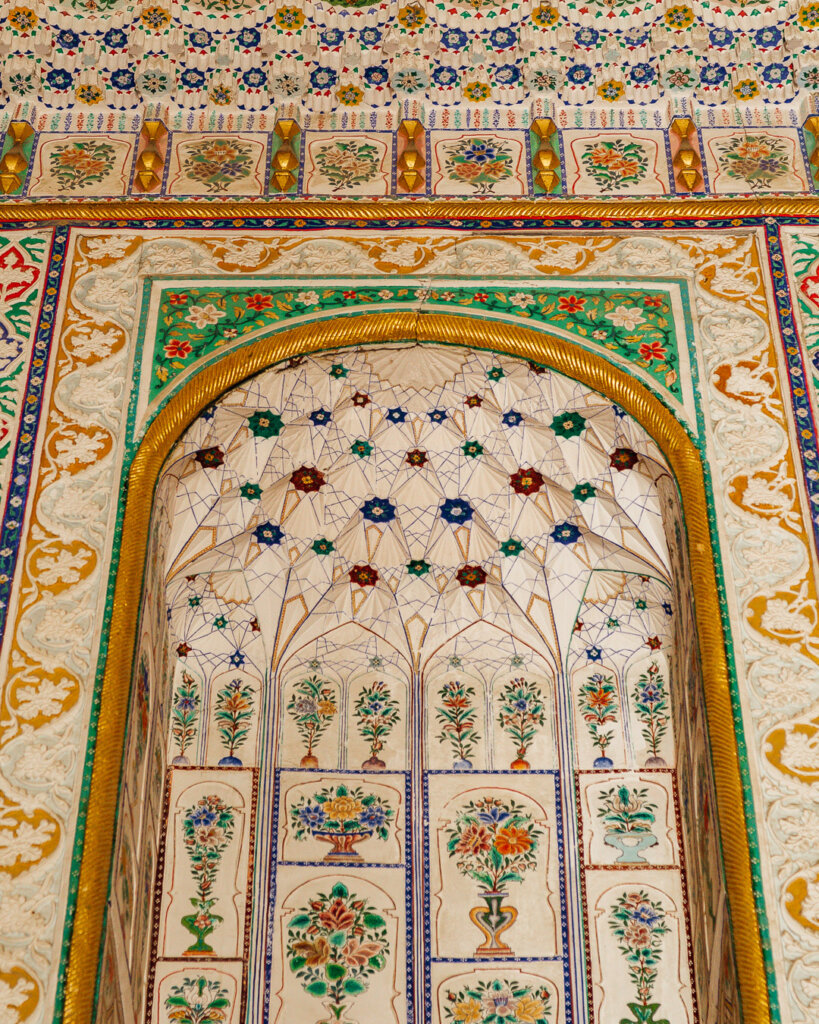
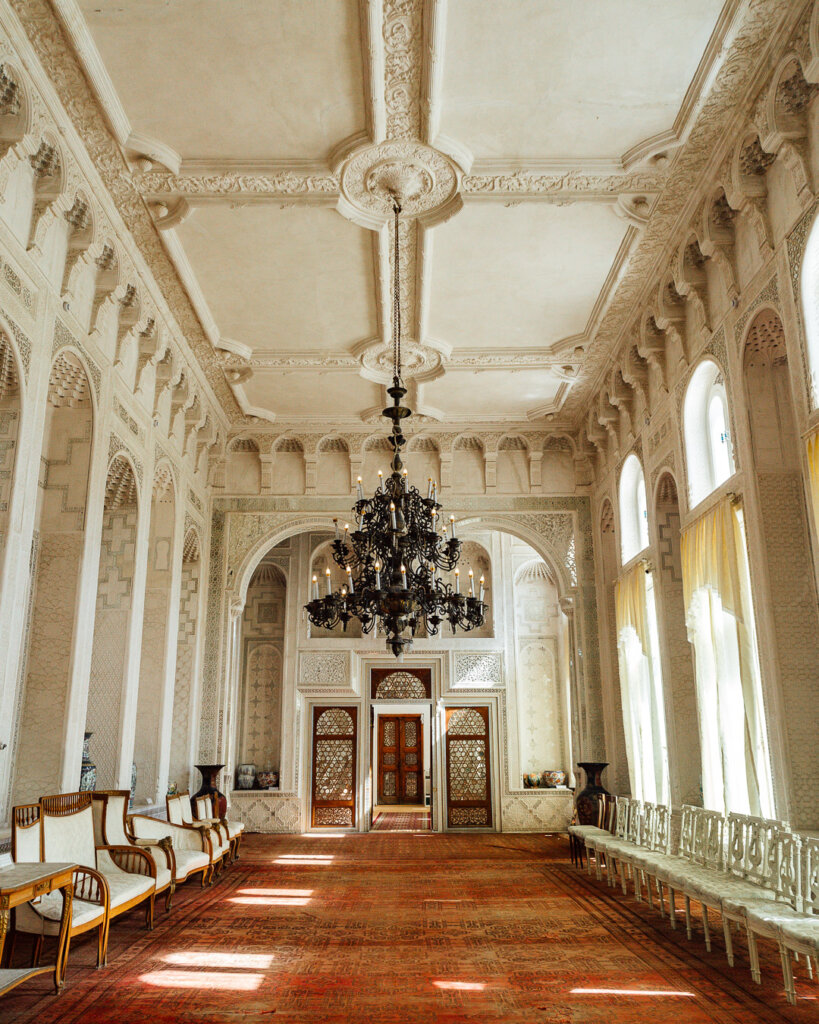
Inside, you can see the White Hall featuring some amazing, typical Bukhara stucco. Other rooms are splendidly decorated with a mix of European, Russian and Oriental influences.
A big gate with colourful tiles greets you on your way to Sitori-i-Mokhi Khosa Palace. The stunning summer palace, which lies around 4km north of Bukhara’s city centre, belonged to the last emirs of Bukhara.
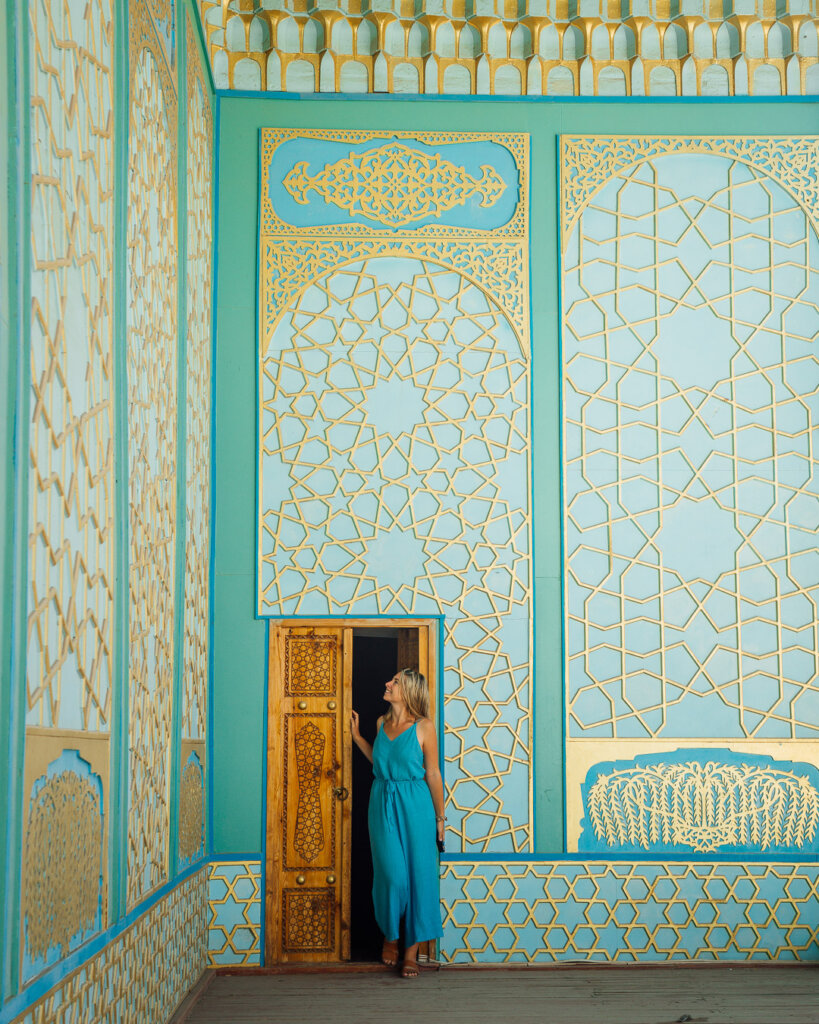
The beautiful courtyard with its turquoise wooden veranda already looks so much different to all other places in Uzbekistan.
Chor Bakr Memorial Complex
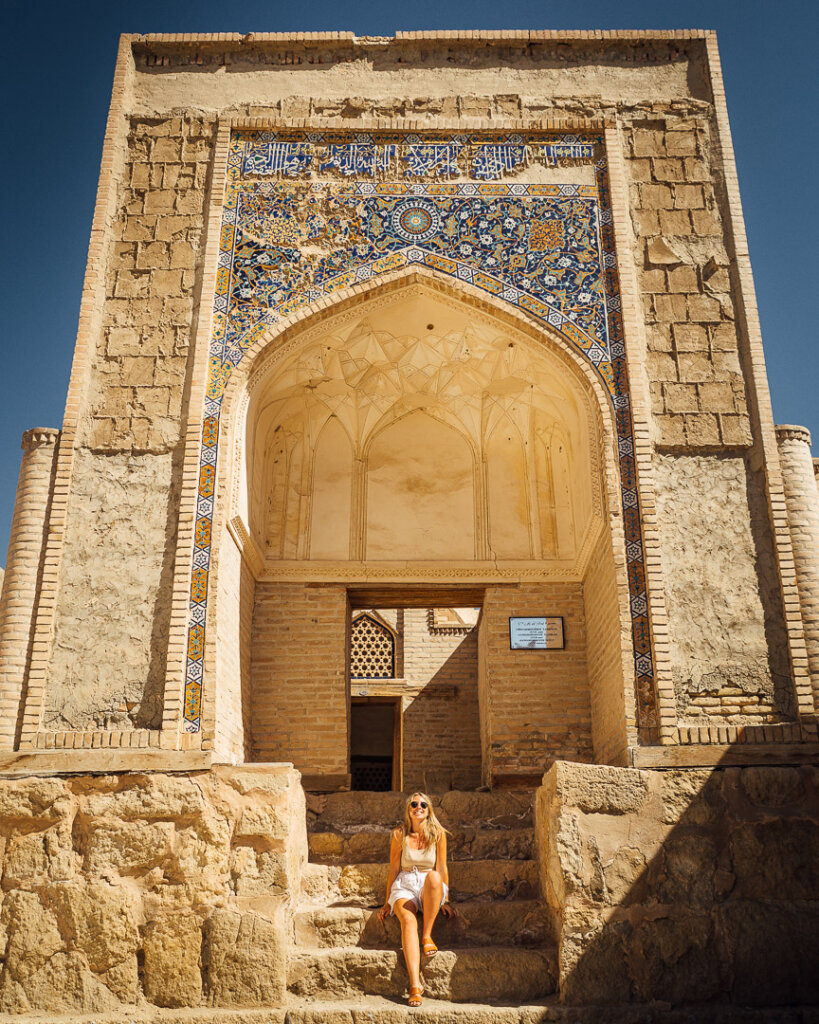
The Chor Bakr Memorial Complex lies about 5 km west of Bukhara and is a good place to visit if you have extra time on your hands!
Also called the City of the Dead, the Chor Bakr Necropolis appeared in the 16th century during the rule of the Samanids. It was Abu Bakr Said who died here and made this place to a pilgrimage site ever since.
The whole complex is divided by small lanes and mulberry trees – making it quite a special place to wander around.
If I were to go again, I’d book this exclusive Bukhara Culture & Architecture Tour. With your Uzbek guide, you’ll dive deep into all the history and explore one of the most beautiful places in Uzbekistan, right in the countryside of Bukhara.
Chashma-Ayub Mausoleum
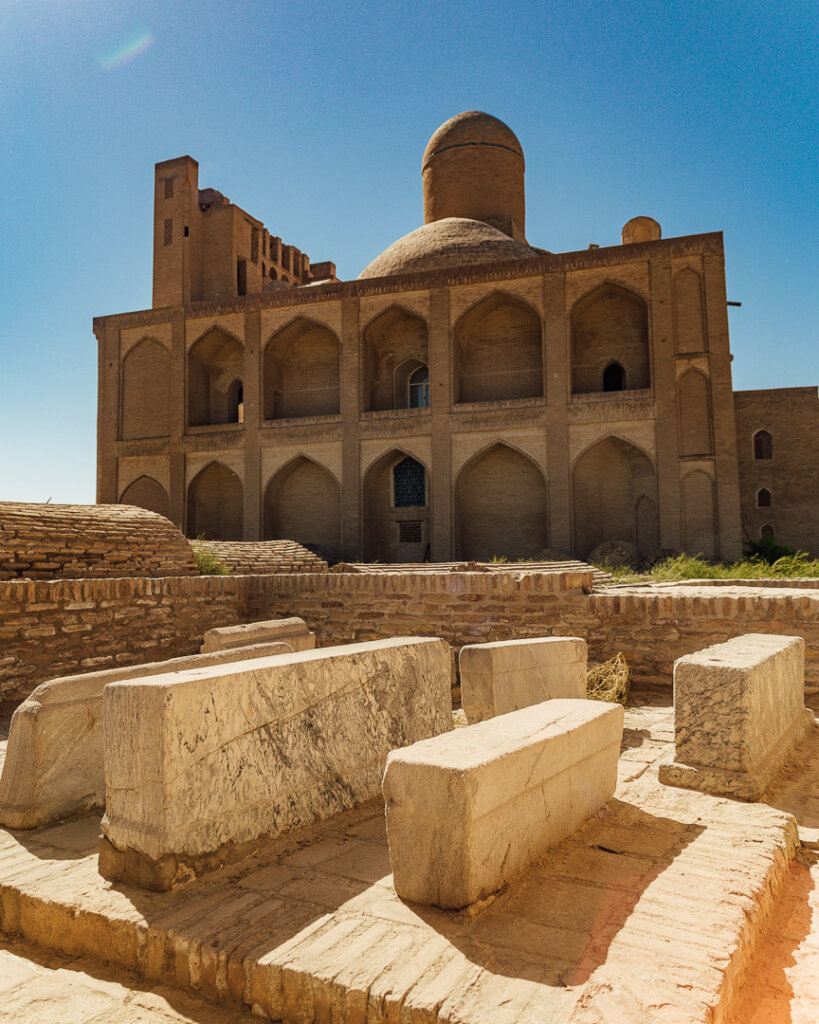
The Chashma-Ayub Mausoleum is another one of Bukhara’s UNESCO World Heritage Sites and quite a unique one! It sits in the middle of a cemetery and consists of a mausoleum and a holy spring.

Samanid Mausoleum
The Samanid Mausoleum is one of Bukhara’s architectural masterpieces, erected during the Samanid dynasty. The tomb stands alone in the middle of the park and is one of the more interesting places to see in Bukhara and all of Uzbekistan.
Built in the 10th century, truly is a special one as it survived all these decades. Therefore, it shows us a glimpse into the great funerary architecture of the Islamic world.

What To Know Before Visiting Bukhara
What Makes Travel in Uzbekistan Easier Than You Expect
Travelling through places like Uzbekistan is incredibly rewarding, but it also comes with a few practical realities, long overland routes, currency changes, and limited support if something goes wrong. These are two tools I rely on when moving through Central Asia and similar regions.
Uzbekistan Internet
I have spent 2-3 weeks in Uzbekistan to explore and unwind, including getting some work done. As a Digital Nomad, I found the Wi-Fi to be working great and fast enough. I’d suggest getting an eSIM Card to be prepared and avoid language barriers when arriving.
Travel Insurance That Works Beyond Tourist Hotspots
When you’re traveling independently through countries like Uzbekistan, having flexible travel insurance matters more than having perfect coverage on paper. I use SafetyWing because it’s designed for long trips, allows extensions while you’re already abroad, and actually works in regions where many traditional policies fall short.
It’s especially useful if Bukhara is just one stop on a longer journey through Central Asia or if you’re continuing on to places like Kyrgyzstan or Iran.
If you’re traveling through Uzbekistan as part of a wider itinerary, this makes logistics noticeably simpler.
As a European citizen, you can get a Wise card and set it up before your trip here.
I hope this guide gives you enough inspiration on places to see in Bukhara and to visit Uzbekistan. The relaxed vibe, quiet streets, cute rooftop terraces and overall more Oriental influence will surely enchant you!

Keen on more Central Asia travel inspo? Check out these articles:
Plan a Kyrgyzstan Journey: Ultimate Kyrgyzstan Guide & The Best Places to Visit
Horse trekking in Kyrgyzstan & everything you need to know and what to expect.
Keen on visiting Iran? Complete Iran Itinerary & Everything You Need to See!
Disclaimer: This article contains affiliate links. If you purchase using these links, I earn a small commission at no additional cost to you. I only recommend services and tools I know and trust myself.
Pin this post for later!


